Key Takeaways
- The best Muay Thai gym in Thailand is the one that matches your goal, whether that is professional fight preparation, technical mastery, or a high-intensity fitness camp.
- Trainer pedigree matters more than marketing — look for active or former stadium fighters who coach hands-on, not just a famous name on the wall.
- A low student-to-trainer ratio is the clearest sign of quality, because it determines how much real correction your footwork and clinch work actually get.
- Location shapes the experience — Bangkok offers stadium-level competition, the southern islands lean toward modern performance camps, and the north favors technical, long-stay training.
Finding the best Muay Thai gym in Thailand depends entirely on what you want from your training. Some camps are built for fighters preparing for stadium bouts, while others focus on fitness, technical depth, or an immersive stay-and-train experience. Rather than chasing a name you saw on social media, it pays to judge a gym by a clear set of standards that predict how much you will actually improve.
This guide breaks down exactly what separates a world-class camp from a tourist-focused fitness studio, how training culture differs by region, and how to match a gym to your goals. We will also show you what to expect at MAVINN’s own Bangkok gym, where reigning ONE world champion Superbon trains and teaches.
What Makes a Great Muay Thai Gym
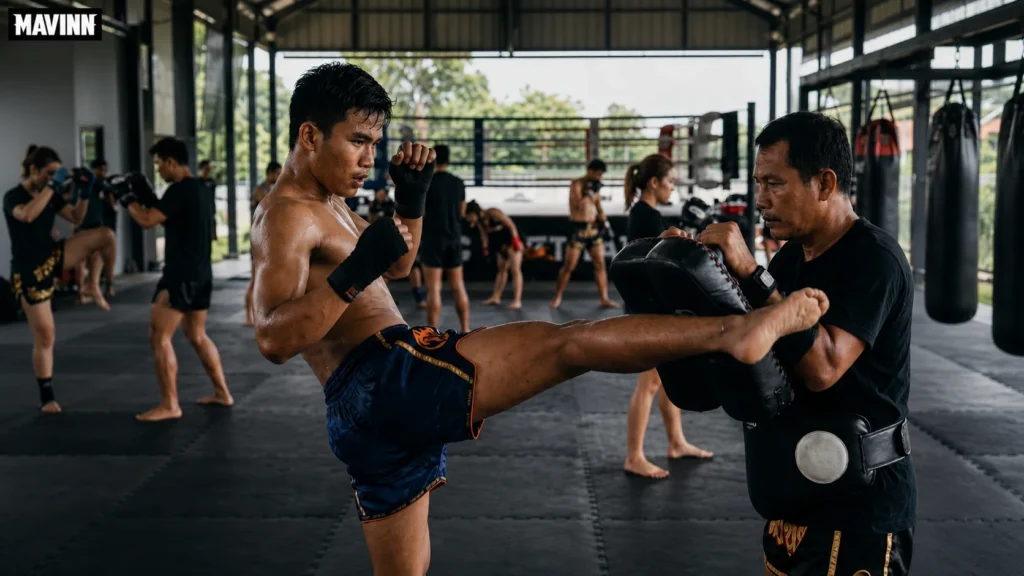
The strongest camps combine an authentic fight lineage with a structured curriculum that works for every level. The single most reliable signal of quality is the coaching staff: trainers who have competed at a high level can read gaps in your guard and footwork instantly, because they have exploited those same gaps in the ring. A famous gym name means little if the champions it advertises never actually hold pads.
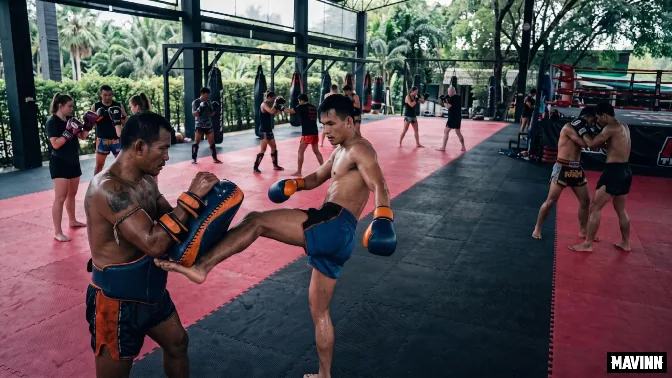
Class size is the next thing to check. A student-to-trainer ratio of roughly four-to-one or lower means you receive real-time correction during pad work rather than just hitting a bag in a crowd. Ask whether classes are separated by skill level, since a good camp lets beginners build clean fundamentals without being thrown in with active fighters.
Finally, look at the training environment itself. Well-maintained heavy bags, clean and shock-absorbent flooring, and a structured weekly schedule that includes technical work, clinching, and conditioning all point to a serious gym. Recovery facilities and on-site accommodation are a bonus for anyone planning a longer stay.
Training Culture by Region
Thailand’s three main training hubs each have a distinct personality, and the right one depends on your priorities.
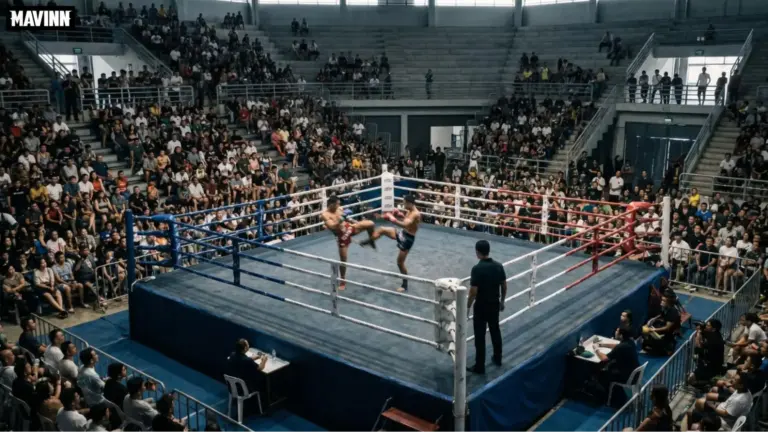
- Bangkok is the competitive engine room. The capital is home to the legendary Rajadamnern and Lumpinee stadiums, so its camps tend to produce active stadium fighters and emphasize a fast, technical style of clinching and knee work. It suits competitors and purists who want direct access to the professional scene.
- The southern islands, especially around Phuket, lean toward modern, performance-focused camps with integrated strength-and-conditioning zones and recovery facilities. They tend to attract athletes balancing intense striking sessions with a lifestyle-oriented setting.
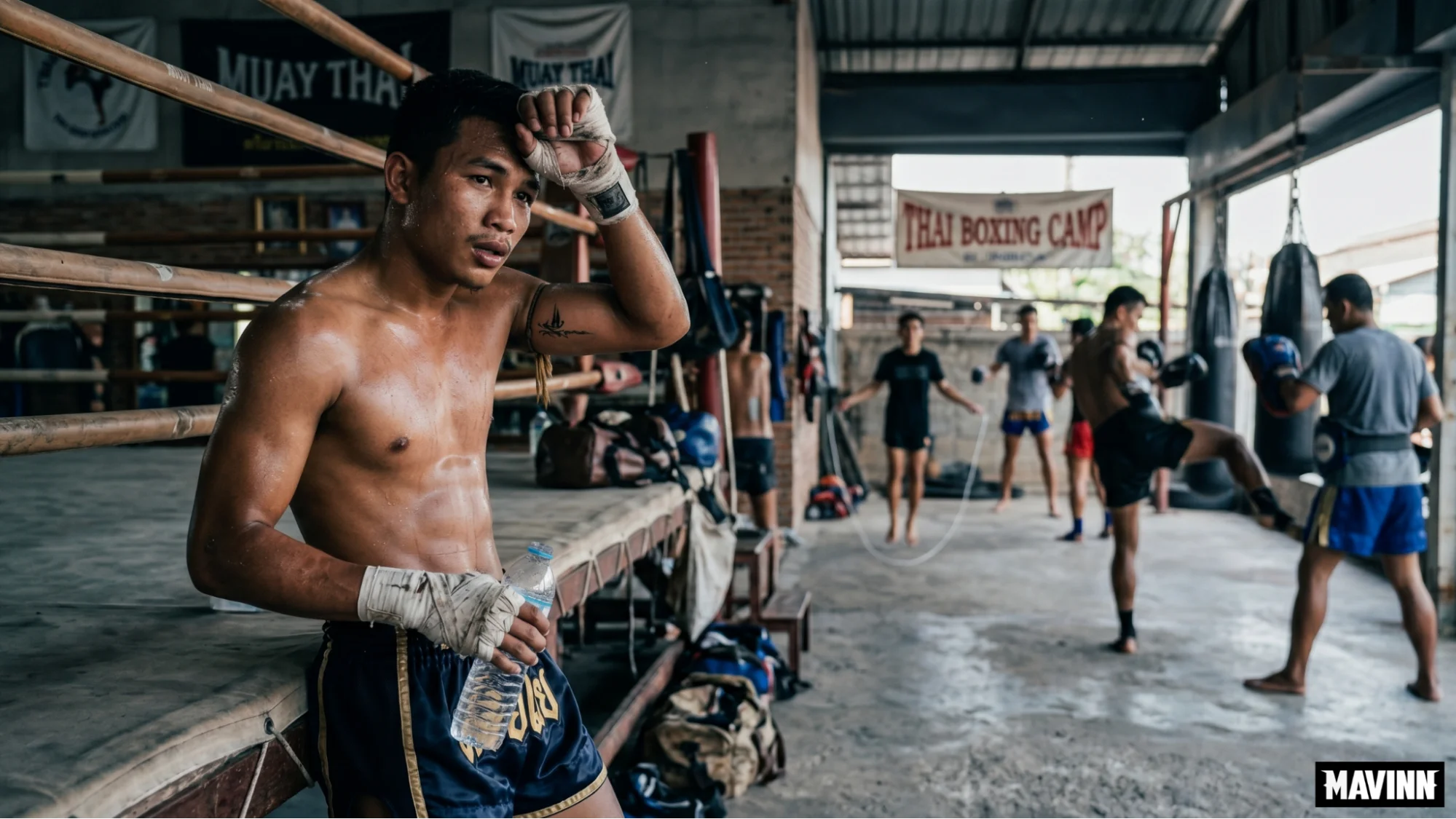
- Northern Thailand, around Chiang Mai, offers a cooler climate and a slower, more technical pace. Camps here often favor meticulous form and longer stays, making the region popular with practitioners who want to refine their striking over weeks or months.
How to Match a Gym to Your Goals
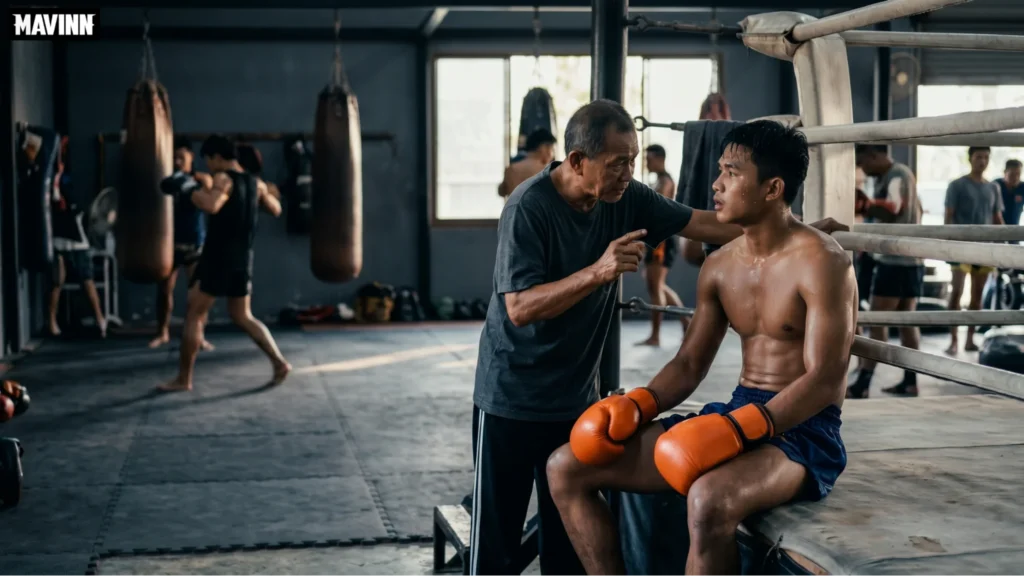
Your training intensity should match the camp’s specialty. If you are a complete beginner, prioritize a gym with a dedicated foundations program, separated skill levels, and trainers who scale drills to your fitness rather than forcing pro-level intensity on day one. Look for a free trial session so you can feel the environment before committing.
If you train for fitness, a camp that keeps you moving with high-volume pad and bag work will give you the metabolic burn you are after while still teaching real technique. If you are an experienced or competitive fighter, you need a camp with active stadium-level sparring partners, structured fight-camp programming, and coaches who can prepare you for the pressure of a real bout. In every case, the trainer-to-student ratio and the coaches’ genuine fight or coaching record matter more than the gym’s size or fame.
Training at MAVINN’s Bangkok Gym
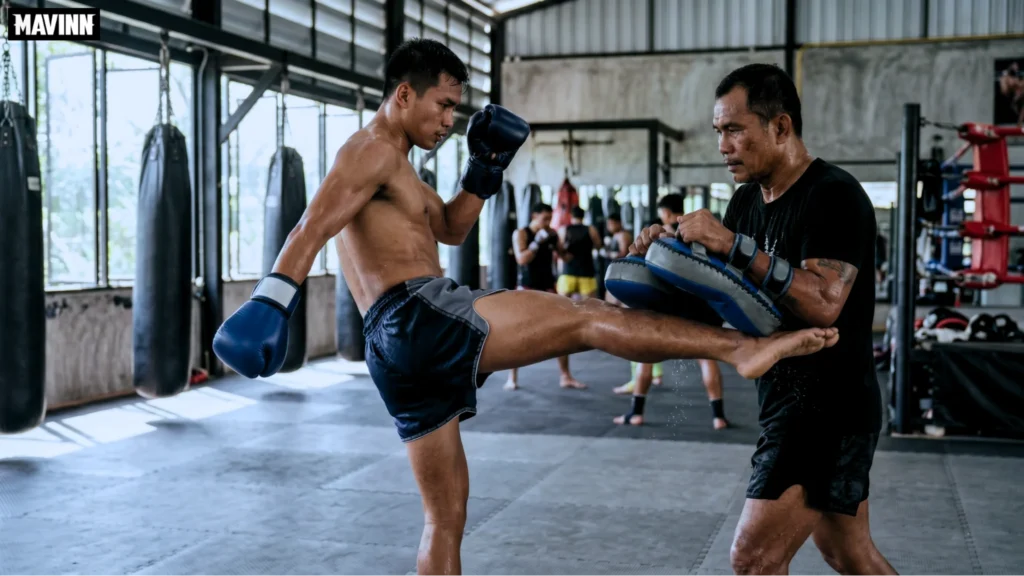
For training in Bangkok, MAVINN’s gym is the home of reigning ONE Featherweight Kickboxing World Champion Superbon Singha Mavinn, who teaches at the camp hands-on rather than lending his name from a distance. The gym is located on Soi Nuan Chan 54 in the Bueng Kum district on the eastern side of Bangkok, a short drive from Central Eastville and The Crystal Ekamai-Ramindra.
What makes the camp stand out is its genuine fight lineage. Alongside Superbon, the roster includes Rajadamnern champions such as Shadow Singha Mavinn and Tapaokaew Singha Mavinn, and day-to-day technical coaching is led by an experienced head trainer with decades of pad-holding experience. Training is open to all levels, and the camp runs group classes, private one-on-one sessions, stay-and-train packages with on-site accommodation, and online courses for those who cannot travel.
It is a clear example of the standards covered above: champion-level coaching, hands-on instruction, and a structured program for beginners through to competitors — the literal sense of “train where champions train.”
Costs and What to Budget
Training costs in Thailand vary by region and prestige, but the general ranges are predictable.
- Single drop-in session: roughly 400 to 600 THB at most gyms, with premium tourist-zone camps charging more.
- Monthly training (training only): around 10,000 to 15,000 THB at mid-to-upper-tier Bangkok camps, with budget options in Chiang Mai starting lower.
- All-inclusive packages that bundle twice-daily training with accommodation and meals offer the best value for a dedicated stay, though prices rise accordingly.
Owning your own gear is also a hygiene necessity in Thailand’s tropical climate, since rental equipment is shared and dries slowly.
For a worked example with published figures, MAVINN lists every pass and what each one covers on its Muay Thai training camp in Thailand page.
Visa Options for Training in Thailand
The visa you need depends on how long you plan to train. Please treat this as a general overview and confirm current rules with an official source before you travel, as Thai visa policy changes frequently.
- Visa exemption: Citizens of many countries can currently enter for up to 60 days and extend once for a further 30 days. Note that the Thai cabinet has approved reducing this to 30 days, so check the latest status before relying on the longer stay.
- Tourist Visa (TR): Allows a 60-day stay, extendable by 30 days.
- Destination Thailand Visa (DTV): Designed partly around “soft power” activities including Muay Thai, it allows stays of up to 180 days per entry and remains valid for five years. It requires proof of 500,000 THB in savings, and the bank statement generally needs to have been seasoned for at least three months.
- Education Visa (ED): For long-term study of six to twelve months at a government-licensed Muay Thai school, which requires genuine attendance.
Essential Gear for Training in Thailand
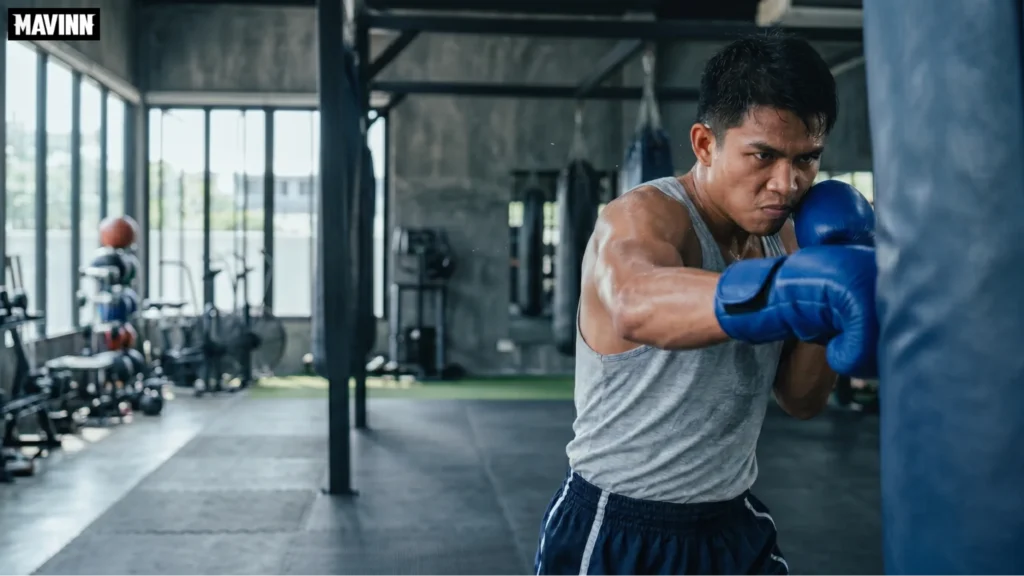
A reliable kit keeps you training consistently through heavy daily sessions.
- Boxing gloves: 12 to 14oz for bag and pad work, and 16oz for sparring.
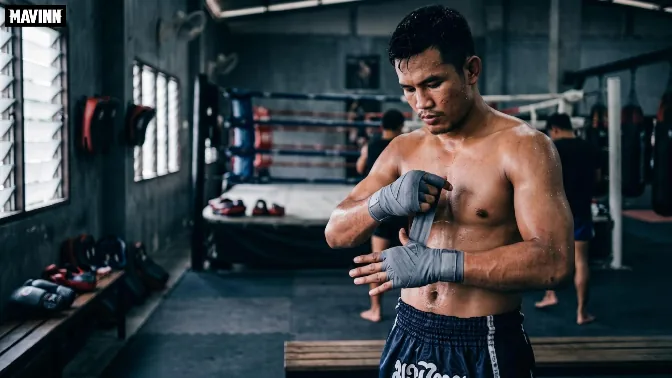
- Hand wraps: Semi-elastic wraps to stabilize the 27 small bones in your hand and wrist.
- Muay Thai shorts: High-cut designs that allow a full range of motion for head kicks.
- Shin guards: High-density foam to protect your tibia during technical partner drills.
- Mouthguard: Essential the moment you move to any contact work.
Quick-drying, sweat-resistant fabrics are worth prioritizing, since gear rarely dries fully between sessions in the heat.
Frequently Asked Questions
Do Muay Thai trainers in Thailand speak English?
Most trainers at camps that welcome international students speak functional English geared toward training, supported by clear physical demonstrations. Fluency varies, but standard striking terminology is effectively a universal language in the gym, so you will still receive precise corrections on your stance and technique.
Is training in Thailand safe for beginners and solo travelers?
Yes. Reputable camps prioritize fundamentals over heavy contact for newcomers, starting you with stance work and bag drills before guided pad work. Solo travelers also benefit from a built-in community, and choosing a camp with on-site accommodation adds convenience and security.
How do I choose between gyms once I have a shortlist?
Take a trial session wherever possible. Pay attention to the trainer-to-student ratio, how cleanly the gym is run, and whether the coaching feels personal. The right environment is the one that motivates you to keep showing up.
Conclusion
The best Muay Thai gym in Thailand is not a single name — it is the camp whose coaching, class size, and culture line up with your goals, whether that means stadium-level fight preparation or a focused fitness retreat. Judge gyms by the genuine fight or coaching record of their trainers and by how much individual attention you will actually get.
If you are training in Bangkok, MAVINN’s gym offers exactly that combination: hands-on coaching from a reigning world champion, a roster of stadium titleholders, and structured programs for every level. Wherever you choose, prioritize authentic instruction and a low student-to-trainer ratio, and you will progress far faster than in any name-only camp.