Key Takeaways
- Muay Thai training builds explosive power and cardiovascular endurance by using the “Art of Eight Limbs” to engage the entire body through repetitive striking and clinching drills.
- Reliable equipment and high-performance activewear are essential for protecting joints and maintaining a full range of motion during an at home muay thai workout.
- Effective striking depends on mastering hip rotation and weight transfer, which produces significantly more force than relying on raw upper-body strength alone.
- Consistent practice develops mental toughness and sharpens reflexes, translating technical ring skills into a disciplined and focused lifestyle.
Muay Thai training is a high-intensity combat system using eight points of contact-fists, elbows, knees, and shins-to build functional strength and cardiovascular endurance. Whether you are executing an at home muay thai workout or following a basic thai boxing training routine, you can develop explosive power through rhythmic movement and repetitive drilling while burning 600 to 1,000 calories per hour depending on intensity.
To help you start safely and effectively, this guide from MAVINN breaks down the essential fundamentals for your home training muay thai journey. We will cover everything from basic stances and heavy bag drills to setting up the right space, ensuring you build proper muscle memory and progress confidently without needing a professional gym.
What is Muay Thai Training Like for Beginners?
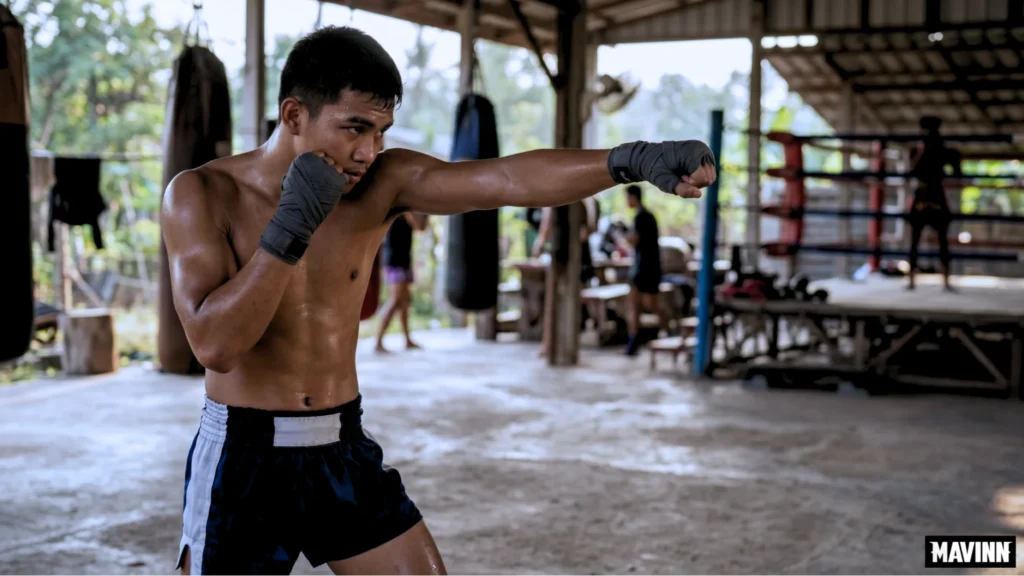
Muay Thai training for beginners is an intense, high-energy experience that prioritizes fundamental body mechanics and cardiovascular conditioning over immediate combat. You can expect a structured session that starts with skipping rope and shadowboxing to elevate your heart rate and loosen your joints. We emphasize “shadowing” to help you visualize movement and footwork before you ever touch a bag, which is a core element of any Thai kickboxing for beginners program.
The core of your workout involves technical drilling where you learn to strike using your fists, elbows, knees, and shins. You will spend most of your time hitting heavy bags or doing air drills to develop the timing and accuracy required for a proper roundhouse kick. This repetitive striking builds lean muscle and serves as a highly effective muay thai fitness program, burning 600 to 1,000 calories per hour depending on your intensity. Beginners typically see a significant increase in their hip mobility and core strength after just four weeks of consistent practice.
How to Start an At-Home Workout with No Experience
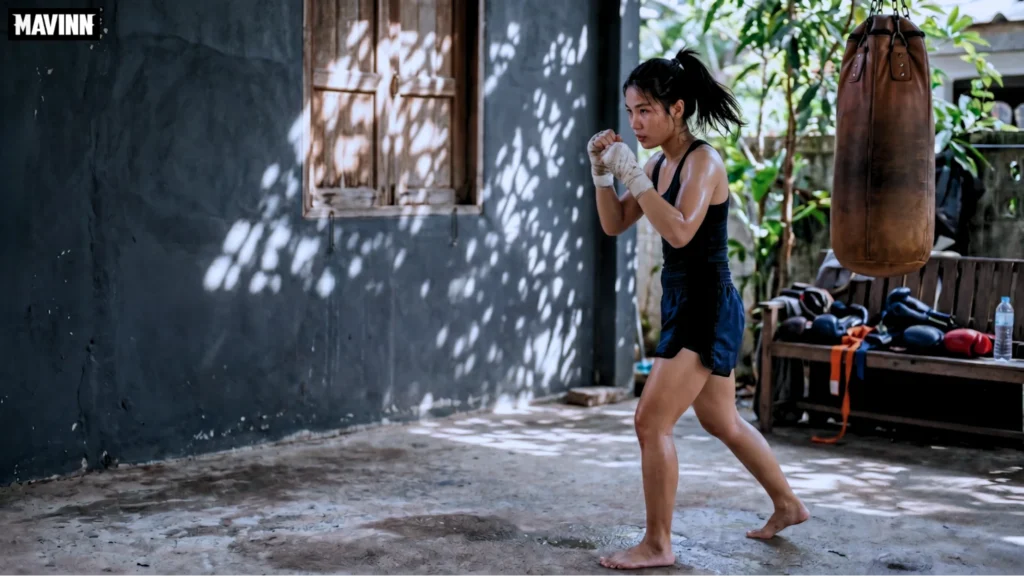
You begin your home muay thai training and home muay thai workout by mastering the basic stance and rhythm to build a stable foundation. Stand with your feet shoulder-width apart and your lead foot slightly forward to maintain a balanced center of gravity. We recommend practicing this “square” stance in front of a mirror for 10 minutes daily to correct your posture and weight distribution. A proper Thai boxing training routine, sometimes referred to as thai box training, always starts from the ground up.
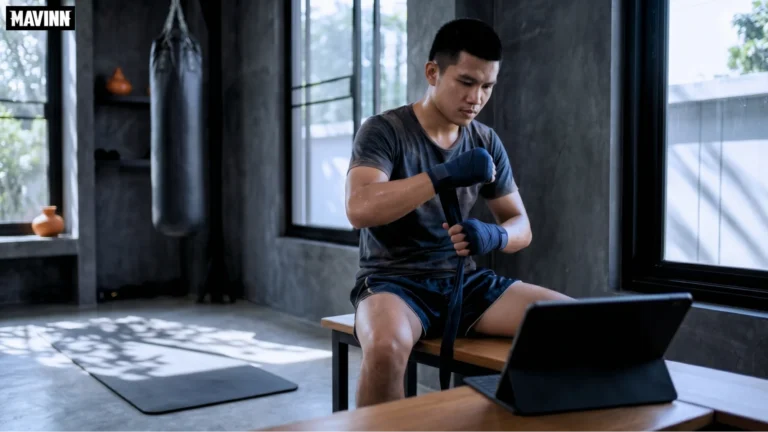
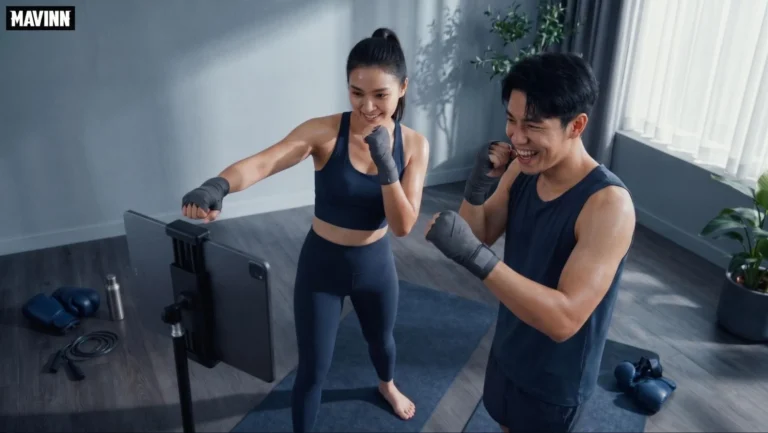
Shadowboxing serves as the most effective tool for developing coordination without needing expensive equipment right away. Focus on controlled straight punches and basic leg checks while keeping your guards high to protect your jawline. You should aim for three rounds of three minutes to build the specific cardiovascular endurance required for high-intensity striking. Beginners often see the fastest results by recording their muay thai video training sessions on a smartphone to review their technique and fix balance issues.
Setting Up Your Space & Must-Have Items
For effective professional muay thai training at home, you need a minimum 6×6 feet of clear floor space. Prioritize high-density rubber mats to absorb impact and prevent slipping during lateral movements. Ensure the area is clear of low-hanging fixtures to allow for full-range kicks without obstruction. Here are the essentials for your workout for muay thai.
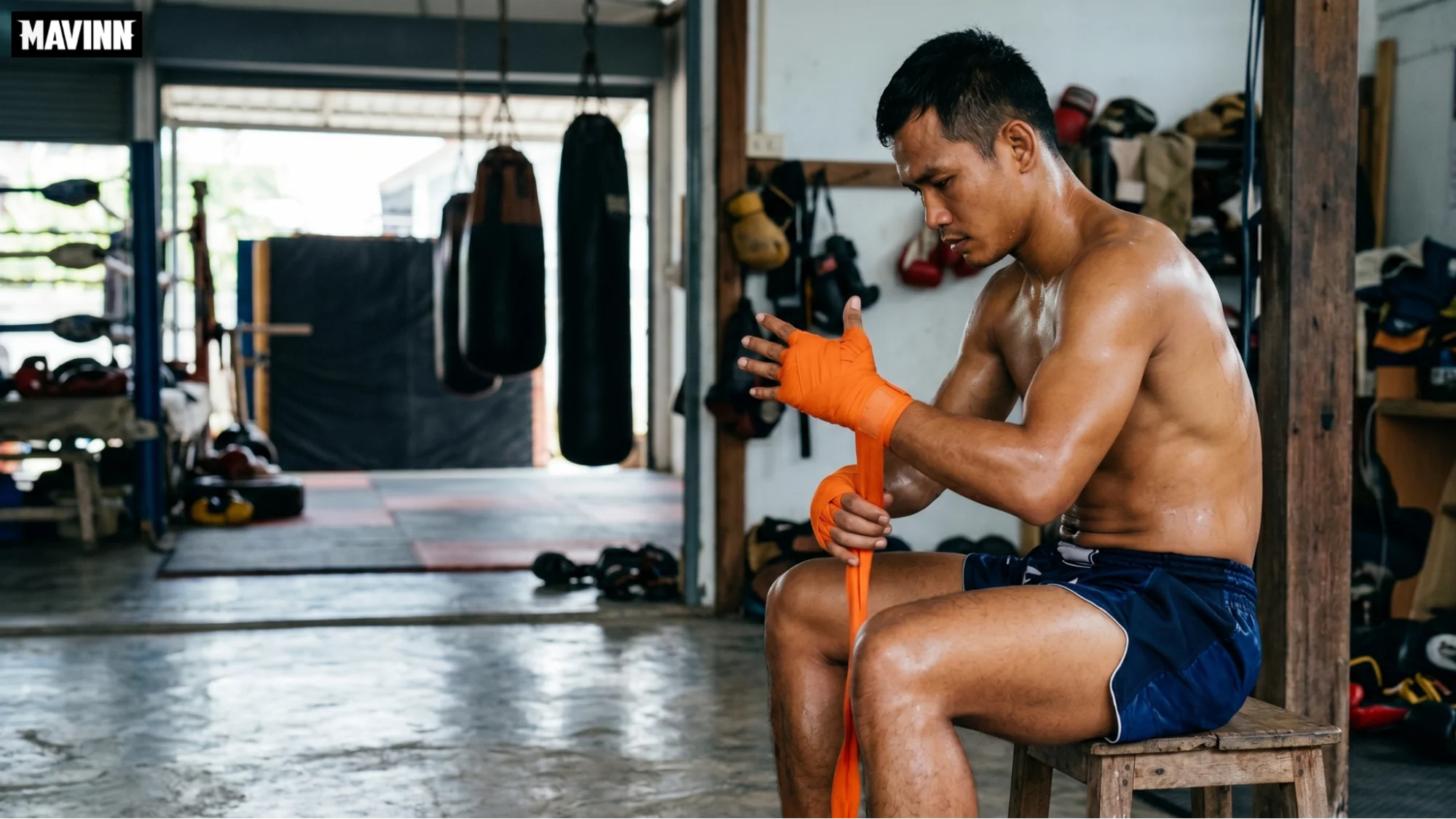
- 180-inch Hand Wraps: Necessary for stabilizing the small bones in your hand against repetitive impact.
- 14oz Gloves: Provides the ideal balance of padding and weight for beginner-level bag work.
- Shin Guards: Protects your tibia from bruising while you develop proper kicking mechanics.
- Heavy Bag: Choose a bag weighing at least 80 lbs to provide enough resistance for power strikes.
Hang your heavy bag from a reinforced ceiling joist to handle the high-torque force generated by Thai kicks. Consistent airflow is vital to manage the heat and humidity generated during a high-intensity Thai kickboxing workout.
Best Techniques and Drills for Home Practice
Effective practicing muay thai and training muay thai at home focuses on shadowboxing and technical footwork drills that sharpen your muscle memory. You should prioritize the long guard and basic 1-2-kick combinations to maintain your range and balance. Mastering the transition from a jab-cross to a rear roundhouse kick is an essential muay thai drill for developing fluid rhythm.
We recommend integrating 3-minute rounds of shadowboxing where you visualize an opponent. Focusing on the “teep” or push kick against a wall-without touching it-builds the hip stability required for high-repetition sets. Consistently hitting 100 shadow-reps of each strike daily builds the structural integrity needed for your thai boxing training techniques.
Basic Techniques & Stance
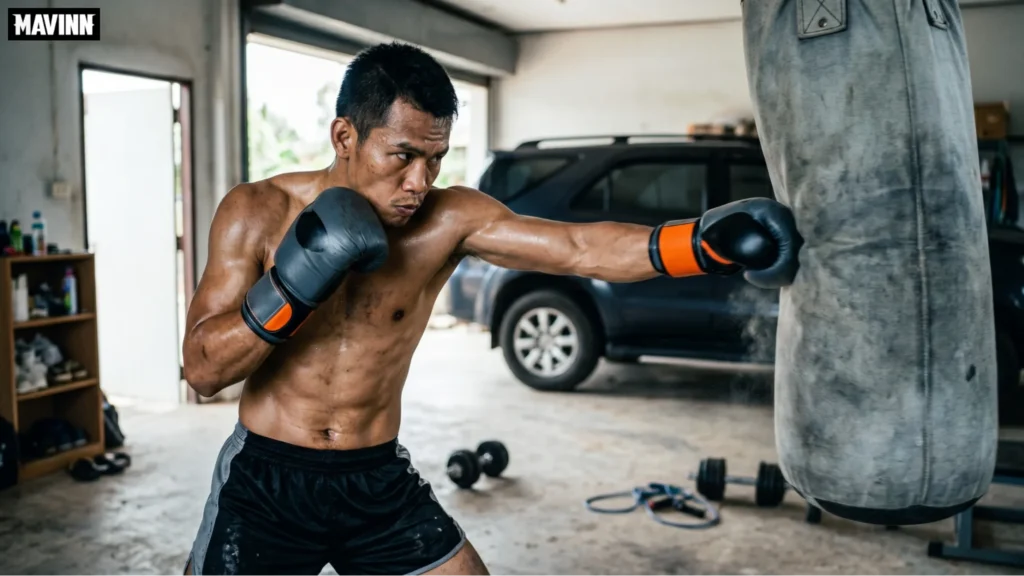
You build a solid foundation by mastering a square stance with your feet shoulder-width apart and your lead foot pointing forward. Keep your chin tucked and your hands positioned at eyebrow level to provide maximum facial protection. This balanced posture allows you to check kicks instantly.
Effective best muay thai techniques integrate the “Art of Eight Limbs” by combining punches, kicks, elbows, and knees into explosive sequences. You generate power in your roundhouse kick by pivoting your lead foot and swinging your arm down to create centrifugal force. Perfecting these basics is essential for muay thai mastery.
Heavy Bag Kick & Shadowboxing Drills
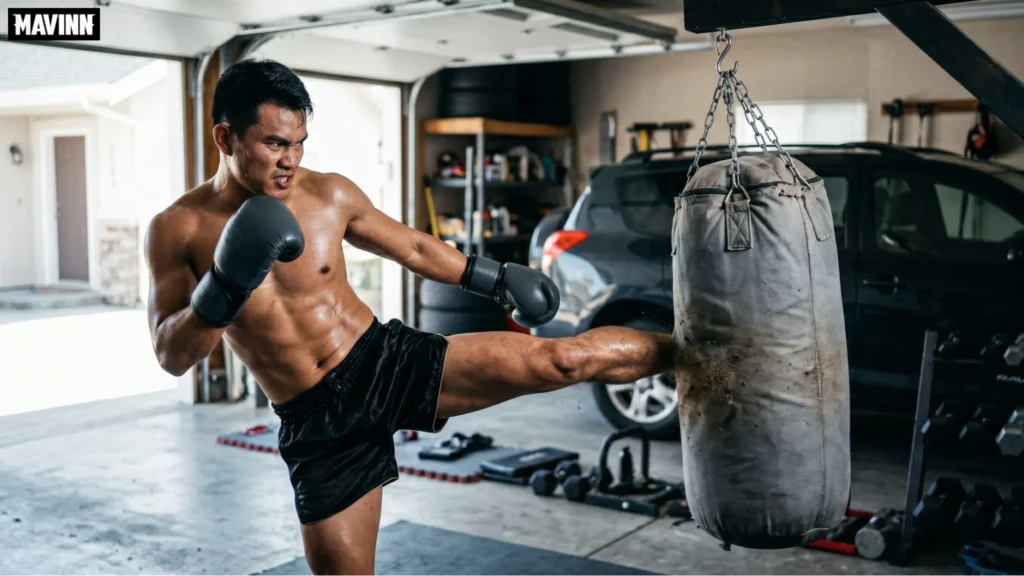
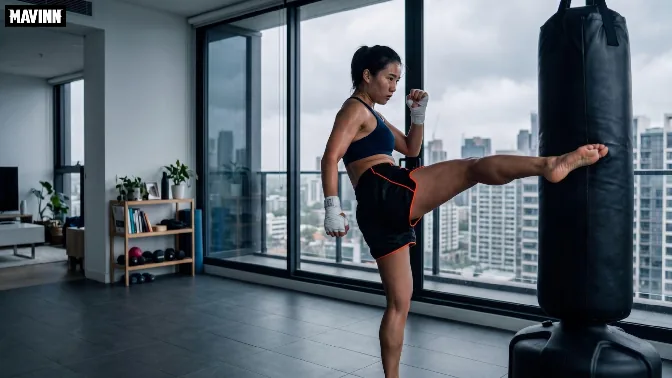
Muay thai drills on the heavy bag sharpen your rhythm and build explosive power. We focus on visual accuracy and physical impact to ensure your form remains technical.
- Power Kick Burnouts: Perform 50 consecutive mid-level heavy bag kick strikes on each leg to build hip flexor endurance.
- Shadow-to-Bag Transitions: Box the air for 30 seconds focusing on lateral footwork, then explode into a 10-second heavy bag flurry.
- Defensive Checking: Incorporate a shin block after every third strike to simulate reacting to a live counter-attacker.
Using a 130lb heavy bag provides the necessary resistance to condition your shins. Tracking your strikes per round provides a measurable benchmark for your body conditioning muay thai progress.
Simple Training Routine for Everyone
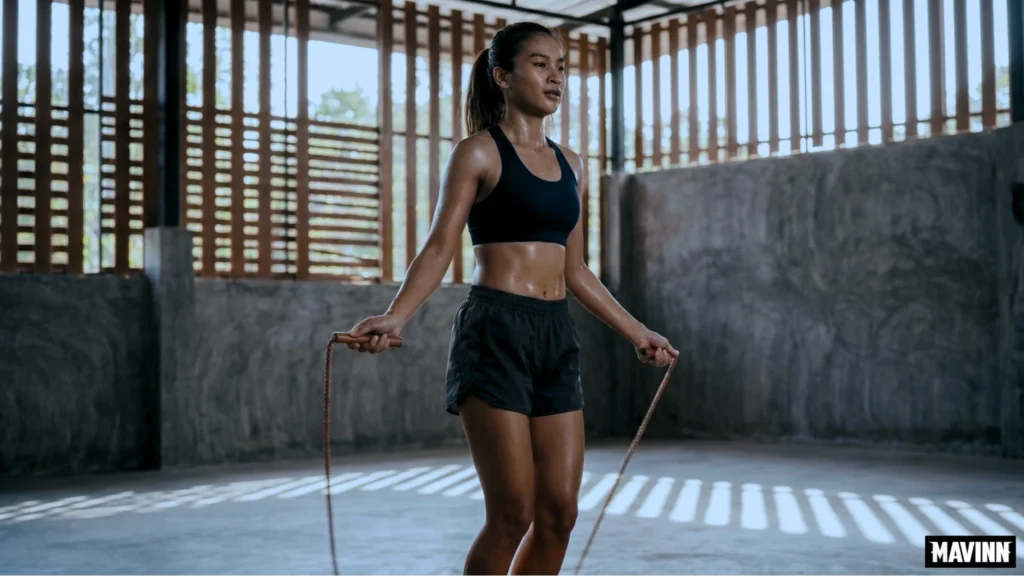
An effective thai boxing training routine starts with three rounds of skipping to elevate your heart rate and prime your calves. You then transition into shadowboxing, focusing on maintaining a high guard while executing basic jab-cross-hook combinations. Dedicate at least 15 minutes to these fundamentals to lock in your form before moving to high-impact muay thai training exercises.
Heavy bag sessions allow you to develop raw power by throwing repetitive roundhouse kicks and knees with full hip rotation. You should perform 3-minute work intervals followed by 60 seconds of active rest to mimic the metabolic demands of a real bout. Finish your workout muay thai with bodyweight conditioning like sit-ups to strengthen the core.
Best Exercises & Body Conditioning
Some of the best workouts for muay thai require a foundation of high-volume roadwork and explosive calisthenics. You must prioritize running to develop a steady aerobic base before hitting the mats. The best exercises for muay thai focus on repetitive impact and isometric strength.
- Heavy Bag Drills: Execute 100 power kicks per leg to micro-fracture and strengthen the shins safely.
- Neck Isometrics: Use resistance bands to build neck thickness for clinch control.
- Shadowboxing: Complete three 3-minute rounds with 1kg weights to improve shoulder endurance and hand speed, an excellent addition to any muay thai fitness training program.
A 30-Minute Home Training Schedule
Maximize your efficiency by structuring your muay thai program training into four distinct blocks. Focus on high-volume repetitions and short rest periods to build the specific endurance required for combat.
We recommend a 2:1 work-to-rest ratio to keep your heart rate elevated and simulate the 3-minute round pressure of a stadium fight.
| Segment | Time | Action |
|---|---|---|
| Warm-up | 5 Mins | Jump rope or freestyle shadowboxing |
| Technique | 10 Mins | 3-punch combos and defensive checks |
| Power | 10 Mins | 100 teeps and heavy bag kick reps |
| Finisher | 5 Mins | Core work and active recovery stretch |
Shadowboxing is your primary tool at home, so prioritize technical precision over raw speed. Ending the session with a high-intensity burnout of 50 consecutive knees will build the lactic acid threshold needed for your Thai kickboxing training.
Recommended Video Training & Resources
Top-tier Muay Thai training starts with access to authentic technical breakdowns from veteran fighters and championship-level coaches. We recommend utilizing muay thai training videos like the Muay Thai Library by Sylvie von Duuglas-Ittu, which archives over 160 hours of training sessions with legendary Thai masters. This resource provides a deep look into specific mechanics like the cross-body knee and traditional clinch entries.
For modern tactical drills, Liam Harrison’s Training Program offers high-definition muay thai training video modules focused on leg kicks and explosive power combinations. These platforms provide professional-grade muay thai videos training that mimics the intensity of authentic thailand muay thai training at a Bangkok gym.
If you prefer structured courses, Dynamic Striking features instructional videos from world-class fighters and coaches. These videos break down complex fight IQ into 5-minute drills you can practice solo on a heavy bag. Consistently watching high-level sparring footage from the ONE Championship archives will help you visualize timing and distance management.
Common Beginner Mistakes to Avoid
Any muay thai training beginner engaging in muay thai training for beginners often prioritizes raw power over proper mechanics, which leads to rapid fatigue and increased injury risk. One of the best tips for muay thai is to focus on weight distribution to avoid standing flat-footed.
Holding your breath during strikes is another frequent error that causes newcomers to gas out prematurely. You should practice a sharp, rhythmic exhale with every punch or kick to maintain oxygen flow to your muscles.
While you are practicing solo, keeping these basic tips for muay thai and mental muay thai sparring tips in mind will help you maintain a tight guard. Many students drop their lead hand when throwing a roundhouse kick. Keep your non-striking hand glued to your temple to protect your jaw during rotation. Developing this defensive muscle memory early is crucial for real muay thai training.
Conclusion
Muay Thai training transforms your physical conditioning while sharpening mental discipline through repetitive, high-intensity drills. Whether you are following an at home muay thai workout or utilizing a dedicated thai boxing training routine, you will build functional strength and cardiovascular endurance that far exceeds traditional gym routines. Beginners often see significant improvements in agility and core stability within the first six weeks of consistent practice.
When you muay thai train, success in this discipline requires the right balance of technical skill, patience, and consistent effort. We suggest focusing on proper shin conditioning and hip mobility to prevent common overuse injuries. Ultimately, your dedication to mastering these fundamentals through a structured home muay thai training program will determine your long-term progress and mastery of the art.