Key Takeaways
- Can You Learn Muay Thai – You can master basic strikes through digital guides, but professional coaching is essential to fix structural errors and accelerate progress significantly.
- A functional home setup requires a 6×6 foot area with high-density mats and 16oz gloves to protect your joints during high-impact drills.
- Technical mastery begins with establishing the correct Muay Thai stance, which is the foundation for all strikes in the “Art of Eight Limbs.”
- After 3 to 6 months of Muay Thai self training, transitioning to a local gym is recommended to experience live sparring and pad work.
Can you learn Muay Thai at home? Absolutely. Regardless of your fitness level or age, mastering the “Art of Eight Limbs” starts right in your living room. You don’t need a fully equipped gym; focusing on simple bodyweight mechanics like your guard, balance, and basic strikes builds the essential coordination required for the sport.
Effective learning prioritizes technical form over raw power. At MAVINN, we see that students who commit to Muay Thai training at home for beginners build excellent muscle memory for core weapons like jabs, crosses, hooks, and kicks. This early preparation ensures you can execute functional strikes effectively before ever stepping inside a professional gym.
Can You Learn Muay Thai Without a Trainer ? Realistic Expectations
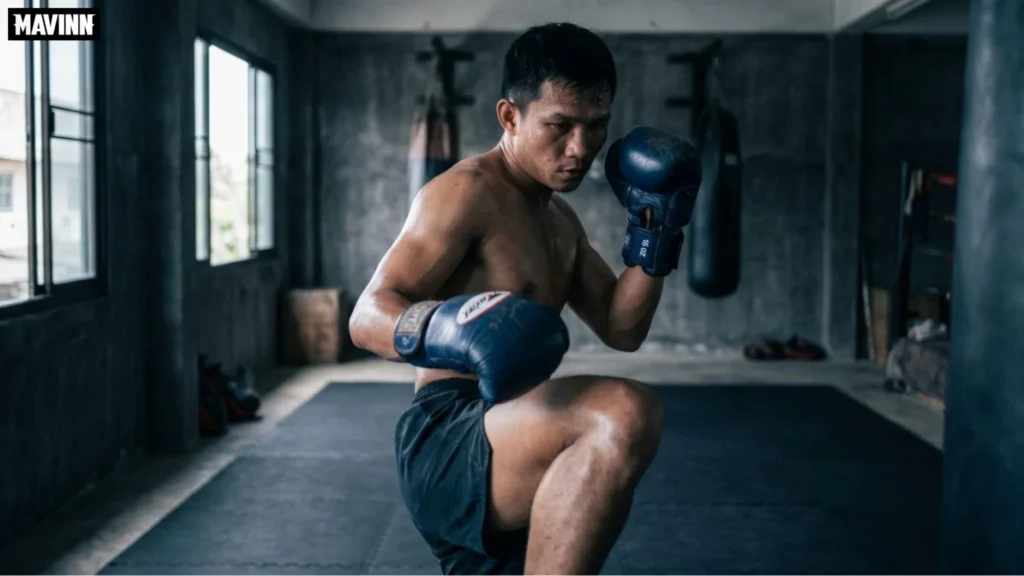
You can learn Muay Thai fundamentals independently by using high-quality digital guides to master the basic stance and “eight limbs” strikes. At MAVINN, we find that a home setup with a 6×6 foot area and a pair of 16oz gloves allows you to build significant muscle memory for jabs, crosses, and knee strikes. However, solo training cannot replicate the real-time structural corrections a coach provides to ensure your weight distribution and guard remain tactically sound.
Expect to make incredible progress in your first 3 to 6 months of Muay Thai self training. You will develop speed, endurance, and proper form. Yet, to avoid hitting a technical ceiling, acknowledge that a heavy bag will never hit back. Use this solo period to perfect your mechanics, knowing that live feedback from a trainer will eventually be the next logical step in your martial arts journey.
Setting Up Muay Thai Training at Home for Beginners
You can build a functional foundation for muay thai training at home for beginners by prioritizing a clear training zone and essential protective gear. We recommend a minimum 6×6 foot area with non-slip flooring or mats to prevent joint injuries during high-impact pivot movements. Proper hand protection starts with 180-inch hand wraps and 14oz or 16oz gloves to maintain wrist alignment while hitting a heavy bag.
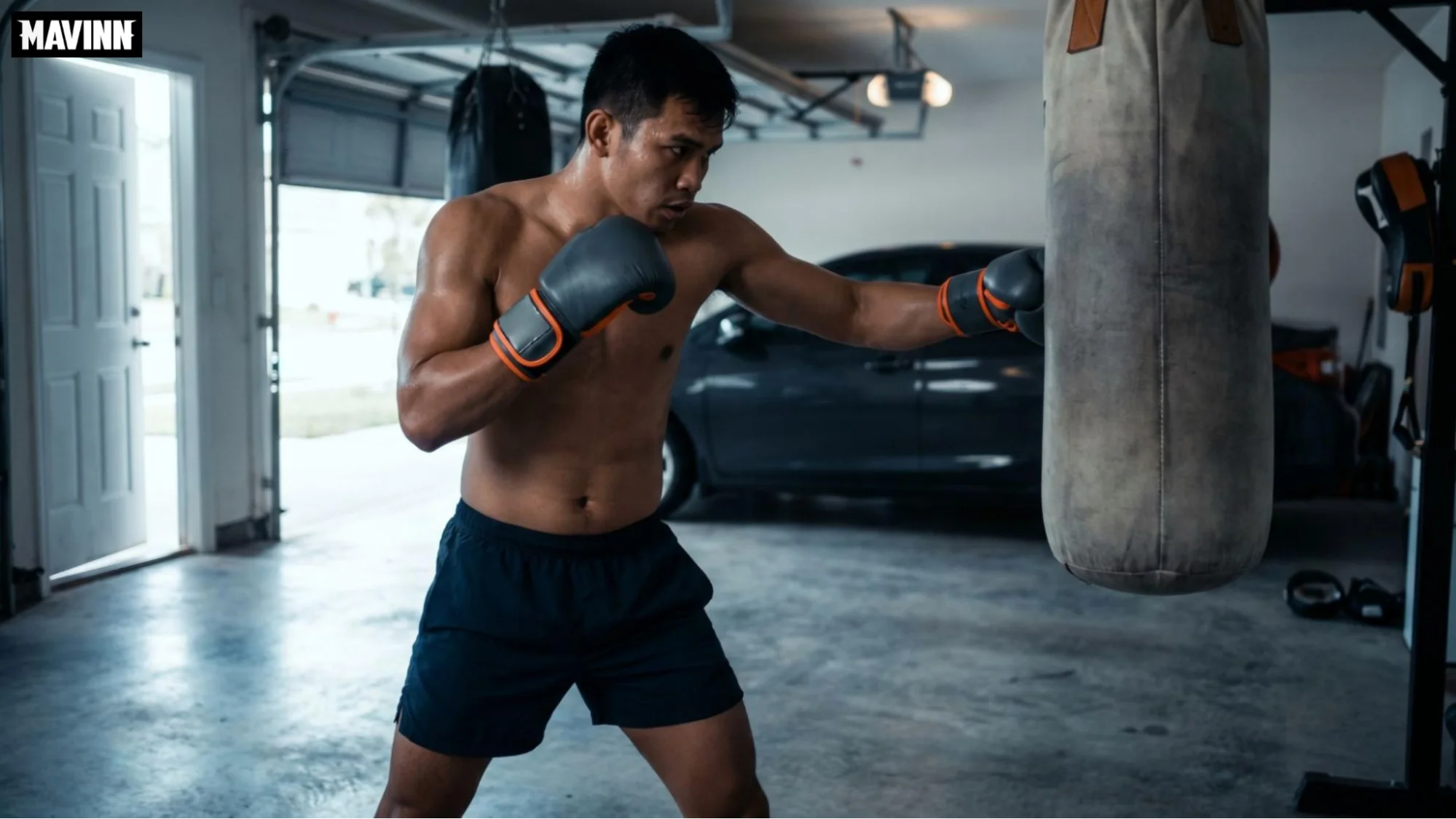
A high-quality heavy bag, preferably a 6-foot banana bag, allows you to practice low kicks and knee strikes with full extension. If ceiling mounting is not an option, a sturdy free-standing bag provides the necessary resistance for power development and conditioning. Beginners should integrate full-length mirrors to monitor their stance and ensure the long guard stays tight during defensive drills.
Essential gear for your Muay Thai workouts
While you can start with nothing, investing in basic gear will elevate your Muay Thai workouts significantly. Quality equipment safeguards your body and allows you to train harder and longer.
- 14oz or 16oz gloves and 180-inch hand wraps: Essential to protect your knuckles and stabilize your wrists during repetitive impact.
- A 6-foot banana bag: If space allows, this heavy bag lets you practice the full range of strikes, from high kicks to low shin kicks.
- A weighted jump rope: Crucial for building calf endurance and the rhythmic footwork required for effective Muay Thai workouts.
- Full-length mirror: A simple mirror is one of the best tools for solo practitioners to monitor their guard and posture.
Step 1 Can You Learn Muay Thai Basics ? Start with the Correct Muay Thai Stance
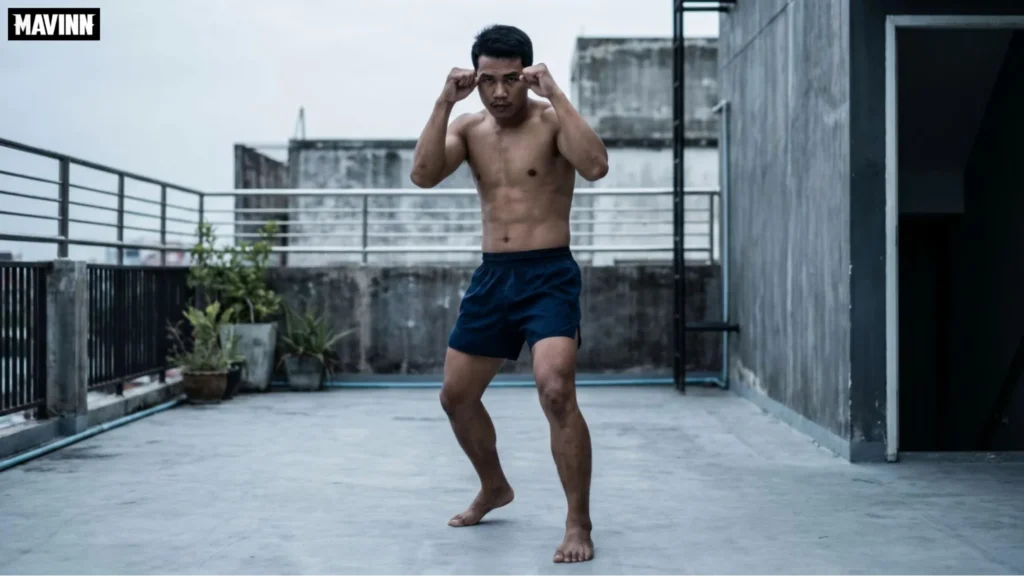
You can learn Muay Thai basics at any fitness level, but you must prioritize a rock-solid stance to avoid early injury or bad habits. This foundation acts as your primary defense and the launchpad for every strike in your arsenal. A weak stance results in losing balance after a single roundhouse kick, effectively neutralizing your offensive capabilities.
Position your feet shoulder-width apart and step forward with your lead leg while keeping your hips squared to your target. Keep your back heel slightly elevated to stay “springy,” which allows for immediate movement in any direction. Professional fighters maintain a weight distribution of roughly 50/50 to ensure they can lift the lead leg instantly to check incoming low kicks.
Raise your hands to eyebrow height with your palms facing inward to shield your temples and jaw. Tuck your chin toward your chest to minimize the target area for counter-punches and elbows. We recommend practicing this position in front of a mirror for three-minute intervals to build the necessary calf and shoulder endurance.
Step 2 Essential Strikes for Your Muay Thai Self Training
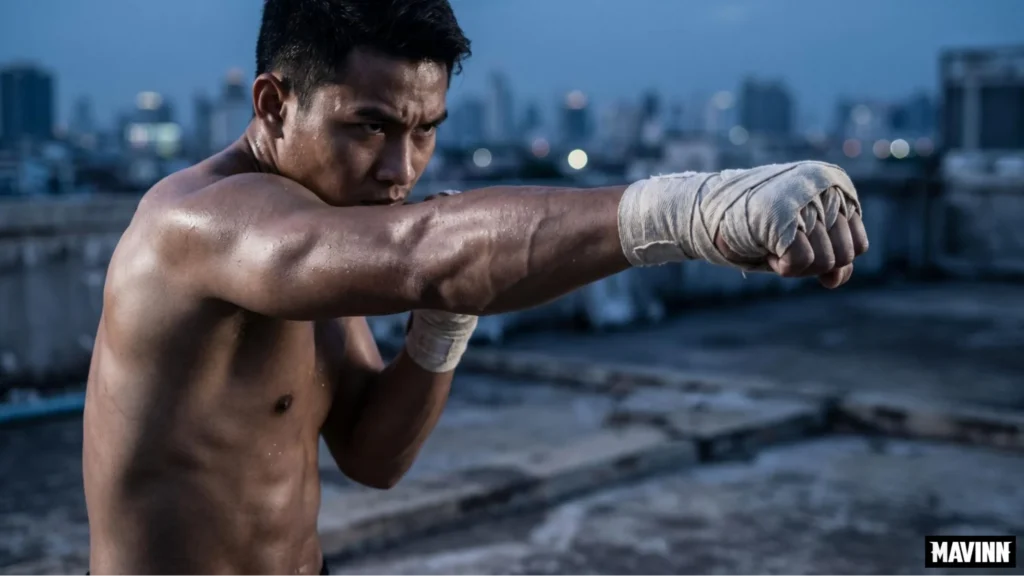
Mastering the fundamental strikes of Muay Thai requires you to focus on the “Art of Eight Limbs”—punches, elbows, knees, and kicks. You should start with the straight punch (jab/cross) and the roundhouse kick, as these form the backbone of your offensive arsenal. Prioritize hip rotation over raw power to ensure your shins and knuckles land with maximum impact without compromising your balance.
Integrate close-range weapons like the horizontal elbow and the spearing knee to round out your self-training routine. These strikes require a tight guard and explosive core engagement to generate force from a stationary position. Film your sessions to fix common errors, like dropping your lead hand or failing to pivot, while practicing for at least 30 minutes daily.
How to throw a proper jab and cross
Throwing a proper jab and cross requires a stable base where power originates from your legs and hips rather than just your shoulders. Your jab serves as a range-finder to measure distance, while the cross acts as your primary power strike through a full weight transfer.
1. Snap your lead hand out straight from your chin while rotating your wrist so your knuckles land flat.
2. Step forward with your lead foot simultaneously to add momentum and close the distance.
3. Pivot your rear foot and turn your hip forward as you launch the cross in a straight line.
4. Retract each hand back to your face instantly to maintain your guard.
Keep your chin tucked behind your punching shoulder to protect your jaw from counter-strikes. Exhale sharply on every impact to brace your core and stabilize your rotational force. Professional strikers focus on landing with the first two knuckles to ensure maximum structural integrity and prevent hand injuries.
Learning the power of the roundhouse kick
The Muay Thai roundhouse kick generates devastating power by using your entire body weight as a projectile rather than relying on isolated leg muscles. You swing your leg like a baseball bat, making contact with the lower third of your shin to prevent injury to the foot. Pivoting your standing foot at least 90 degrees away from the target is the essential trigger that unlocks full hip rotation.
Maximize torque by stepping diagonally off the center line at a 45-degree angle before launching the strike. Swing your same-side arm down in a whipping motion to create a counter-force that accelerates your torso through the arc. Most elite gyms require students to land high-volume kick repetitions per week on heavy bags to build the necessary bone density.
Speed requires relaxation, so keep your kicking leg heavy and loose until the split second before impact. Stiffening your muscles too early acts as a mechanical brake and alerts your opponent to the incoming strike. A correctly executed kick should land with a loud, heavy “thud” that indicates the force has penetrated through the target’s core.
Basic elbow and knee strikes for beginners
You can learn Muay Thai’s signature close-range weapons by mastering the horizontal elbow and the straight knee first. These strikes define the “Art of Eight Limbs” and require you to drive your hips forward to generate power rather than just swinging your limbs. Beginners must keep their guard high and hands open near the temple to protect against counter-strikes in the short-range impact zone.
1. Horizontal Elbow: Target the brow or temple using the sharpest part of your ulna bone to maximize impact.
2. Straight Knee: Thrust the knee upward into the solar plexus while pulling the opponent’s guard down for leverage.
3. Diagonal Elbow: Cut downward at a 45-degree angle to bypass gloves and target the opponent’s jawline.
Effective power comes from rotational torque and skeletal alignment rather than raw muscle strength. We recommend pivoting your lead foot during an elbow strike to increase speed and prevent unnecessary knee strain. Always point your toes down during knee strikes to tighten the quadriceps and calves, ensuring a rock-solid striking surface.
Step 3 How to Train Muay Thai at Home A Simple Daily Routine
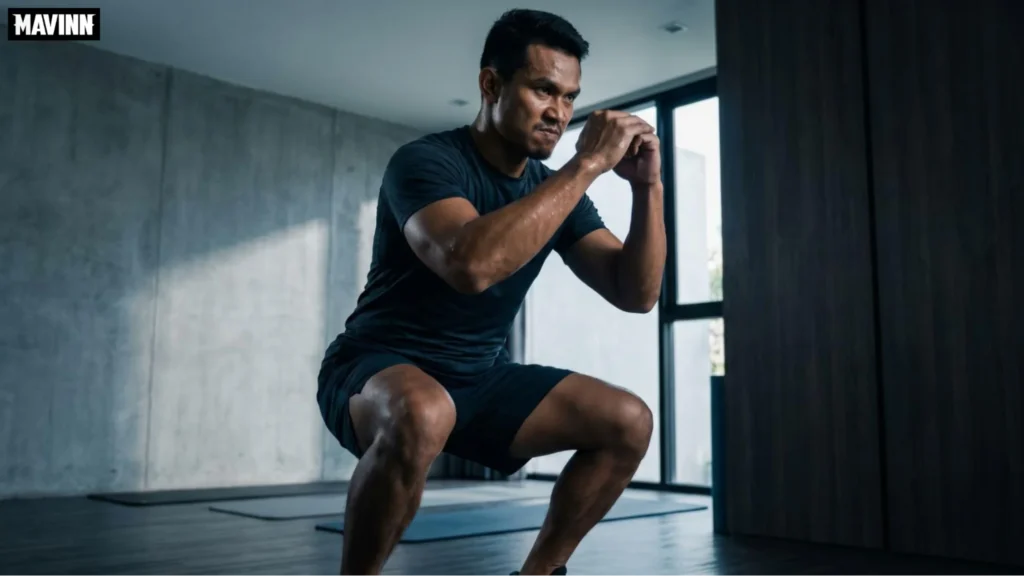
You can build a functional foundation for Muay Thai at home by dedicating 30 to 45 minutes daily to fundamental movement and conditioning. Start with shadowboxing to sharpen your balance and ensure your weight remains centered between your feet. Focusing on technical precision during these rounds prevents the development of bad habits that often occur when training without a partner.
Integrate specific drills like 50 repetitions of mid-level kicks on an imaginary target to build hip flexibility and leg endurance. You should also incorporate explosive movements like burpees or mountain climbers to simulate the high-intensity bursts of a real fight. This method ensures your cardiovascular system adapts to the unique rhythm of eight-limb combat.
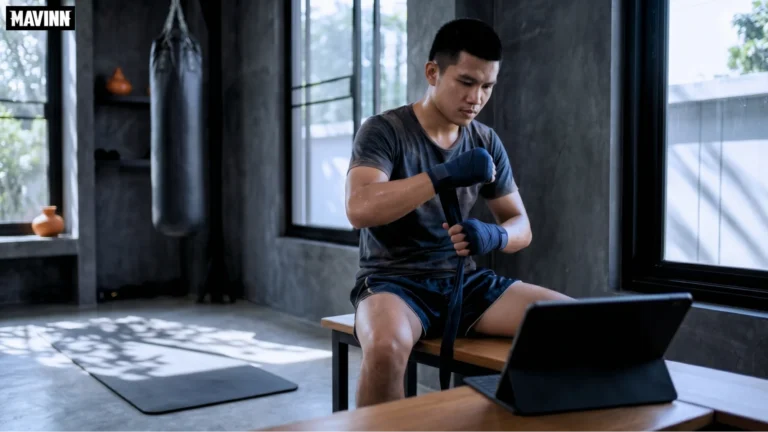
Conclude every session with core-focused movements like sit-ups or leg raises to stabilize your torso for better striking leverage. Filming your movements on a smartphone allows you to self-correct your form against professional footage. Consistent repetition of these basics is the most effective way to ensure you can learn Muay Thai effectively in a solo environment.
Starting with a Muay Thai Workout Without Equipment
A Muay Thai workout without equipment is highly effective for building technique and cardio. You can start Muay Thai with zero equipment by focusing on shadowboxing, footwork, and bodyweight conditioning. Shadowboxing builds essential muscle memory for the basic four strikes—jabs, crosses, hooks, and kicks—without requiring a heavy bag or pads. We recommend practicing in front of a mirror to ensure your guard stays high and your chin remains tucked during every rotation.
1. Footwork drills (moving in all four directions while maintaining a balanced 45-degree stance).
2. Shadowboxing (focusing on rotating the hips and pivoting the lead foot for power).
3. Bodyweight conditioning (explosive squats and core work to prepare for clinch strength).
Technical mastery starts with your stance, where you maintain a roughly even 50/50 weight distribution to stay ready for offensive or defensive movements. This balance allows you to check incoming low kicks instantly or pivot for a powerful roundhouse strike. Dedicate at least 20 minutes daily to these movement patterns to build the coordination necessary before investing in your first pair of 16oz gloves.
Using shadowboxing to perfect your form
Shadowboxing is the most effective method for building muscle memory because it forces you to focus on balance and body mechanics without the distraction of a physical target. When you strip away the heavy bag, you can feel exactly where your center of gravity shifts during a rear roundhouse kick. Using this tool is how you ensure you can learn Muay Thai fundamentals effectively, as it highlights whether your lead hand stays high to protect your jaw during a cross.
We suggest performing your shadowboxing rounds at half-speed to identify micro-errors in your footwork and hip rotation. This slower pace allows you to verify that your feet aren’t squaring up and that your weight remains on the balls of your feet. Professional nak muays often finish their sessions with three rounds of shadowboxing specifically to reset their form after heavy bag work has fatigued their muscles.
Can You Learn Muay Thai Faster ? Choosing a Muay Thai Home Study Course
Yes, you can learn Muay Thai faster by using a muay thai home study course to master technical nuances outside of gym hours. While nothing replaces live sparring, digital programs allow you to repeat specific movements like the 45-degree roundhouse kick until they become instinctive. This focused repetition builds the muscle memory needed to execute strikes with professional-grade speed and precision.
Select a course based on these high-performance criteria:
- Instruction from fighters with verified Lumpinee or Rajadamnern stadium experience.
- Multiple camera angles to show foot placement and hip rotation clearly.
- Specific modules dedicated to defensive footwork and clinch entry.
Integrate thirty minutes of home study three times per week to refine your shadow boxing and balance. This structured approach helps bridge the gap between “knowing” a move and “applying” it during high-intensity sessions. Most elite practitioners use these digital resources to study the striking mechanics of top-tier nak muay.
Common Mistakes When Figuring Out How to Self Train Martial Arts
The biggest mistake when asking “Can you learn Muay Thai” at home is training without a feedback loop, which leads to ingrained bad habits that are difficult to fix. Without a coach to correct your hip rotation or guard, you risk developing “ghost” techniques that lack power and leave you vulnerable. We suggest filming your sessions and comparing your form to elite strikers like Superbon to identify technical gaps.
Common errors to watch for include:
- Skipping shadowboxing and footwork drills to focus solely on hitting bags.
- Practicing strikes without maintaining a tight defensive guard.
- Neglecting the 30-minute daily mobility work required to throw high kicks safely.
Training on unforgiving surfaces or skipping hand wraps often leads to avoidable wrist and shin injuries. You need at least a 100lb heavy bag and proper hand protection to build the necessary bone density without breaking your tools. Focus on mastering the basic teep and switch-kick before attempting complex spinning maneuvers.
When is the Right Time to Move from Muay Thai Workouts at Home to a Gym ?
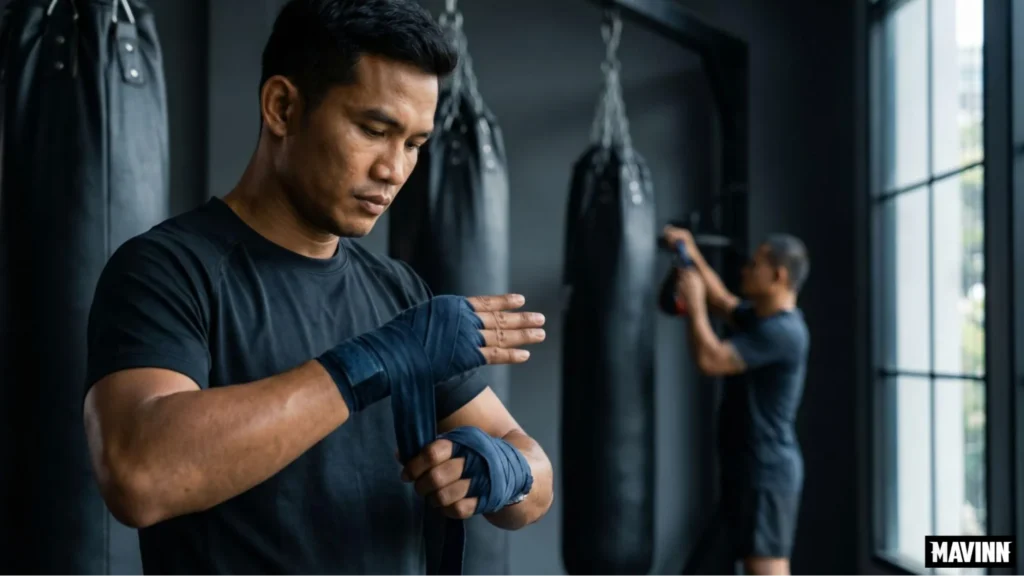
Transition to a professional gym as soon as your basic movements feel fluid and you require real-time technical correction to progress. While you can learn Muay Thai fundamentals solo, you need a coach to identify subtle flaws in your stance that cause power leakage. Most practitioners find this shift necessary after 3 to 6 months of consistent home practice to maintain a steep learning curve.
You need a gym environment once your training requires a partner for clinching, active pad work, and live sparring drills. Proper gyms provide the resistance and unpredictable movement necessary to sharpen your timing against a moving target.
Watch for these specific indicators that it is time to join a local camp:
- Hitting a plateau in your striking speed or power.
- Feeling “stale” or bored during your solo heavy bag sessions.
- Needing a partner to practice clinching and defensive parries.
- Wanting professional feedback on your roundhouse kick trajectory.
Conclusion
So, can you learn Muay Thai at home? The answer is a resounding yes. By dedicating time to the fundamentals—perfecting your stance, practicing your basic strikes, and utilizing tools like shadowboxing and video analysis—you can build a formidable martial arts foundation.
Remember that patience and consistency are your greatest allies. Focus on mastering your body mechanics before worrying about power. Whether your goal is self-defense, incredible cardiovascular fitness, or preparing to eventually join a local camp, starting your training at home empowers you to take control of your martial arts journey today.