
Key Takeaways
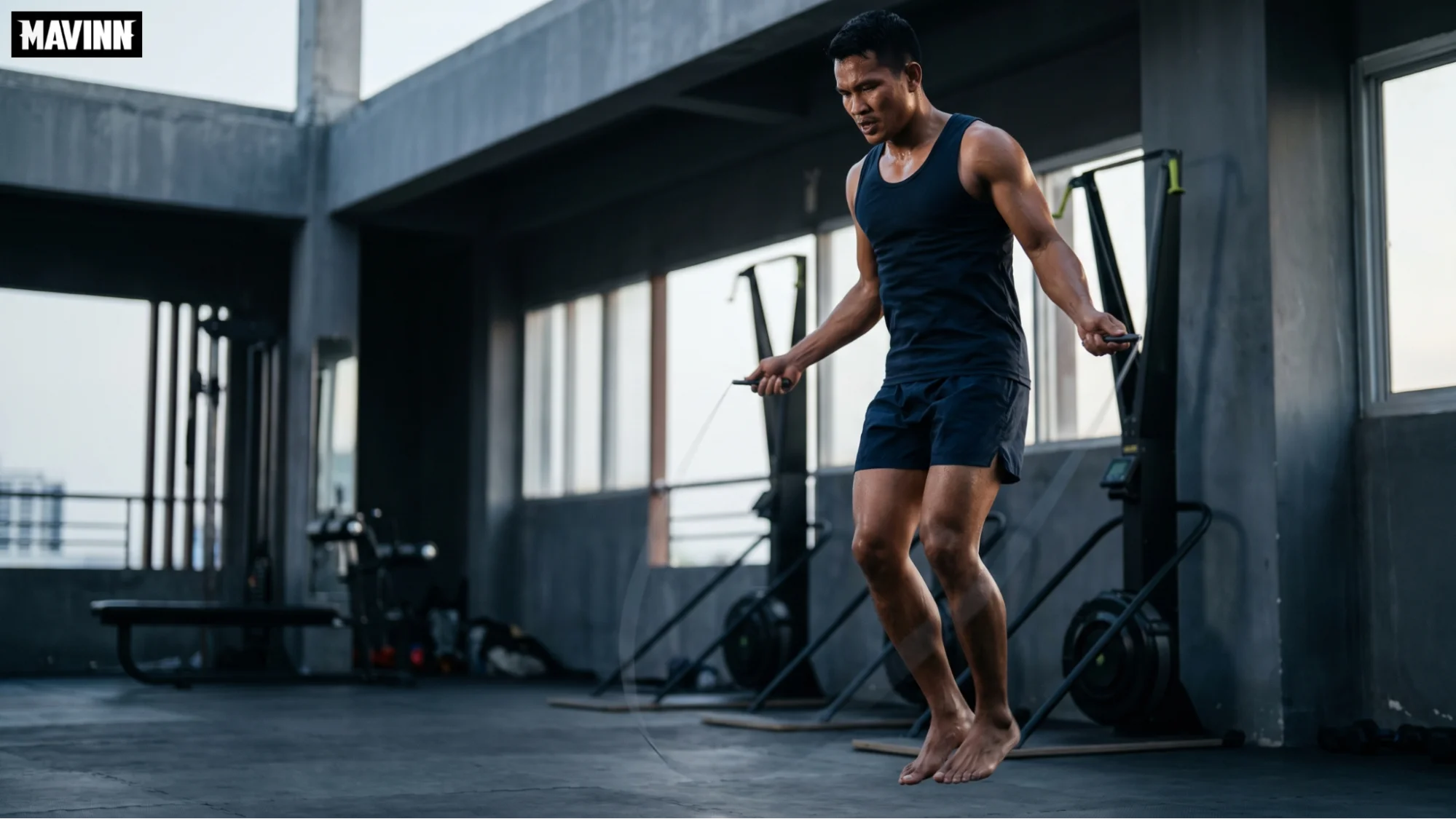
- Jump Rope Workout – This high-intensity tool builds the explosive endurance and agile footwork required for elite combat sports while sharpening rhythm for fluid movement.
- Skipping burns up to 1,000 calories per hour, proving more time-efficient for fat loss and metabolic conditioning than traditional steady-state jogging.
- Maximize efficiency by landing on the balls of your feet with one-inch ground clearance to protect joints and increase rotational speed.
- Longevity in training depends on using rubber mats and footwear with lateral stability to absorb impact and prevent common injuries like shin splints.
A jump rope workout is the ultimate tool for building cardiovascular endurance, burning up to 1,000 calories per hour, and sharpening footwork. Whether you are a total beginner looking to lose weight or a fighter priming for the ring, skipping outperforms traditional jogging by engaging your entire body and improving coordination under fatigue.
To maximize your results safely, mastering the fundamentals is key. At MAVINN, we treat skipping as a core discipline for developing explosive stamina. With our essential skipping tips, you will quickly transition from a basic bounce to an intense fat-burning routine, building lower-body strength without unnecessary joint strain.
Why a Jump Rope Workout is a Game Changer for Fitness
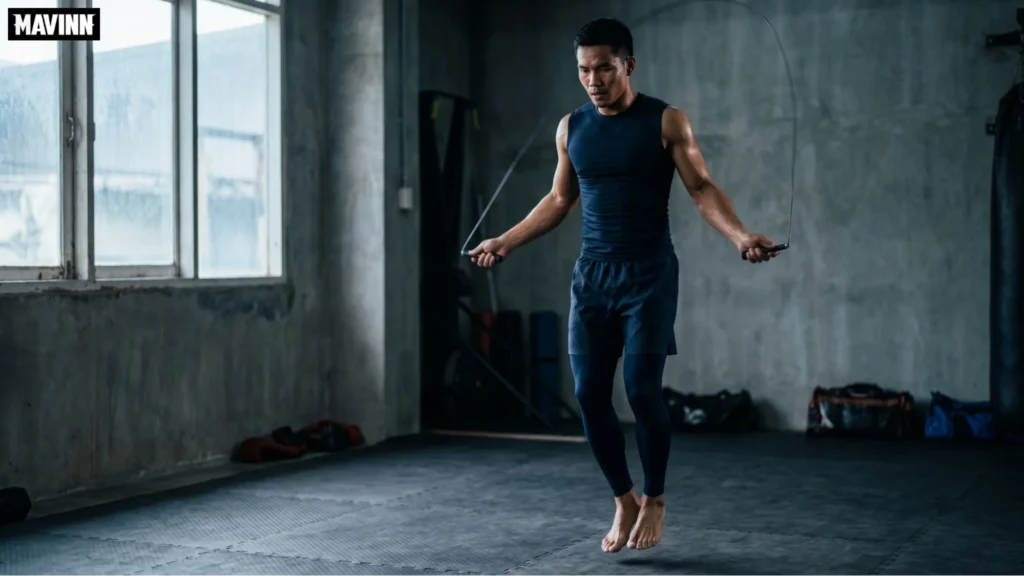
A jump rope workout delivers higher metabolic demand than almost any other steady-state cardio, burning up to 1,000 calories per hour. You build explosive power in your calves and shoulders while sharpening the footwork essential for high-level Muay Thai or boxing. This efficiency means ten minutes of jumping can match the cardiovascular impact of a thirty-minute run at a moderate pace.
Beyond fat loss, you develop the rhythm required to time strikes and evade opponents in the ring. We see professional fighters use this tool to synchronize hand-eye coordination with fast-twitch muscle activation in the lower body. High-intensity intervals with a heavy rope specifically increase grip strength and forearm endurance needed for clinching.
You can execute a complete session in a small street corner or a crowded gym without needing heavy machinery. Unlike stationary bikes, ropes force you to maintain total body tension, which strengthens your core and stabilizes your ankles against injury. Consistent practice improves bone density in the lower legs, providing the structural integrity required for heavy sparring sessions.
Health Benefits: Weight Loss, Heart Health, and Joint Impact
A jump rope workout burns between 10 to 16 calories per minute, outperforming steady-state jogging for rapid fat loss. We use these high-intensity intervals to spike your heart rate, which strengthens the cardiac muscle and builds the endurance required for three-minute combat rounds. Consistent training can meaningfully improve your cardiovascular VO2 max within a few weeks of structured intervals.
Proper jumping technique is lower impact than running because you land on the balls of your feet to absorb shock naturally. This vertical loading strengthens the connective tissues in your ankles and calves, protecting you against common strains and sprains. Keep your feet close to the floor—clearing the ground by just one inch—to maximize efficiency while minimizing joint stress.
How to Choose the Right Gear for Your Jump Rope Workout

You must match the rope material and weight to your specific conditioning goals to maximize your jump rope workout results. Combat athletes should prioritize 5mm PVC ropes for balanced feedback or weighted cables to build explosive shoulder endurance. This setup allows you to maintain a steady rhythm while developing the heavy-hand stamina needed for long rounds in the ring.
Your choice of footwear dictates how long your joints can handle high-impact sessions on concrete or gym mats. Avoid running shoes with high heel-to-toe drops because they lack the lateral stability required for complex footwork and quick transitions. Look for cross-trainers or boxing shoes that offer a low profile and reinforced midfoot support to protect your arches during intense double-under sets.
| Rope Type | Best For | Material |
|---|---|---|
| Speed Rope | Double-unders & Speed | Coated Wire |
| PVC Rope | Freestyle & Rhythm | 5mm Solid PVC |
| Weighted Rope | Power & Endurance | Heavy PVC or Braided |
The surface you jump on is the final piece of gear that determines your longevity in the sport. Hard concrete increases the risk of shin splints, so we recommend using a high-density rubber mat to absorb impact. A quality mat not only protects your joints but also extends the life of your rope by preventing the outer coating from fraying on abrasive ground.
Finding the Perfect Rope Length for Your Height
To find the correct rope length, stand on the center of the cable with one foot and pull the handles straight up toward your shoulders. For a standard jump rope workout, the tips of the handles should reach your armpits. This length provides enough clearance to avoid tripping while maintaining a consistent rhythm during high-intensity intervals.
Experienced fighters and speed jumpers often shorten their ropes so the handles reach the mid-chest area. A shorter rope minimizes excess slack, allowing for faster rotations and more efficient double-unders during training. If the rope consistently hits your feet or drags too much on the floor, shorten it by one inch at a time to find your sweet spot.
| Your Height | Recommended Rope Length |
|---|---|
| 5’0″ – 5’4″ | 8’0″ |
| 5’5″ – 5’9″ | 8’6″ |
| 5’10” – 6’2″ | 9’0″ |
| 6’3″ and taller | 9’6″ |
Speed Ropes vs. Heavy Ropes for Your Goals
Choose speed ropes to maximize agility and footwork speed, while heavier ropes are designed to build raw power and shoulder endurance. Speed ropes use thin cables to allow for high-repetition double-unders and rapid-fire intervals. These tools are essential for fighters who need to sharpen their fast-twitch muscle fibers.
| Feature | Speed Ropes | Heavy Ropes |
|---|---|---|
| Primary Goal | Velocity & Agility | Power & Muscle Endurance |
| Cable Weight | 50g – 150g | 400g – 1kg+ |
| Target Areas | Calves & Cardio | Shoulders, Forearms, Core |
| Best For | Double-unders & Footwork | Combat Conditioning & Fat Loss |
Heavy ropes provide the high-intensity resistance needed to develop the functional strength used in Muay Thai and boxing clinches. By increasing the weight of the cable, you force your core and forearms to stabilize every rotation, significantly increasing your caloric burn. We suggest using a 1lb heavy rope for 3-minute rounds to simulate the physical demand of a professional fight.
How to Start a Jump Rope Workout Proper Form & Technique

Proper jump rope form requires a relaxed, upright posture with your gaze fixed forward and elbows tucked tight to your ribs. Most beginners swing their entire arms, but elite fighters generate power solely from quick wrist rotations. Keep your knees slightly bent to absorb impact and ensure you land exclusively on the balls of your feet.
You only need to clear the ground by about one inch to maintain a sustainable rhythm. Excessively high jumps waste energy and increase the risk of shin splints or joint fatigue during high-intensity rounds. We recommend a jump rope length that reaches your armpits when standing on the center of the cable.
Integrating a jump rope workout into your boxing or Muay Thai routine builds the footwork and calf endurance necessary for 3-minute rounds. Focus on a steady “bounce” rather than a double-jump to mimic the movement patterns used in the ring. Professional boxers often maintain a pace of 120 to 140 RPM to sharpen their fast-twitch muscle fibers.
Quick Warm Up to Prevent Foot and Knee Injuries
You must activate the stabilizer muscles in your feet and the connective tissue around your knees to withstand the repetitive impact of a jump rope workout. Skipping this step forces cold tendons to absorb 100% of the landing force, which often leads to common injuries like plantar fasciitis or shin splints. Start with 20 controlled ankle circles in each direction followed by 15 slow calf raises to prime the lower leg.
1. Pogo Hops: Perform 30 seconds of low-intensity vertical hops without a rope to wake up your Achilles tendons.
2. Lateral Leg Swings: Swing each leg 10 times across your body to open the hips and stabilize lateral knee support.
3. Toes-to-Heels Rocking: Rock from your heels to the balls of your feet for 60 seconds to lubricate the ankle joints.
These movements increase blood flow specifically to the lower kinetic chain to ensure your joints are resilient before you add the rope. A 5-minute window for these movements noticeably reduces post-training soreness.
Perfecting Your Posture and Breathing Correctly
Maintain a neutral spine with your head up and gaze fixed forward to keep your airway open and your balance centered. Keep your elbows tucked tightly to your ribs and use only your wrists to rotate the cable, preventing shoulder fatigue during long sets. Stay on the balls of your feet with a slight bend in your knees to absorb impact, protecting your joints while building explosive calf power.
Inhale and exhale through your nose to maintain a steady heart rate and avoid the gasping that leads to early burnout. Match your breathing to your skipping rhythm, such as exhaling every two or three rotations, to sync your cardiovascular system with your movement. Professional fighters use this rhythmic breathing to stay calm under pressure, ensuring they have enough oxygen for 12 rounds of high-intensity work.
Pro Skipping Tips to Avoid Common Mistakes

Maximize your jump rope workout by prioritizing minimal ground clearance and keeping your movements tight. High jumps waste energy and increase the impact on your shins, which often leads to stress fractures during heavy training weeks. Professional boxers keep their feet just one inch off the floor to maintain the endurance needed for 12-round sessions.
Your wrists must drive the rope’s rotation rather than your entire arm or shoulder. Flailing your arms disrupts your balance and causes the cable to catch on your heels, breaking your metabolic flow. Keep your elbows tucked close to your ribs and use a flicking motion that generates enough speed to clear a 5mm high-speed PVC rope.
Skip on impact-absorbing surfaces rather than concrete to protect your joints and extend the life of your gear. Hard surfaces provide zero shock absorption, which frequently triggers shin splints during high-intensity intervals. Using a dedicated rubber mat or a sprung wooden floor noticeably reduces the vertical impact force on your ankles.
Stop Jumping Too High & Getting Tired Too Fast
You only need to clear the rope by about one inch to maximize your jump rope workout efficiency. Jumping higher than necessary wastes explosive energy and increases joint impact, which quickly fatigues your calves and lungs. Beginners often jump 3-4 inches high, causing their heart rate to spike before they even finish their first three-minute round.
Keep your knees slightly bent and stay strictly on the balls of your feet to mimic active combat footwork. Drive the rope rotation using only your wrists while keeping your elbows tucked tight against your ribs. This mechanical efficiency allows you to maintain a steady pace of around 120 to 140 RPM without prematurely burning out your shoulders.
Fun Tricks to Keep Your Workout Exciting and Fresh
Elevate your jump rope workout by incorporating combat-specific footwork like the Boxer Skip or lateral hops to mimic ring movement. We suggest rotating through different rope weights—switching from a 1lb weighted rope to a PVC speed rope forces your muscles to adapt to varying tempos. This prevents plateaus and keeps your coordination sharp for Muay Thai or boxing drills.
Try these high-skill tricks to break the monotony:
- Double Unders: Rotate the rope twice per jump to spike your heart rate.
- Cross-Overs: Cross your arms at the midline to improve hand-eye coordination.
- Side Swings: Use these as active recovery to maintain momentum without jumping.
Boost intensity by using an EMOM (Every Minute on the Minute) protocol for ten minutes. Complete 40 double unders at the start of every minute, using the remaining time to rest or shadowbox. This structure ensures you maintain a high work rate while sharpening the explosive power needed for a 3-minute round.
Best Jump Rope Workout Routines for Beginners
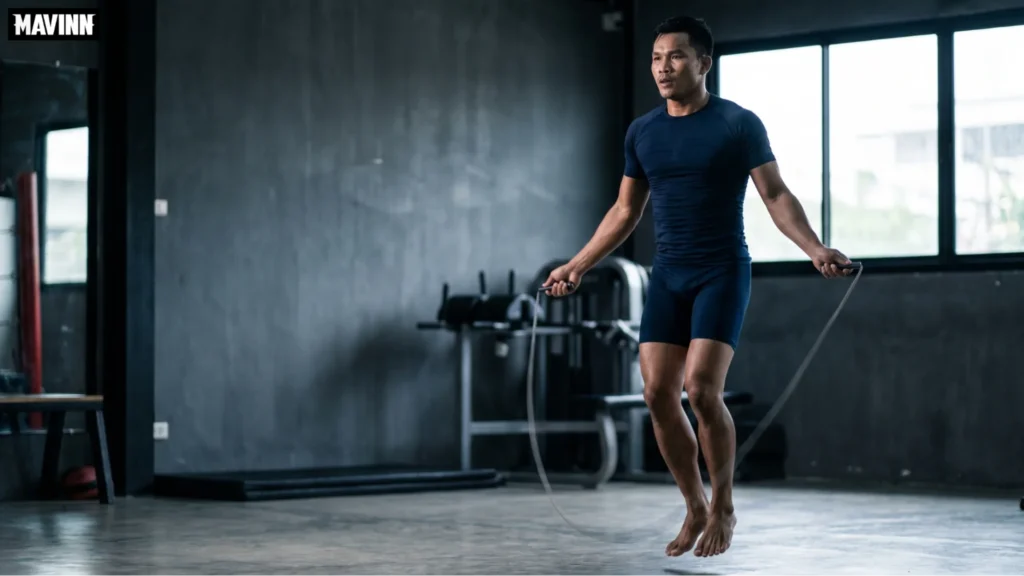
The most effective jump rope workout for beginners utilizes 30-second work intervals paired with 60-second rest periods to build foundational endurance without risking early burnout. You must focus on the basic bounce by keeping your jumps low—no more than an inch off the ground—while keeping your elbows tucked tightly into your ribs. This mechanical focus ensures your wrists do the heavy lifting, which mimics the energy efficiency required for long rounds in a boxing ring.
Once you can clear the rope consistently, transition to the “Boxer Skip” by shifting your weight from one foot to the other in a rhythmic, low-impact shuffle. We suggest keeping your total workout time under 15 minutes during the first two weeks to allow your tendons and calves to adapt to the high-impact stress. This gradual progression prevents common overuse injuries like shin splints while sharpening the footwork agility essential for high-level combat sports.
| Level | Interval Split | Training Focus |
|---|---|---|
| Foundation | 30s Work / 60s Rest | Rhythm & Timing |
| Progression | 45s Work / 45s Rest | Aerobic Capacity |
| Performance | 60s Work / 30s Rest | Combat Conditioning |
Beginner Skipping Schedule for the First 30 Days
Your first 30 days must focus on building lower-body durability and rhythm through 10-to-15 minute interval sessions to prevent common injuries like shin splints. We suggest starting with just three sessions per week to allow your tendons and calves to adapt to the repetitive impact. Focus on staying on the balls of your feet and keeping your jumps less than one inch off the ground to maximize efficiency and speed.
| Phase | Frequency | Daily Routine Structure |
|---|---|---|
| Week 1-2 | 3 Days/Week | 10 mins total (30s jump / 30s rest) |
| Week 3 | 4 Days/Week | 15 mins total (45s jump / 15s rest) |
| Week 4 | 5 Days/Week | 20 mins total (Steady state jumping) |
By the third week, your connective tissues are conditioned for increased intensity and significantly shorter recovery periods. You should incorporate the boxer skip into your routine to shift weight between feet, which mimics the fluid movement required in Muay Thai or boxing. Complete the month by aiming for a 15-minute continuous jump session to establish a solid cardiovascular baseline for advanced combat training.
15 Minute HIIT Jump Rope Session for Busy Days
A 15-minute HIIT jump rope workout maximizes cardiovascular output by alternating between 100% maximum effort bursts and brief recovery periods. This specific structure triggers the afterburn effect, keeping your metabolic rate elevated for hours post-training. We recommend a 2:1 work-to-rest ratio to maintain high intensity without compromising your form or footwork.
Follow this high-intensity sequence to build explosive power and stamina:
1. Warm up with a steady, moderate-pace basic bounce for 3 minutes.
2. Perform 10 rounds of 45 seconds of high-intensity “sprints” followed by 15 seconds of rest.
3. Cool down with 2 minutes of light stretching and slow-paced jumping.
Jump Rope Conditioning for Muay Thai Athletes
Jump rope conditioning builds the specific calf endurance and rhythmic timing you need to maintain a fighting stance through five high-intensity rounds. This steady-state “bounce” trains your lower leg muscles to absorb impact while developing the fast-twitch fibers required for explosive switch kicks. Traditional Thai camps often start every training session with 20 to 30 minutes of continuous skipping to harden the shins and feet.
A standard jump rope workout for combat athletes should focus on intervals that mirror the duration of a professional fight:
1. Perform 3-minute rounds of high-intensity skipping with minimal foot-to-ground contact time.
2. Incorporate “sprints” using high knees or double-unders during the final 30 seconds of every round.
3. Rest for exactly 60 seconds between sets to simulate standard corner breaks.
Skipping vs Running: Which is Better for Weight Loss?

Jump rope workouts burn more calories per minute than running, making them the most efficient tool for rapid weight loss and metabolic conditioning. While a steady run burns roughly 10 calories per minute, a high-intensity jump rope session can torch 15 to 20 calories in the same timeframe. This efficiency is why we prioritize the rope for athletes who need to drop weight while maintaining explosive power.
| Feature | Jump Rope Workout | Running |
|---|---|---|
| Calories per Hour | 600–1,000+ | 500–800 |
| Primary Focus | Speed, Agility, Power | Aerobic Endurance |
| Muscle Engagement | Full Body (Arms, Core, Legs) | Lower Body (Glutes, Quads) |
| Impact Level | Low to Moderate (on toes) | High (heel-to-pavement) |
You should choose the jump rope if you want to sharpen your footwork and hand-eye coordination alongside fat loss. Running excels at building long-distance endurance, but skipping rope engages your entire upper body and core with every rotation. Aim for three-minute intervals with 30 seconds of rest to mimic the high-intensity energy output of a championship fight.
Conclusion
A structured jump rope workout delivers higher intensity and faster metabolic results than traditional steady-state running. It is an essential tool for anyone looking to build explosive power, improve agility, or simply achieve sustainable weight loss at home. Start with short intervals and gradually increase your duration as your stamina improves.
By applying the skipping tips outlined in this guide—such as maintaining a light bounce on the balls of your feet and rotating with your wrists—you will reduce joint impact and build incredible calf endurance. Consistency is key, so stay patient, protect your joints with proper footwear, and enjoy the process of leveling up your fitness journey.