Key Takeaways
- Joining a muay thai class provides a high-intensity, full-body workout that integrates traditional striking techniques with modern cardiovascular conditioning for all fitness levels.
- Beyond physical gains, these sessions foster mental discipline and sharp focus, offering a constructive outlet for stress within a high-energy community environment.
- Training emphasizes the “art of eight limbs,” allowing participants to develop explosive power and coordination through the calculated use of fists, elbows, knees, and shins.
- Utilizing specialized gear like moisture-wicking activewear and durable hand wraps is essential for maintaining mobility and protecting joints during repetitive heavy bag and pad work.
Joining a muay thai class transforms your physical conditioning by combining elite striking techniques with high-intensity interval training. You will master the “Art of Eight Limbs,” utilizing fists, elbows, knees, and shins to build functional strength and sharp defensive skills. Most beginner sessions burn between 600 to 1,000 calories per hour while teaching foundational footwork and heavy bag work.
The fighter’s lifestyle extends beyond the mats, blending combat intensity with modern discipline. In this article from MAVINN, we will guide you through the essential preparation, gear, and mindset needed to handle the rigors of clinching and striking. This ensures you are fully equipped for the high volume of kicks typically performed in a standard training session, allowing you to focus completely on your combat
What Actually Happens in a Beginner Muay Thai Class ?
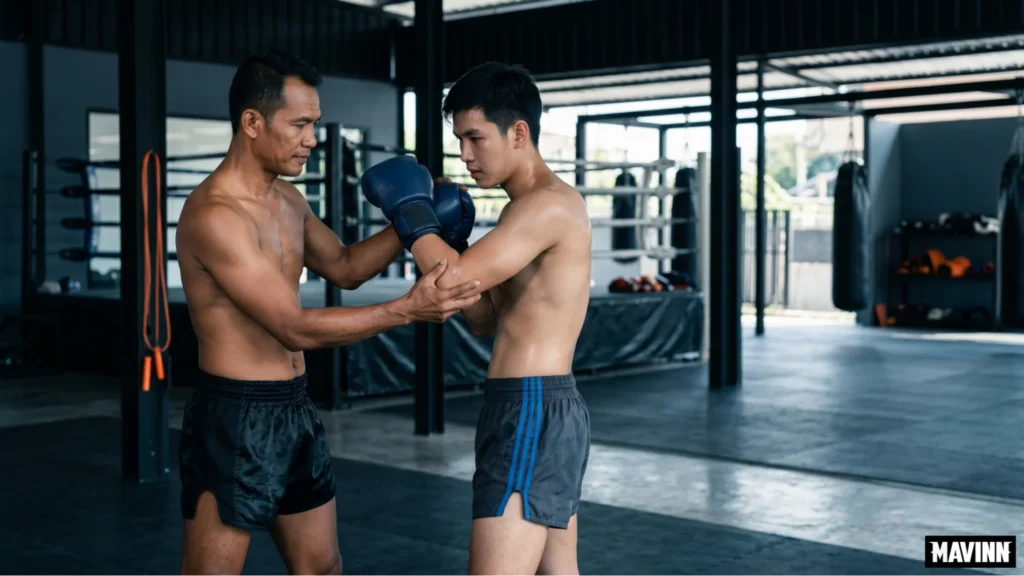
When you step into your first muay thai class, you should expect a high-intensity session that prioritizes basic mechanics, cardiovascular conditioning, and fundamental striking techniques. A typical 60 to 90-minute class begins with a dynamic warm-up involving skipping rope or shadowboxing to elevate your heart rate. This initial phase prepares your joints and muscles for the explosive movements required in the “Art of Eight Limbs.”
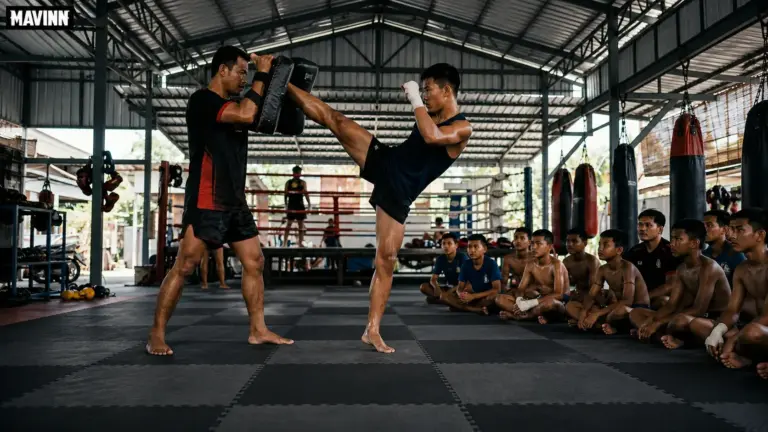
Once warm, the instructor leads the group through technical drills where you learn the proper stance and basic strikes like the jab, cross, and roundhouse kick. You will spend a significant portion of the hour performing pad work with a partner or hitting heavy bags to build striking power. Coaches focus heavily on hip rotation and balance to ensure you develop a functional foundation through repetitive striking drills.
The session concludes with bodyweight conditioning exercises such as “Thai planks” or core work to increase your overall durability. Unlike professional sparring, beginner classes focus on controlled movements and repetitive muscle memory rather than live combat. Most gyms finish with a group stretch to improve flexibility and mitigate post-training muscle soreness.
Dynamic Warm Up and Technical Conditioning
Every muay thai class starts with a dynamic warm-up to prime your joints and nervous system for the explosive power of striking. We replace static stretching with active movements like hip circles, leg swings, and shadowboxing to mimic real combat patterns. This process increases your core temperature and synovial fluid flow, ensuring your body is ready for high-velocity rotation.
Technical conditioning focuses on repeating foundational mechanics until they become instinctive under pressure. You will execute low-impact drills, such as alternating teeps or “check” transitions, to sharpen your balance and defensive stance. These repetitions build the neuromuscular pathways needed to fire a perfect roundhouse kick without hesitation.
Our sessions dedicate the first 15 to 20 minutes to these movements to protect your hip flexors and lower back from strain. This specific preparation bridges the gap between your daily routine and the high-intensity demands of heavy bag work. Focusing on these micro-adjustments early on ensures your form remains crisp even as fatigue sets in.
Shadow Boxing and Mastering Basic Strikes
Shadow boxing is your mental rehearsal in a muay thai class, where you visualize an opponent to sharpen technique and spatial awareness without physical impact. You focus on fluid transitions between strikes and defensive moves like checking kicks or slipping punches. Most high-level practitioners spend at least 15 minutes shadow boxing daily to engrain the muscle memory needed for the “Art of Eight Limbs.”
Mastering basic strikes requires you to generate power from your hips and core rather than relying solely on your arms or legs. We prioritize the pivot of your lead foot during a roundhouse kick to maximize torque while protecting your joints. Each strike, from a crisp jab to a sharp elbow, must snap back to your guard immediately to maintain a 360-degree defense.
Working with Pads and Heavy Bags
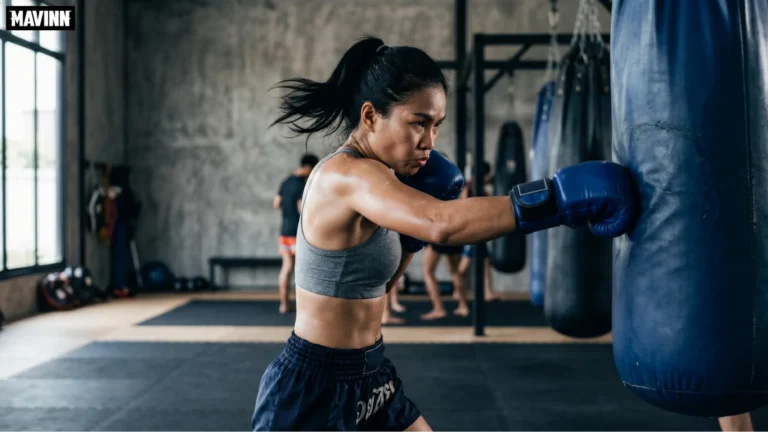
You develop raw power and structural endurance by striking heavy bags to refine your range and “harden” your shins for impact. This phase of a class muay thai session focuses on repetitive, high-volume strikes like the teep or the lead roundhouse kick. A standard professional-grade heavy bag weighs between 100 and 130 pounds, providing the necessary resistance to build functional muscle and dense bone structure.
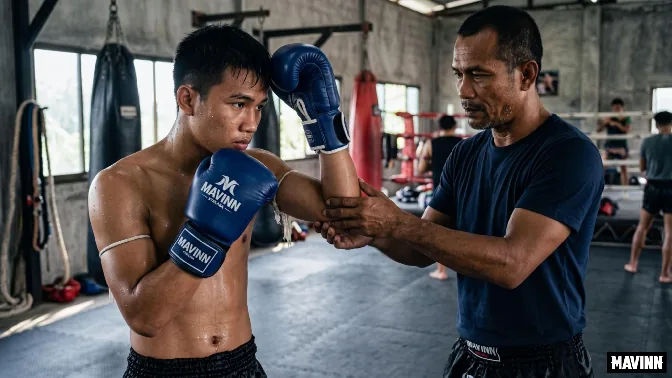
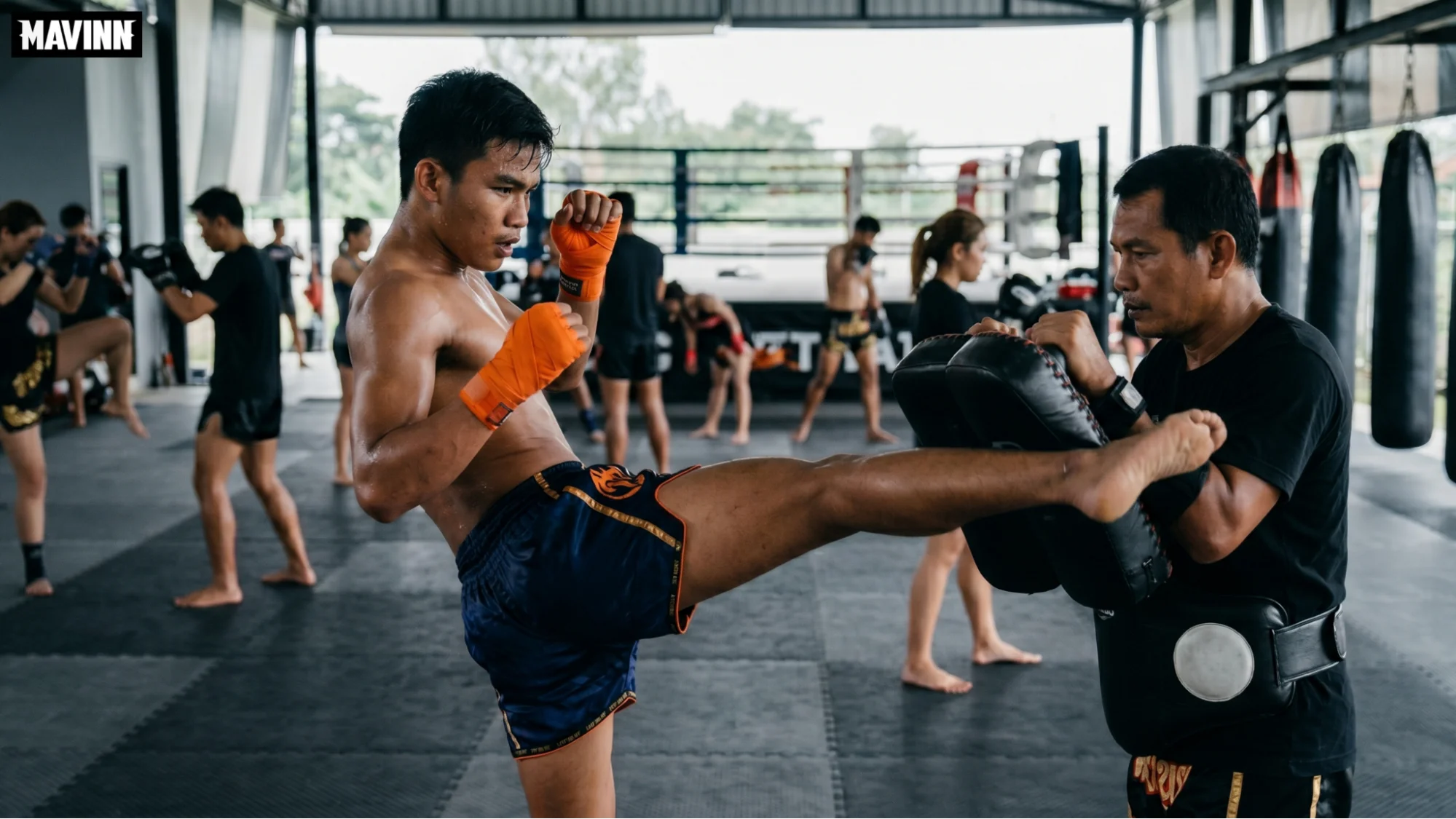
Working on Thai pads with a trainer shifts your focus toward timing, accuracy, and reactive defensive maneuvers. Your coach holds the pads to simulate a moving opponent, forcing you to execute multi-strike combinations while maintaining a tight guard and proper footwork. Intense pad sessions are designed to push your heart rate to 90% of its maximum capacity during a single three-minute round.
Essential Techniques You Will Learn in a Class Muay Thai
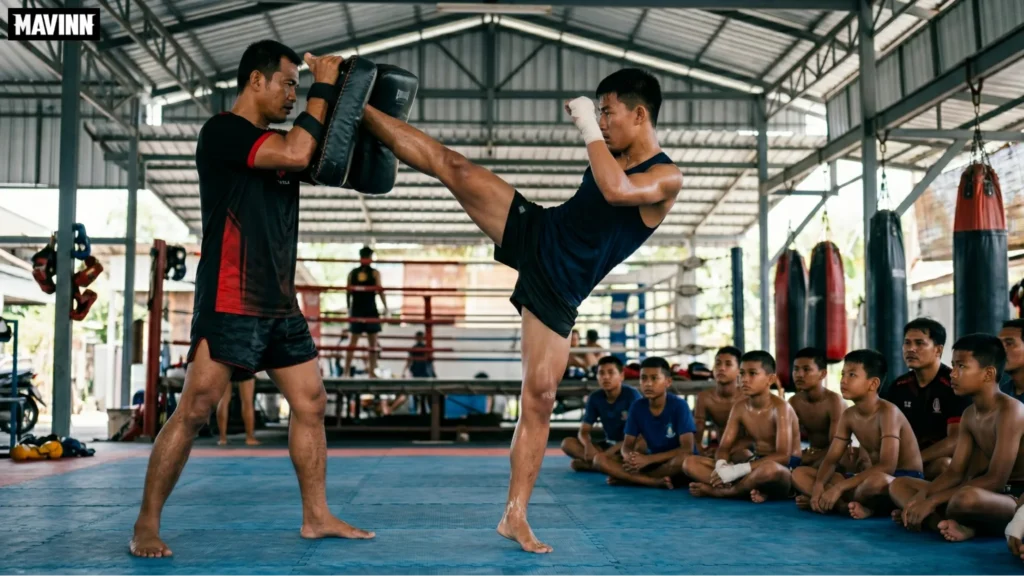
A muay thai class equips you with the fundamental mechanics of the “Art of Eight Limbs,” focusing on the coordinated use of fists, elbows, knees, and shins. You begin by mastering a balanced stance and fluid footwork, which provide the essential foundation for both offensive power and defensive agility. We prioritize the three-point pivot during kicks to ensure you generate maximum torque from your hips without losing your footing.
You will learn to execute the lead jab, cross, and the signature Muay Thai roundhouse kick while maintaining a tight guard to protect your chin. Training involves repetitive drilling on heavy bags or Thai pads to sharpen your timing and increase bone density in your shins. Most sessions dedicate specific intervals to the clinch, where you learn to manipulate an opponent’s neck and arms to create openings for close-range strikes.
Beyond striking, you will practice defensive maneuvers such as “checking” kicks and parrying punches to minimize impact during active drills. These techniques are taught through partner work that mimics real combat scenarios to improve your reaction speed and situational awareness. Consistent practice helps you refine your breathing patterns, allowing you to maintain high intensity throughout a three-minute round.
Finding Your Stance and Basic Footwork
Your stance is the primary foundation for balance, power, and defense. Stand with your feet shoulder-width apart, placing your non-dominant foot forward and your rear foot at a 45-degree angle. Keep your hands at eyebrow level and your chin tucked to minimize your profile as a target. Effective footwork ensures you stay mobile without compromising your defensive structure.
- Step with the lead foot first when moving forward, followed immediately by the rear foot.
- Lead with the rear foot when moving backward to maintain your base.
- Step with the foot closest to your direction of travel when moving laterally to avoid crossing your legs.
We emphasize keeping your weight on the balls of your feet to allow for rapid weight shifts. A square hip position is vital because it lets you transition into a kick or knee without telegraphing your movement. Maintain a consistent distance between your feet to ensure you are always ready to check a kick or return fire.
The Power of Punches, Kicks, Knees, and Elbows
Muay Thai transforms your entire body into a weapon by utilizing the “Art of Eight Limbs” to strike from any distance. Unlike boxing, a professional class muay thai environment integrates your hands, shins, knees, and elbows for total combat versatility. This multi-range approach ensures you remain offensive whether you are striking from the outside or locked in a tight clinch.
We focus on the mechanical leverage required to turn skeletal alignment into high-impact force. Your shins function as heavy clubs for mid-range power, while elbows and knees act as sharp tools for close-quarters pressure. Engaging all eight limbs in a single session can burn 600 to 1,000 calories per hour while developing unmatched core stability.
Refining these strikes builds a level of conditioning that traditional cardio cannot replicate. You will master the teep (push kick) to control the rhythm and use the clinch to neutralize an opponent’s movement. These techniques form the tactical foundation used by elite fighters to dominate the ring.
What Gear Do You Really Need for a Muay Thai Class ?
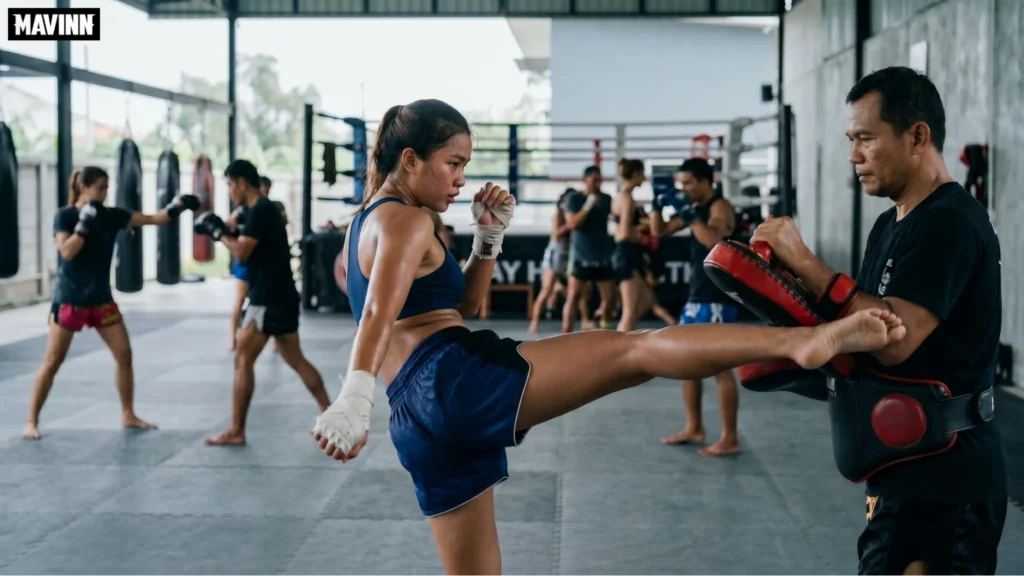
You need hand wraps, 14oz or 16oz boxing gloves, and moisture-wicking shorts to survive your first muay thai class. While many gyms provide rental gloves, owning your own pair ensures better hygiene and a fit tailored to your specific hand structure. Proper 180-inch hand wraps are non-negotiable for protecting the 27 small bones in your hand during heavy bag work.
Wear lightweight, tear-resistant shorts that allow for a full range of motion during high kicks and knee strikes. Traditional shorts feature a wide leg opening, while modern hybrid combat shorts offer a streamlined aesthetic for the gym. You should also bring a mouthguard and shinguards if the session includes technical sparring or defensive drills.
| Essential Gear | Primary Function | Recommendation |
|---|---|---|
| Hand Wraps | Bone & Joint Stability | 180-inch semi-elastic |
| Training Gloves | Impact Absorption | 14oz (standard) or 16oz (heavy) |
| Combat Shorts | High-Kick Mobility | Satin or lightweight polyester |
Choose gear with multi-layered foam padding to absorb impact without being overly bulky. We recommend high-grade synthetic or genuine cowhide leather to ensure your equipment survives at least three high-intensity sessions per week. Focus on gear that balances protective density with a weight that won’t prematurely fatigue your shoulders.
Choosing Quality Boxing Gloves and Hand Wraps
You need 14oz to 16oz gloves with multi-layer padding and 180-inch semi-elastic hand wraps to protect your knuckles and wrists. Genuine leather or high-grade microfiber offers the best durability for heavy bag work and technical sparring sessions. Cheaper vinyl alternatives often crack within three months of consistent use.
| Glove Weight | Primary Use | Recommended User Weight |
|---|---|---|
| 10oz – 12oz | Pad work & speed drills | Under 140 lbs |
| 14oz – 16oz | General training & sparring | Over 140 lbs |
Hand wraps are required to stabilize the 27 small bones in your hand and prevent wrist collapse. We recommend 180-inch Mexican-style wraps because they offer enough length for a secure “X-pattern” across the knuckles. This specific length ensures your protection remains tight even during high-volume clinching drills.
Proper Apparel Why Muay Thai Shorts Matter
Muay Thai shorts provide the necessary range of motion for high kicks and knees that standard athletic gear cannot match. Regular gym shorts often catch on the thighs or restrict hip rotation, which can compromise your technique during a class muay thai workout. Quality Muay Thai shorts feature wide leg openings and deep side slits to ensure you maintain unrestricted mobility during every strike.
The specific fabrics used, such as lightweight satin or technical polyester, prevent the garment from absorbing heavy sweat and becoming a burden. Cotton shorts hold moisture and cling to the skin, whereas these specialized materials stay dry and light throughout a 90-minute training session. This moisture-wicking capability is vital for maintaining speed and comfort during intense clinch work.
A thick, multi-layer elastic waistband serves as a functional anchor that keeps the shorts from shifting during explosive movements. This structural design supports your core and ensures the gear stays in place even when grappling or catching kicks. Always check for reinforced piping and heavy-duty stitching to ensure the shorts withstand the friction of daily pad work.
Major Health Benefits of Joining a Regular Muay Thai Class
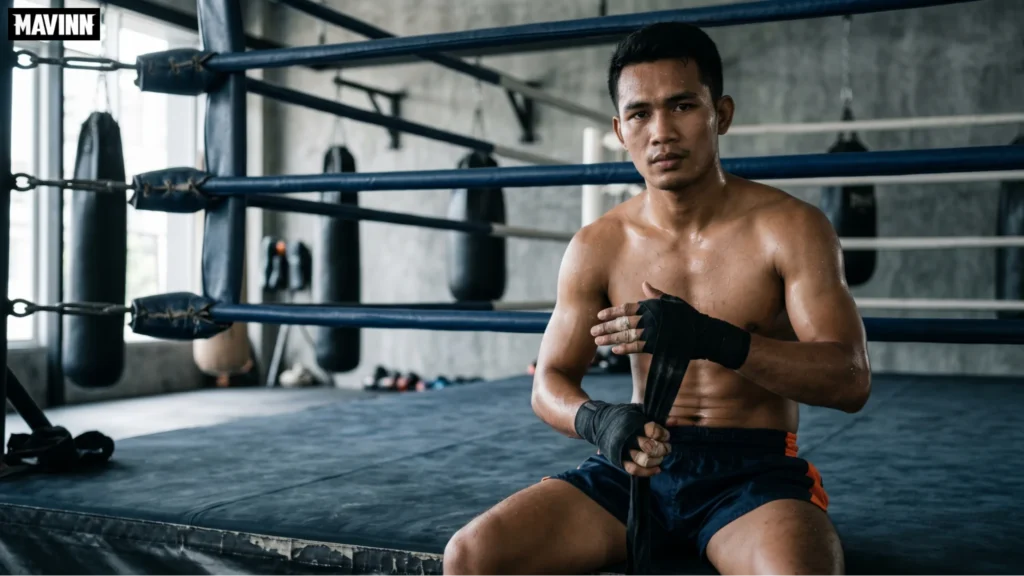
Joining a regular muay thai class transforms your cardiovascular health by forcing your heart to adapt to high-intensity interval training through repetitive striking and clinching. You can burn between 600 to 1,000 calories during a standard sixty-minute session, making it one of the most efficient fat-loss tools available. This elevated heart rate improves your VO2 max, which measures the maximum amount of oxygen your body can utilize during intense exercise.
We focus on “the art of eight limbs” to build functional power in your shins, knees, elbows, and fists while simultaneously strengthening your core. Constant rotation during kicks and knees forces your deep abdominal muscles to stabilize, leading to superior trunk stability and total-body coordination. Regular practitioners often report a significant decrease in daily stress because the intense mental focus required for pad work acts as a moving meditation.
Full Body Conditioning and Functional Strength
A muay thai class builds explosive power and core stability because every strike requires your entire kinetic chain to work in unison. You are not just hitting a bag; you are rotating your hips, stabilizing your spine, and driving force through your heels. This functional approach develops a lean, athletic frame by engaging the posterior chain and deep abdominal muscles simultaneously.
We focus on high-intensity intervals that mimic the rhythm of a fight round to push your anaerobic threshold. Unlike stationary gym machines, these movements engage small stabilizer muscles often neglected in standard bodybuilding routines. A single session can burn 600 to 1,000 calories per hour while strengthening your skeletal structure through repetitive impact on heavy bags.
Real-world strength in combat sports comes from the “clinch,” where you control an opponent’s balance using your neck, back, and forearms. This specific type of isometric tension creates a rugged physique that performs under pressure. Consistent training hardens your bone density through progressive micro-calcification during high-volume pad work and bag drills.
Mental Toughness and Stress Relief Through Striking
Hitting the pads in a muay thai class provides an immediate neurochemical reset by forcing your brain to focus entirely on the present moment. You cannot dwell on work stress when you are timing a roundhouse kick or perfecting a lead hook against a moving target. This intense concentration triggers a cortisol flush, replacing tension with endorphins that stabilize your mood for hours after the session.
Mental toughness is forged through the repetitive discipline of pushing past physical exhaustion during high-intensity rounds. We see students develop “combat composure,” which is the ability to remain calm and analytical while under significant physical pressure. This translates directly to real-world scenarios, where you become less reactive to daily stressors and more focused on decisive action.
The rhythmic nature of striking serves as a form of active meditation that clears mental clutter more effectively than passive rest. By the time you finish a 60-minute session, the external problems that felt overwhelming usually seem manageable and smaller. Consistent striking practice reduces the resting heart rate and lowers the physiological response to non-physical stress.
How to Prepare and Avoid Common Mistakes
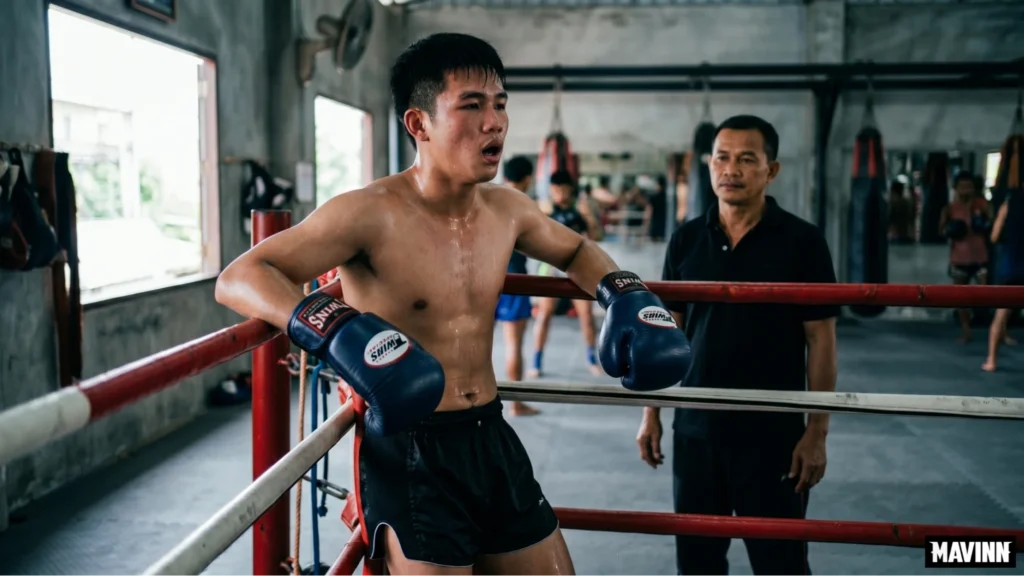
Success in your first muay thai class depends on arriving hydrated, showing up early to wrap your hands, and checking your ego at the door. Most beginners gas out within the first ten minutes because they throw every strike at full power instead of focusing on rhythm. Aim to arrive at least 15 minutes before the session starts so you have enough time to wrap your hands and warm up your joints properly.
Wear breathable, high-cut shorts that allow for a full range of motion, as standard compression gear can sometimes restrict your hip movement during kicks. You should consume at least 500ml of water one hour before training to handle the high-intensity conditioning drills typical of a traditional camp. If you are using loaner gloves, always wear your own hand wraps underneath to prevent skin abrasions and secure your wrist joints.
Avoid the mistake of tensing your entire body, as rigid muscles lead to early fatigue and slow, telegraphed strikes. Keep your shoulders relaxed, your jaw tucked, and stay light on the balls of your feet to maintain balance during pad work. Focus on exhaling sharply with every strike to regulate your heart rate and prevent the oxygen debt that usually hits unprepared beginners during the final rounds.
Physical Readiness and Hydration Tips
You must prepare your body through dynamic mobility and a strategic hydration plan to sustain the intensity of a muay thai class. Focus on these core preparation steps to ensure you perform at your peak:
- Perform dynamic stretches for your ankles and hips to handle the explosive rotation required for roundhouse kicks.
- Consume 500ml of water two hours before training to ensure deep cellular hydration.
- Add electrolytes or a pinch of sea salt to your water to prevent muscle cramping during high-repetition clinch work.
Proper readiness prevents common injuries like calf strains and mid-session fatigue. We suggest tracking your sweat loss to adjust your fluid intake, as a 2% drop in body weight from dehydration can decrease your power output significantly. Arriving at the gym 15 minutes early allows for the necessary joint lubrication required for heavy bag work.
Focusing on Technique Over Power
Perfecting your form is the fastest way to increase striking force while maintaining the endurance needed for a full muay thai class. If you lead with power before mastering mechanics, you risk telegraphing your movements and losing balance during rapid exchanges. Focus on the pivot of your lead foot and the rotation of your hips to turn your body into a whip.
Shadowboxing in front of a mirror allows you to identify gaps in your guard and ensure your weight distribution remains centered. A strike delivered with 100% technical accuracy will always land harder and faster than a clumsy swing driven by raw muscle alone. Professional fighters spend thousands of hours refining the “teep” or the specific angle of a roundhouse kick because precision dictates the outcome.
Clean technique also preserves your joints, especially when hitting heavy bags or Thai pads repeatedly throughout the training week. We recommend slowing down your combinations to 50% speed until your balance feels instinctive and your hands return to your chin every time. This deliberate practice builds the muscle memory required to execute high-level counters under pressure without gassing out in the first round.
Conclusion
Joining a muay thai class establishes a foundation for elite physical conditioning and mental resilience that applies to any fitness goal. You can burn 600 to 1,000 calories per hour while developing functional strength through repetitive striking drills. This training environment fosters the discipline required to maintain a high-performance lifestyle.
Focus on technical form rather than raw power during your initial sessions to build lasting muscle memory. Most practitioners observe a measurable increase in cardiovascular endurance within four weeks of training at least three times per week. We recommend arriving at the gym 15 minutes early to wrap your hands properly and prepare your joints for the work ahead, ensuring a safe and steady progression on your martial arts journey.