Key Takeaways
- Thai boxing class – These high-intensity sessions blend traditional eight-limb striking techniques with functional conditioning to build explosive power, cardiovascular endurance, and agility.
- A standard session follows a rigorous progression, starting with dynamic warm-ups and shadowboxing before moving into technical pad work and heavy bag drills to refine striking precision.
- Proper equipment is a non-negotiable requirement; participants must use hand wraps and sport-specific gloves to protect the small bones in the hands during high-impact repetitions.
- Beyond the physical workout, these classes focus on mental resilience and tactical discipline, teaching students how to maintain composure under physical pressure.
A Thai boxing class is a high-intensity striking session that utilizes the “Art of Eight Limbs” to deliver a full-body conditioning workout. You will engage in a mix of heavy bag work, pad drills, and technical clinching to build explosive power and functional mobility. A single one-hour session can burn 600 to 1,000 calories per hour depending on your effort and intensity levels.
In this beginner’s guide from MAVINN, we will walk you through exactly what you need to know before stepping into the gym. Whether you are a complete novice or transitioning from another martial arts class, you will learn how to prepare physically and mentally. Proper equipment, such as 14oz or 16oz gloves and moisture-wicking wraps, is essential for safety during repetitive striking drills as you begin your muay thai training journey.
What to Expect During Your First Thai Boxing Class
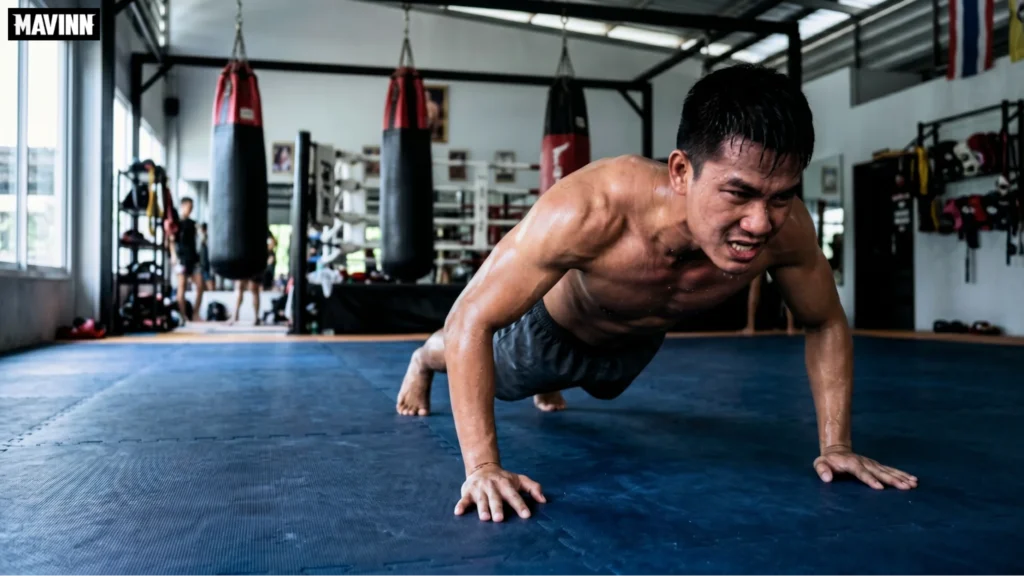
Your first Thai boxing class focuses on high-intensity conditioning and fundamental mechanics rather than immediate sparring. You will begin with a rigorous warm-up consisting of jump rope, shadow boxing, and bodyweight drills to elevate your heart rate. Most beginners can expect to burn 600 to 1,000 calories during a standard ninety-minute training session.
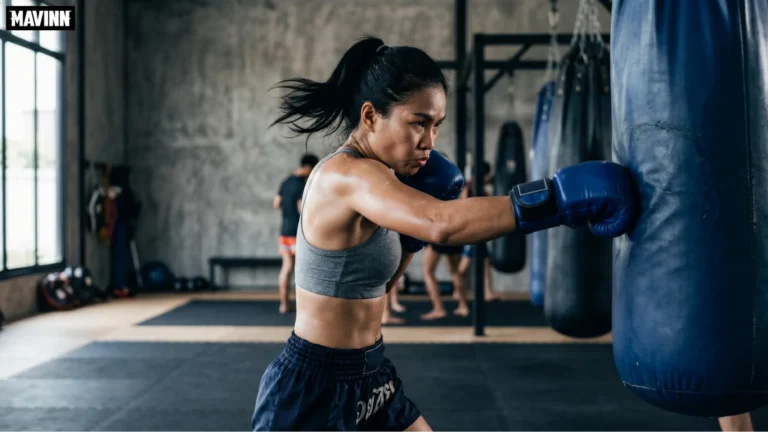
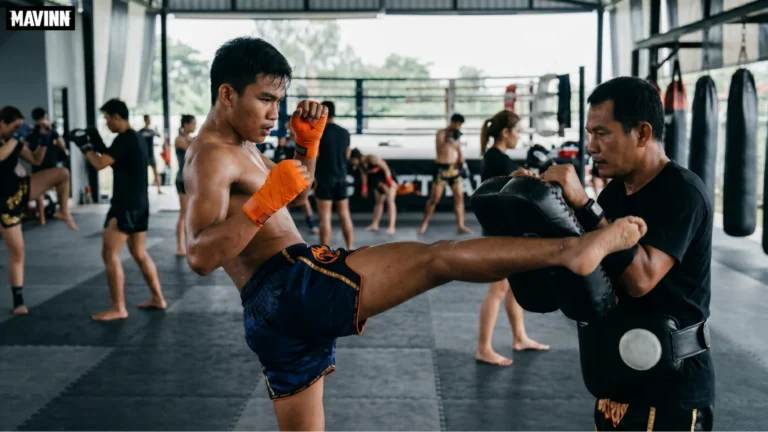
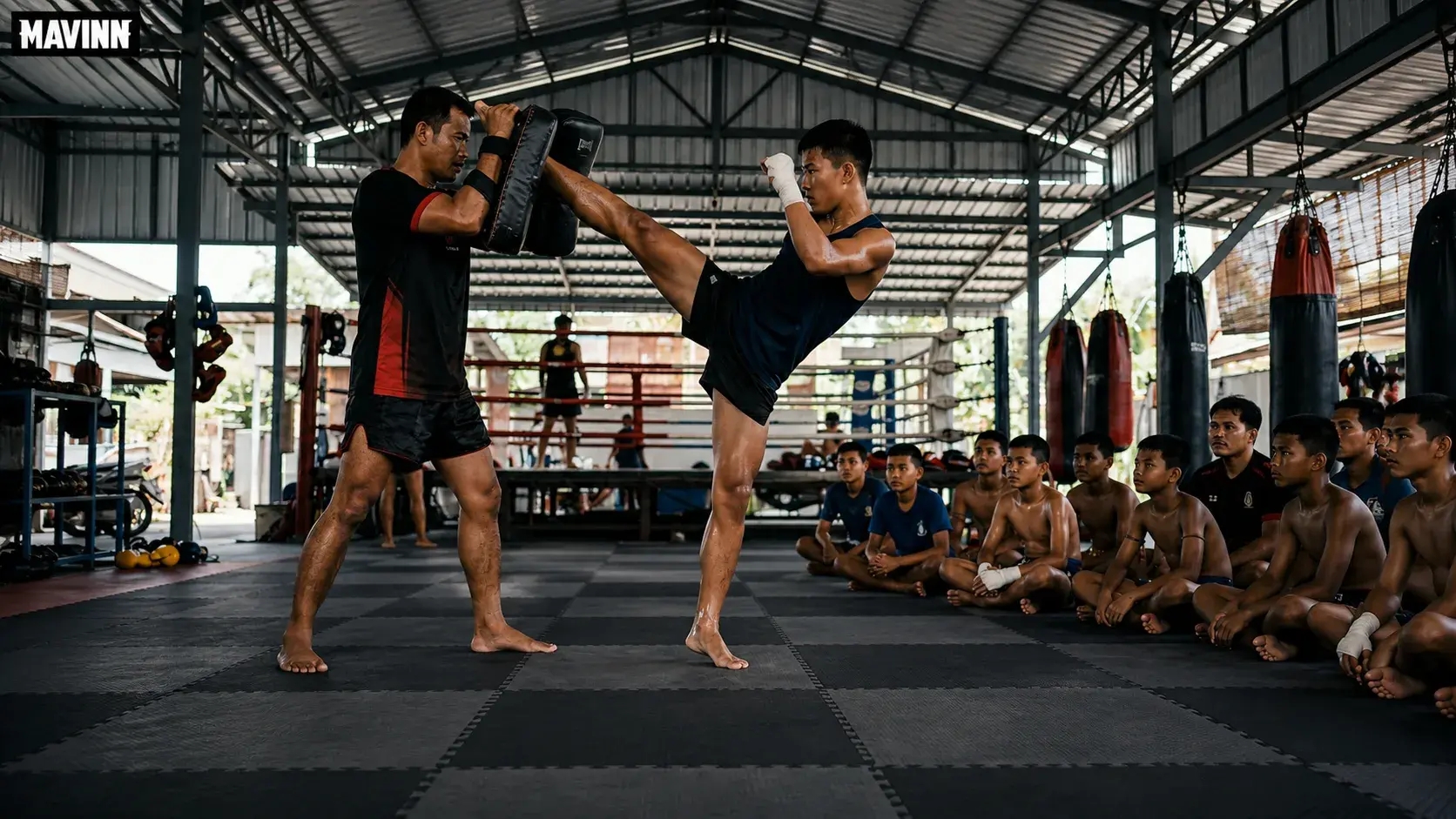
After warming up, we move into technical drills where you learn to use your fists, elbows, knees, and shins. You will spend the majority of the class performing repetitive strikes on heavy bags or catching rhythm on Thai pads held by an instructor. Trainers emphasize the pivot of the lead foot during roundhouse kicks to ensure you generate power from your core rather than just your leg.
The session concludes with intense core work and a cool-down period to assist with muscle recovery. Expect your shins and shoulders to feel significant fatigue or minor bruising as your body adapts to the impact of the pads. Bringing a 1.5-liter water bottle and a personal hand towel is mandatory to manage the high perspiration levels common in combat sports environments.
Understanding the Art of Eight Limbs
Muay Thai is known as the “Art of Eight Limbs” because it utilizes eight points of contact-two fists, two elbows, two knees, and two shins-turning the entire body into a weapon. Unlike traditional boxing that focuses solely on hand strikes, a thai boxing class teaches you to coordinate these limbs for both offense and defense. You learn to transition between long-range kicks and close-range elbow strikes with fluid movement.
Modern practitioners use these techniques to build functional strength and explosive power that translates to high-intensity street-style fitness. Each limb serves a distinct tactical purpose, such as using shins for heavy-impact kicks or elbows for precision cutting in the clinch. Mastery of this style requires understanding the mechanics of rotation to generate force from the core rather than just the limb itself.
Training involves repetitive drills on heavy bags and pads to condition the bone density in your shins and forearms. This conditioning process is essential for absorbing impact and executing checked kicks effectively during live sparring or bag work. By integrating all eight points, you develop a 360-degree combat awareness that benefits anyone, even if they have previously taken a different martial arts class.
Why Joining a Thai Boxing Class is Great for Beginners
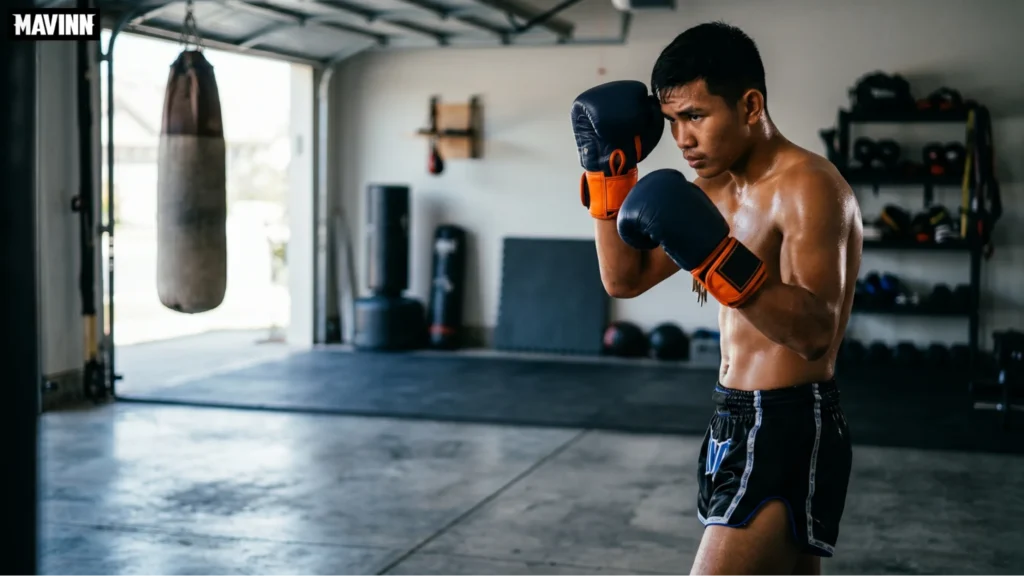
A thai boxing class provides a high-intensity, full-body workout that builds functional strength and real-world self-defense skills simultaneously. You will engage your core, legs, and upper body through dynamic movements that far exceed the calorie burn of traditional treadmill running. Most beginner-friendly programs focus on technical precision to ensure you develop power without risking injury.
Throughout your muay thai training, you quickly develop better coordination and mental discipline by mastering the “Art of Eight Limbs” through structured striking drills. These sessions replace repetitive gym routines with engaging pad work and heavy bag sequences that sharpen your reflexes. A single 60-minute session can torch 600 to 1,000 calories per hour while significantly improving your cardiovascular health.
We see beginners gain significant confidence as they move from basic footwork to landing their first clean roundhouse kicks. You only need minimal gear like 14oz or 16oz gloves and hand wraps to start your first training session. Focus on your stance and breathing during the first few weeks to build a solid foundation for more complex striking combinations.
Essential Gear You Need for a Thai Boxing Class
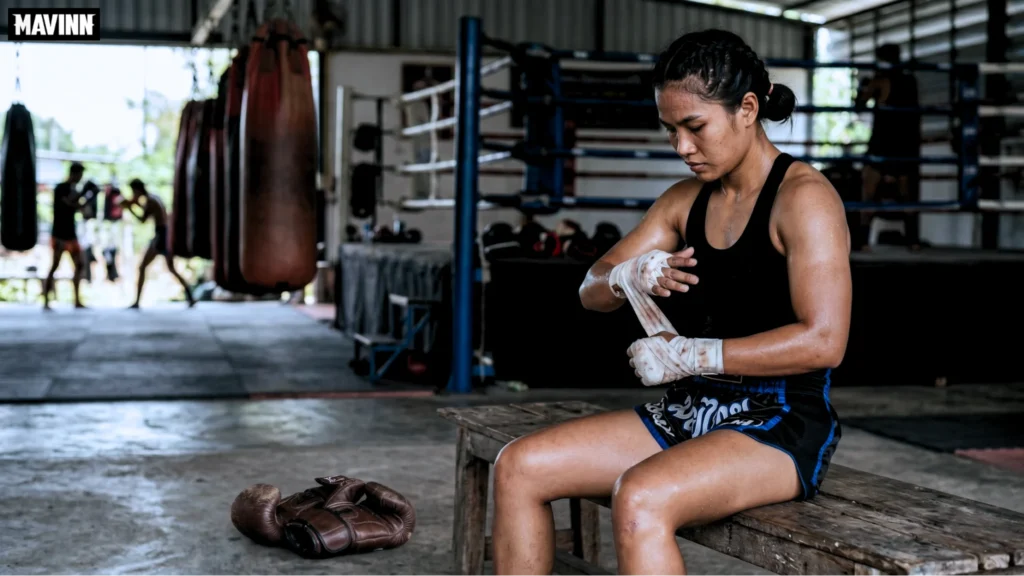
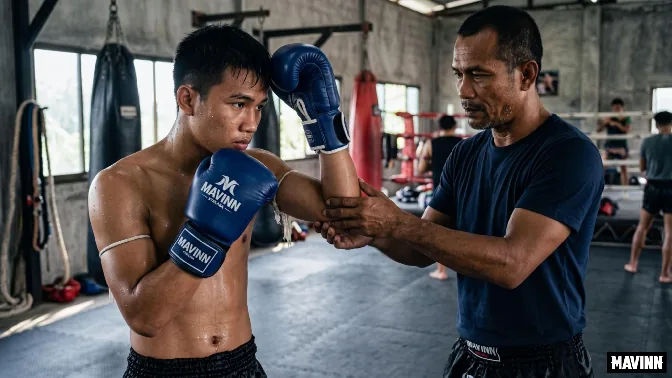
You need high-quality boxing gloves, hand wraps, and moisture-wicking apparel to ensure safety and performance during your thai boxing class. While gyms often offer rentals, owning personal gloves prevents hygiene issues and provides a custom fit suited to your specific striking power. Beginners typically find the best results using 12oz or 14oz gloves for a versatile mix of heavy bag work and pad drills.
Hand wraps are non-negotiable because they stabilize the 27 small bones in your hand to prevent common stress fractures. Pair them with authentic Muay Thai shorts designed with wide leg openings to ensure unrestricted kicking range and mobility. Modern training apparel should utilize technical polyester blends that wick sweat away effectively during high-intensity 90-minute sessions.
Advanced students will eventually require a shock-absorbing mouthguard and high-density foam shin guards for technical sparring. Look for equipment featuring triple-layer foam padding to maximize impact distribution during heavy leg checks. Premium gear is designed to withstand at least 150 intense training sessions before the internal padding begins to lose its structural integrity.
Choosing the Right Gloves and Shorts
Select 12oz or 14oz gloves to balance impact protection with striking speed. For instance, quality gloves feature multi-layered foam densities designed to protect your metacarpals during high-volume heavy bag work. Beginners typically benefit from 12oz gloves as they offer a lighter profile for learning proper punching mechanics without early fatigue.
Pair your gloves with shorts featuring high-cut side slits to ensure your leg movement is completely unrestricted for head kicks. Look for reinforced stitching and lightweight satin-blend fabrics that resist tearing during intense clinch sessions or wrestling transitions. Ensure the waistband features at least six rows of elastic to maintain a secure fit that doesn’t shift during explosive hip rotations.
Breakdown of a Typical Thai Boxing Class Session
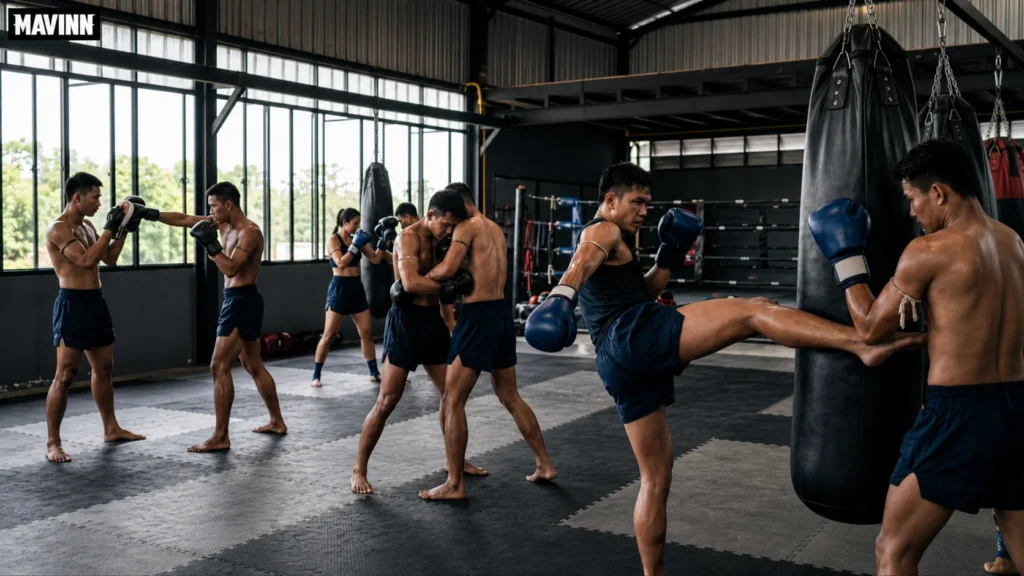
A standard Thai boxing class typically lasts 60 to 90 minutes, structured to push your cardiovascular limits while refining technical striking skills. You begin with a high-intensity warm-up that usually involves 10 to 15 minutes of skipping rope or shadow boxing to elevate the heart rate. This initial phase prepares your joints and muscles for the explosive movements required in Thai-style clinch work.
The core of the session transitions into technical work where you perform three-minute rounds on heavy bags or focus mitts with a trainer. We focus on the “Art of Eight Limbs,” integrating shins, knees, elbows, and fists into fluid combat combinations. Most sessions conclude with high-volume knee strikes or core conditioning to build the functional endurance necessary for three-minute competitive rounds.
Advanced classes may incorporate light technical sparring or clinching drills to apply techniques in a controlled, live environment. Coaches monitor your form to ensure you maintain a proper guard while executing “teeps” and roundhouse kicks. Every session ends with a dedicated stretching routine to improve hip mobility, which is essential for landing head-level roundhouse kicks.
Proper Warm Ups and Basic Techniques
Effective warm-ups for a thai boxing class start by increasing your core temperature through 10 minutes of jump rope or light shadow boxing. We focus on dynamic stretching and joint rotations for the neck, shoulders, and hips to ensure fluid movement during high-impact strikes. These movements prepare your tendons for the explosive power required in kicks and knees.
Mastering the basics begins with a balanced stance that allows for both offensive pressure and defensive stability. You must prioritize the jab, cross, and the lead “teep” (push kick) to control distance against an opponent. Consistent repetition of the roundhouse kick ensures you engage your shin bone rather than your foot to prevent fractures.
- Stance: Feet shoulder-width apart with a slight bend in the knees for mobility.
- Guard: Hands high at eyebrow level to protect the chin and temples.
- Footwork: Small, calculated steps to maintain balance during pivots.
Pad Work vs. Heavy Bag Training
Pad work builds your fight IQ and timing through interaction, while the heavy bag develops raw power and conditioning through repetition. In a professional thai boxing class, we use pads to simulate live combat scenarios with a trainer. This teaches you to manage distance and react to counters at full speed.
The heavy bag allows you to unload maximum force without a partner, hardening your shins and knuckles. It is the primary tool for building the cardiovascular endurance required for high-intensity rounds. Spend at least 20 minutes on the bag per session to master proper weight transfer.
| Feature | Pad Work | Heavy Bag |
|---|---|---|
| Main Focus | Timing & Accuracy | Power & Endurance |
| Feedback | Immediate (from Coach) | Passive (Resistant) |
| Target | Moving / Dynamic | Stationary / Pendulum |
| Equipment | Thai Pads / Mitts | 100lb+ Heavy Bag |
Do Beginners Have to Spar in a Thai Boxing Class ?
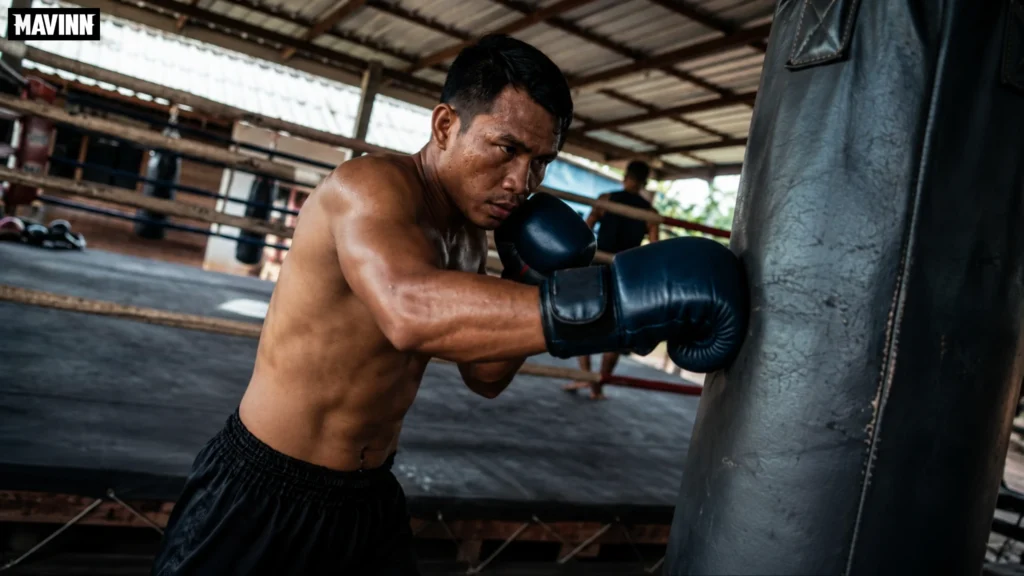
No, you are never required to spar as a beginner in a thai boxing class. Most reputable gyms focus strictly on fundamental mechanics, such as stance, footwork, and basic striking combinations on heavy bags or Thai pads. We prioritize your safety and technical development before you ever step into a ring for live drills.
Transitioning to contact usually takes three to six months of consistent muay thai training. Coaches look for controlled breathing and the ability to maintain a defensive guard while under pressure before clearing you for live rounds. You will start with technical “play sparring,” which emphasizes light touches and form rather than power or speed.
Proper gear is essential even for light drills to prevent unnecessary injuries. We recommend high-quality 14oz or 16oz gloves and impact-resistant shin guards to protect your shins during checked kicks. This ensures you can train daily and still look sharp outside the gym.
How to Find the Right Thai Boxing Class for Your Goals
Finding the right Thai boxing class requires you to match the gym’s specific training philosophy with your personal goals, whether you seek professional-grade technique or a high-intensity metabolic burn. Fitness-focused studios often prioritize continuous movement to help you burn 600 to 1,000 calories in a single session. In contrast, authentic fight gyms spend significant time on the “Art of Eight Limbs,” focusing on the technical precision of elbows, knees, and the clinch.
You must assess the trainer-to-student ratio to ensure you aren’t just a face in a crowd hitting a heavy bag. We recommend looking for a 1:5 ratio during pad work sessions to guarantee you receive immediate feedback on your stance and striking power. Trainers with professional ring records provide the best insights into functional movement and defensive timing.
Check the facility’s vibe to see if it matches your lifestyle, focusing on the cleanliness and the quality of the gear available. Serious practitioners often bring their own high-performance equipment, but the gym’s communal gear should still be well-maintained and sanitized. Most top-tier gyms offer a first-session trial where you can experience the intensity and see if the community motivates you to push your limits.
Group Classes vs. Private Training Sessions
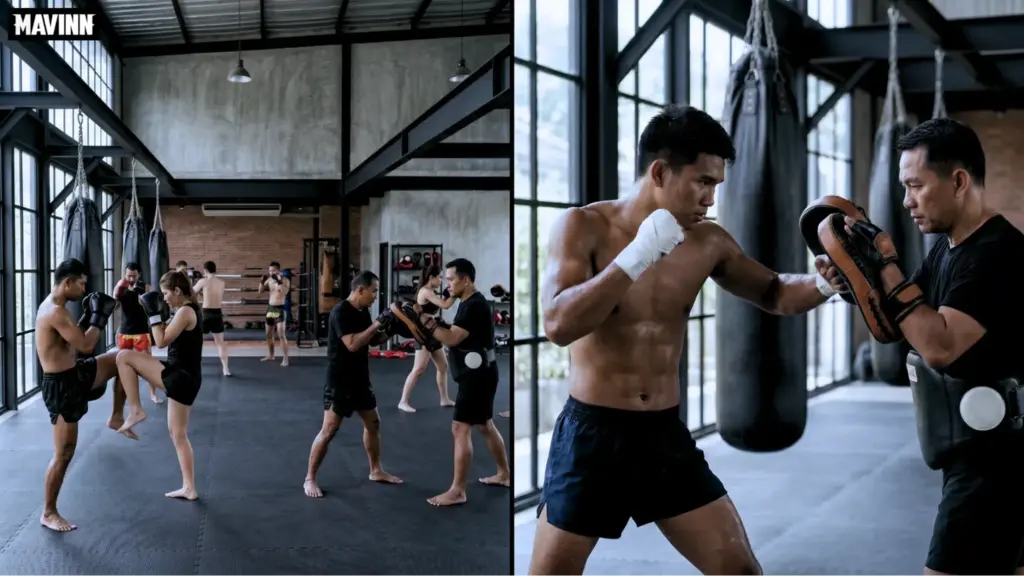
Your choice between a group thai boxing class and private training depends on whether you prioritize communal energy or individual technical refinement. Group sessions emphasize high-volume conditioning and allow you to test your skills against different partners during clinch or sparring drills. You will follow a structured pace that builds the cardiovascular endurance necessary for standard three-minute rounds.
| Feature | Group Training | Private Sessions |
|---|---|---|
| Atmosphere | Social and High-Energy | Focused and Intense |
| Curriculum | Standardized Drills | Fully Customized |
| Feedback | Shared Instruction | Immediate 1-on-1 |
| Value | Cost-Effective | Premium Technical Growth |
Private training offers an accelerated learning curve by focusing exclusively on your specific striking mechanics and defensive footwork. Coaches provide constant feedback on your form, ensuring you master the 8-limb striking system without developing poor habits. This personalized approach allows for a training intensity that matches your daily recovery levels and specific weight-class targets.
Conclusion
Joining a Thai boxing class transforms your fitness levels by combining high-intensity interval training with technical striking drills. You will develop explosive power in your legs and core while significantly improving cardiovascular endurance. Most beginners notice a measurable increase in coordination and stamina within the first 4 to 6 weeks of consistent training.
These sessions build the mental toughness and discipline required for both the ring and a high-performance lifestyle. You should prioritize mastering basic footwork and hand positioning before attempting to increase your striking power. Using high-quality 180-inch hand wraps is essential to prevent minor wrist strain during your first month of heavy bag work.