Key Takeaways
- A muay thai fighter balances explosive power with elite endurance, typically training two sessions a day to master the technical nuances of the “Art of Eight Limbs.”
- Elite performance requires a “Jai Su” (fighting heart) developed through 10-kilometer road runs and 300 knee strikes per session to build essential bone density and mental grit.
- Tactical dominance is achieved by weaponizing eight points of contact while maintaining composure in the clinch, often competing every 21 days in prestigious stadiums like Rajadamnern.
- Success in this sport demands a dedicated lifestyle where high-impact gear and functional activewear support the transition from grueling gym camps to everyday urban environments.
A muay thai fighter masters the “Art of Eight Limbs,” using fists, elbows, knees, and shins for high-impact striking. This path requires immense physical conditioning and the mental toughness to endure rigorous clinch work and daily sparring. Professional athletes often perform 300 knee strikes and 10 kilometers of running during a single morning training session, showcasing the true heart of a champion.
Bridging the gap between this intense combat training and the pinnacle of stadium success requires a lifestyle dedicated to discipline. You must embrace a relentless regimen that prepares you to handle intense sweat, explosive movement, and the psychological pressure of the ring, ensuring you are ready to face the world’s best muay thai fighters inside the ropes.
What Defines a True Muay Thai Fighter ?
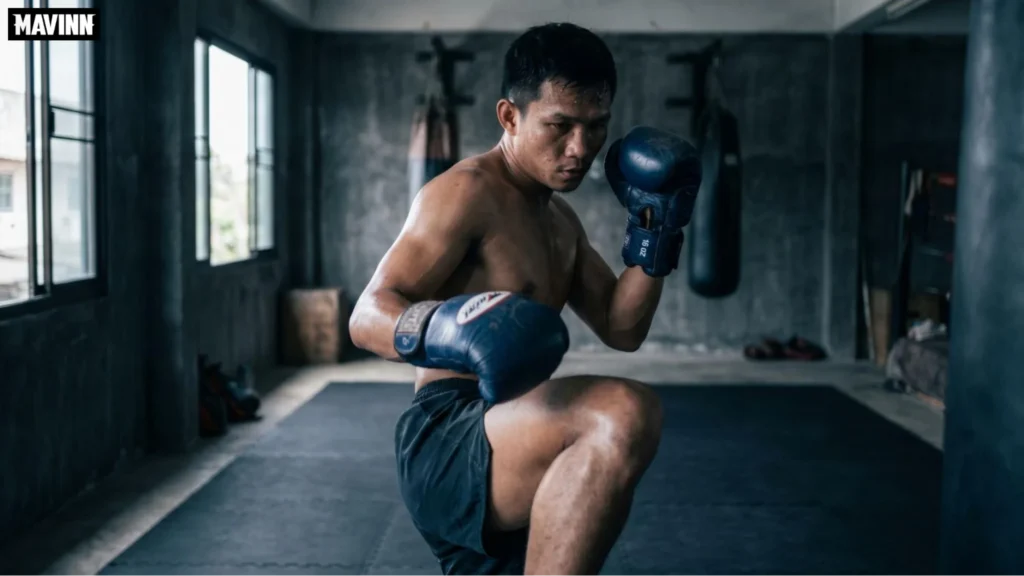
A true Muay Thai fighter is defined by unwavering “Heart” (Jai Su) and the technical mastery of the “Art of Eight Limbs.” You must demonstrate the ability to effectively synchronize punches, kicks, knees, and elbows while maintaining composure during high-intensity exchanges. This level of skill demands thousands of hours spent on heavy bags and technical clinching to build specific bone density and muscle memory.
Your physical identity is forged through a relentless conditioning regimen that prioritizes endurance and explosive power over aesthetic muscle. You live a lifestyle where waking up at 5:00 AM for extensive roadwork is the non-negotiable foundation of your training day. This grit ensures you can execute powerful low kicks and clinch sweeps even in the final minute of a five-round fight.
Mastery of the Eight Limbs and Technical Intelligence
A muay thai fighter gains a competitive edge by weaponizing eight distinct points of contact: the fists, elbows, knees, and shins. Technical intelligence involves more than raw power; you must synchronize these limbs to maintain range and disrupt your opponent’s rhythm. You achieve this through constant drilling of transitions, such as moving from a long-range jab into a mid-range knee strike.
- Fists: Used for range finding, jabs, and knockout hooks.
- Elbows: Precise, short-range weapons designed to create cuts.
- Knees: Dominant in the clinch to target the ribs and solar plexus.
- Shins: The primary tool for checking kicks and delivering heavy roundhouses.
True mastery requires you to understand the “check and counter” system rather than just trading blows. You use feints to draw out a reaction, creating a split-second window to land a scoring blow or a sweep. High-level technical intelligence is often measured by a fighter’s ability to maintain a 60% or higher landing rate while minimizing head trauma through head movement.
Mental Resilience and the Iron Man Spirit of a Nak Muay
A Muay Thai fighter builds mental resilience by intentionally exposing themselves to extreme physical stress during grueling daily camps. We define this “Iron Man” spirit as the ability to remain calm while absorbing heavy kicks or fighting through the exhaustion of a fifth round. Professional Nak Muays typically train for four hours per session to desensitize the brain to the impulse to quit.
You develop this grit through high-intensity conditioning, such as hitting pads until your heart rate exceeds 180 BPM. This forces you to override your survival instincts and execute technical counters despite severe physical discomfort. Fighters like Rodtang Jitmuangnon demonstrate this by moving forward even after taking heavy strikes to the jaw.
Resilience also involves managing the pressure of representing your gym under bright stadium lights. You learn to harness pre-fight adrenaline as a tool for focus rather than paralyzing anxiety. Elite stadium fighters often compete once every 21 days to maintain this relentless cycle of psychological hardening.
Lessons from Legendary Thai Muay Thai Fighters in History
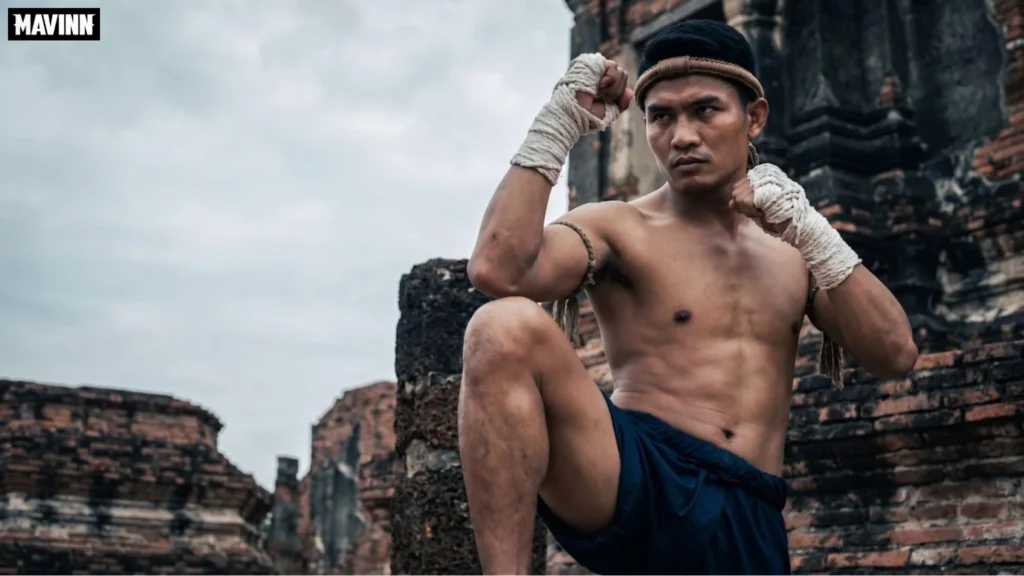
Legendary success for a muay thai fighter hinges on mastering the fundamental rhythm of the “eight limbs” rather than relying on chaotic aggression. You gain the most ground by studying how icons like Samart Payakaroon used distance to make world-class opponents miss by mere inches. This technical precision starts with thousands of repetitions on the heavy bag to perfect a steep kick that functions with the utility of a jab.
Strategy often trumps physical strength, a lesson immortalized by Saenchai’s ability to outmaneuver much larger opponents through superior footwork and feints. You must learn to read an opponent’s weight distribution to capitalize on small openings during transitions. Legendary camps often mandate two daily sessions totaling six hours to ensure this level of instinctive reaction becomes second nature.
True champions exhibit “Jai Su” or a fighting heart, which allows them to remain calm under the immense pressure of the clinch. This mental fortitude is built through grueling conditioning rather than just sparring for fun. Most elite Thai stadiums require fighters to complete grueling cardio conditioning before every afternoon training session to forge this unbreakable spirit.
Ancient Legends Who Started the Legacy
The modern Muay Thai fighter traces their lineage back to the battlefields of ancient Siam, where soldiers developed “Muay Boran” for survival when disarmed. These warriors turned their bodies into biological weapons by refining the “Art of Eight Limbs” to strike with shins, elbows, and knees. Historical records place the origins of these formalized combat systems in the Sukhothai era during the 13th century.
Nai Khanom Tom remains the ultimate symbol of the fighter’s spirit after defeating ten Burmese champions in a single day in 1774. His victory earned him freedom and cemented the reputation of Muay Thai as a superior striking art throughout Southeast Asia. Royal figures like King Phra Chao Suea, known as the “Tiger King,” further solidified this culture by secretly entering village tournaments to fight commoners during the Ayutthaya period.
The Modern Muay Thai Champions Thailand Has Produced
Rodtang Jitmuangnon, Superlek Kiatmoo9, and Tawanchai P.K. Saenchai are the icons every modern Muay Thai fighter now aspires to emulate. These athletes successfully transitioned from traditional stadium circuits to dominate global stages like ONE Championship. Their success transformed the sport from a local pastime into a high-production international spectacle.
Rodtang, known as “The Iron Man,” maintains flyweight dominance through a relentless style that prioritizes aggressive forward pressure. Superlek Kiatmoo9 solidified his “Kicking Machine” reputation by knocking out Jonathan Haggerty in 49 seconds to claim the ONE Bantamweight Muay Thai World Title at ONE 168 in Denver. Meanwhile, Tawanchai P.K. Saenchai exemplifies the blend of traditional aesthetics and power, currently holding the ONE featherweight Muay Thai world title with a high-finish rate built on heavy kicks.
You see these champions bridging elite performance and street culture through premium sponsorships and modern activewear. They have popularized the use of 4-ounce MMA gloves, forcing a faster pace than traditional gear. This shift has redefined training methods in gyms throughout Bangkok and the West.
The Reality of a Professional Muay Fighter Lifestyle

A professional muay thai fighter lives a life defined by extreme physical repetition and a rigid schedule that prioritizes the gym above all else. You will typically undergo two training sessions a day, starting with a 10km run at dawn to build the essential aerobic base. This grind continues with four hours of technical drilling and heavy bag work to harden the shins for impact.
Discipline extends far beyond the ring, particularly when managing the caloric deficits required for weight classes. Most athletes maintain a weight 5-8kg above their competition limit, forcing them into strict dietary cycles and intensive sweat sessions. We find that this mental battle against hunger and fatigue is what truly separates the elite from the hobbyist.
Longevity in the sport depends on your ability to recover quickly from the trauma of regular full-contact competition. A dedicated professional in Thailand might fight 12 to 15 times in a single calendar year to maintain their ranking and income. This high-volume approach ensures that tactical instincts remain sharp while the body adapts to the relentless pressure of the stadium lights.
The Daily Grind Inside a Traditional Training Camp
Life as a professional Muay Thai fighter in a traditional camp follows a strict two-a-day training regimen that prioritizes physical endurance and mental discipline. You begin with a 10km road run at 5:30 AM to build the foundational cardio required for five-round championship fights. This morning session transitions into shadowboxing and heavy bag work, focusing on the precision of your strikes before the 8:00 AM cool down.
The afternoon session starts at 3:00 PM and centers on high-volume pad work and grueling clinch sessions. You will endure at least five rounds of four-minute pad sets designed to exhaust your muscles while maintaining sharp technical form. Each day concludes with a repetitive conditioning circuit, often featuring 300 knees on the heavy bag and targeted neck strengthening exercises to prepare for the clinch.
Career Path and Financial Reality for a Thai Boxer
The professional path of a muay thai fighter begins in local rural circuits as early as age 8, with the ultimate goal of reaching the elite Bangkok stadiums. You climb the ranks by competing in hundreds of bouts to secure a spot at prestigious venues like Rajadamnern or Lumpinee. This career requires a relentless schedule, often fighting every 21 to 30 days to maintain both income and ranking.
Financial reality varies significantly, starting with modest purses of 500 to 3,000 THB for regional temple fair fights. Elite stadium fighters command between 50,000 and 150,000 THB per bout, though gyms typically retain 50% of these earnings to cover training and board. Today, the highest earners move into international promotions where performance bonuses can exceed 1.7 million THB in a single night.
Many competitive Thai stadium careers conclude in the late twenties to early thirties, often leading to a transition into coaching or gym management. Retired champions often earn 800 to 1,500 THB per hour as private trainers in premium urban fitness centers. Building a strong personal brand is now essential for fighters to secure apparel sponsorships and long-term financial stability beyond the ring.
Why Muay Thai Martial Artists Excel in Combat Sports
A Muay Thai fighter excels because they master the “Art of Eight Limbs,” utilizing fists, elbows, knees, and shins to create a complete striking system that leaves no gaps in close-range or distance fighting. Unlike specialists who focus solely on punching, these athletes are conditioned to handle the grueling physical toll of the clinch, where they use leverage and balance to dominate opponents. This versatility makes them the most sought-after strikers in modern MMA, where the ability to strike from any angle is a fundamental requirement for top-tier competition.
The conditioning process for a Thai stylist involves thousands of repetitions of heavy bag work and pad drills that significantly increase bone density in the shins. This “iron shin” effect allows you to throw leg kicks that act more like baseball bats than limbs, often ending fights by compromising an opponent’s mobility. Professional camps in Thailand often require fighters to complete two-hour training sessions twice daily to build the cardiovascular endurance needed for high-intensity rounds.
Beyond the physical tools, the sport instills a unique mental toughness derived from competing frequently from a very young age. We see this manifest as a calm composure under pressure, allowing you to execute technical counters even when fatigued or hurt. Many elite champions transition into other disciplines with over 200 professional bouts of experience, providing a tactical maturity that few other martial arts can match.
Muay Thai vs. Kickboxing Key Differences in Scoring and Style
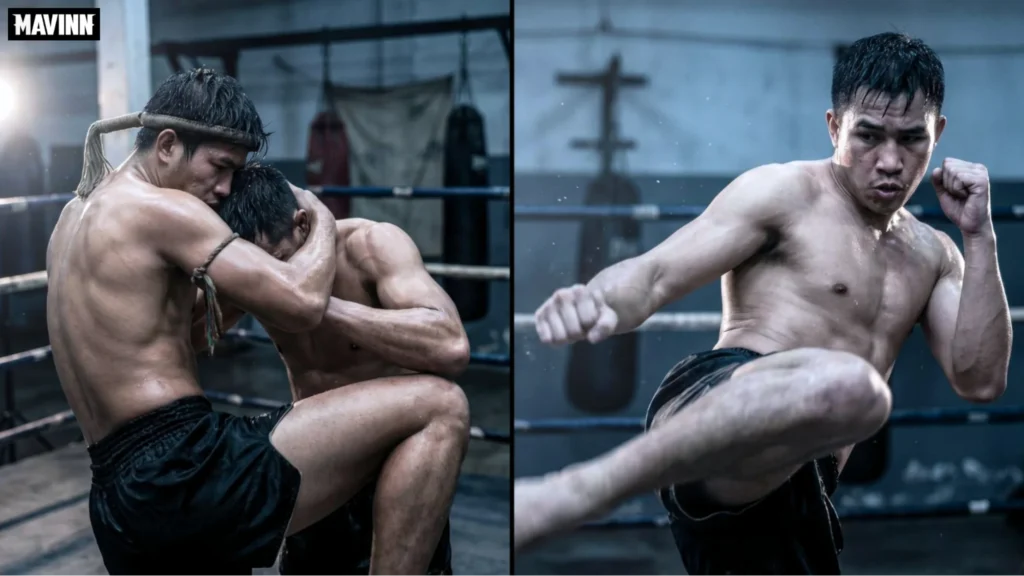
The primary difference lies in the eight limbs of Muay Thai versus the four limbs of kickboxing, which fundamentally dictates how a muay thai fighter scores points and manages distance. In Muay Thai, kicks to the body and head carry the most weight, while kickboxing emphasizes high-volume punch combinations and continuous movement. Judges in Thai stadiums look for “damaging effect” and composure, meaning a fighter who stays balanced while absorbing a hit often scores better than one who flails.
| Feature | Muay Thai | Kickboxing |
|---|---|---|
| Striking Points | 8 (Fists, Elbows, Knees, Shins) | 4 (Fists, Shins/Feet) |
| Clinching | Full grappling and sweeps allowed | Limited or banned (1-knee rule) |
| Scoring Focus | Damage, balance, and “big” strikes | Volume, aggression, and clean landings |
We see the most distinct stylistic gap in the clinch, where a muay thai fighter uses neck wrestling to set up knees and elbows. Kickboxing rulesets like GLORY or K-1 typically force a break if no immediate strike is thrown, favoring a faster, boxing-heavy pace. This difference means a Muay Thai bout often starts slowly to “feel out” the opponent, whereas kickboxing starts at 100% intensity from the opening bell.
Practicality for MMA and Self Defense
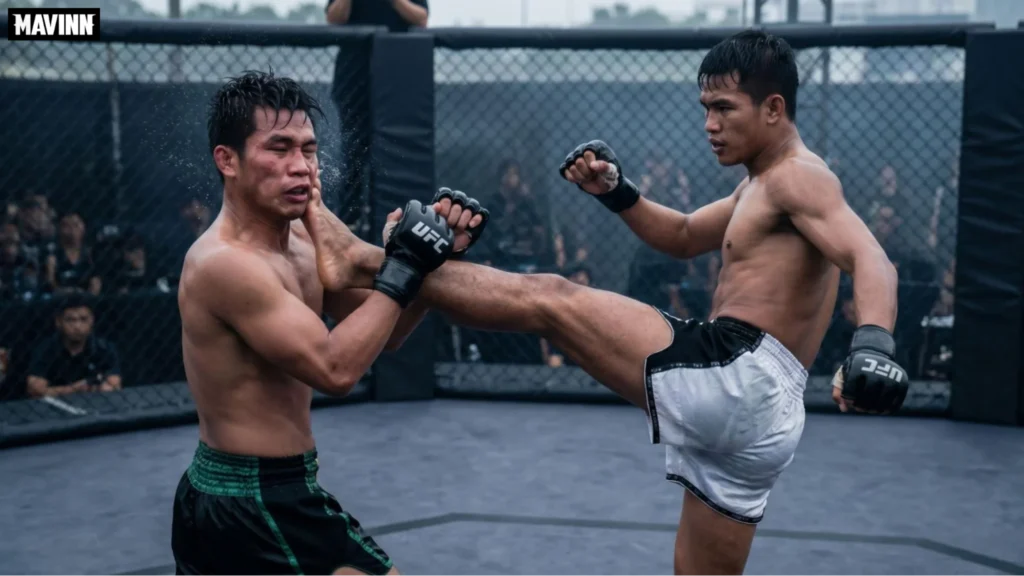
Muay Thai provides the most versatile striking foundation for both the cage and high-stakes street encounters. A Muay Thai fighter masters the “Art of Eight Limbs,” using fists, elbows, knees, and shins to dominate at every range. We prioritize the Muay Thai clinch because it allows you to control a grappler’s posture while delivering high-impact knee strikes.
This discipline transitions into MMA by offering elite leg kick mechanics that compromise an opponent’s mobility. You can see this effectiveness in high-level bouts where calf kicks have shifted the momentum of entire championship fights. In self-defense, the sport’s emphasis on standing balance ensures you can deliver power without being easily pulled to the pavement.
How to Start Your Own Muay Thai Fighter Journey
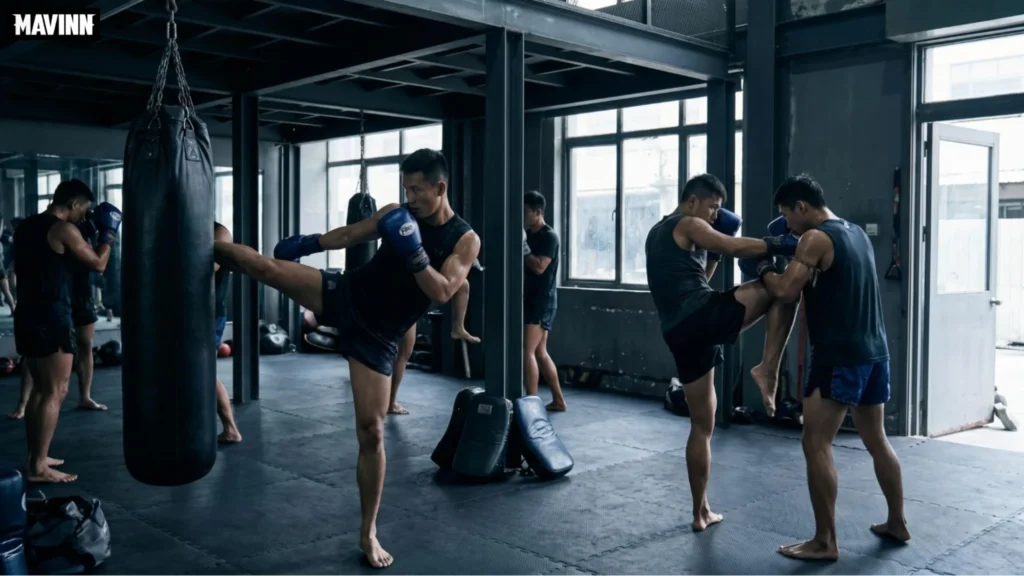
Becoming a Muay Thai fighter begins with selecting a gym that emphasizes active competition over fitness-only classes. You need a coach who has produced professional athletes and a community that pushes your physical limits daily. Consistency in the first 90 days determines if your body can handle the grueling shin conditioning and cardiovascular demands of the sport.
Focus on mastering the basic stance and hip rotation before investing in premium leather gear. Quality equipment like 16oz gloves and heavy-duty shin guards are mandatory for live sparring to prevent bone bruising and joint injuries. Most serious students transition from technical bag work to controlled sparring after roughly six months of dedicated mat time.
Dietary discipline and recovery protocols are just as critical as the hours you spend hitting Thai pads. High-protein intake is necessary to repair muscle tissue damaged during intensive clinch work and repetitive kicking drills. Professional camps often mandate two liters of electrolyte-rich fluids during a single two-hour afternoon session to prevent heat exhaustion and cramping.
Choosing a Gym and Preparing Your Body for the First Session
Select a gym where active pro fighters train under experienced trainers who prioritize technical form over “cardio-kickboxing” routines. Look for a facility with tiered classes so you avoid accidental sparring with experts during your initial orientation. A quality camp must have a clean training surface and well-maintained 100lb heavy bags to prevent joint injury during high-impact striking.
Prepare your body by focusing on hip mobility and steady-state cardio for at least one week before your first class. Muay Thai demands explosive rotation, so perform dynamic stretches like leg swings to prime your tendons for the impact of roundhouse kicks. Drink at least 500ml of water one hour before you arrive to sustain your energy through the high-intensity clinch drills.
Ensure you have these essentials ready for your debut session as a new muay thai fighter:
1. Professional hand wraps (180 inches) to stabilize your wrist and metacarpal bones.
2. Lightweight, moisture-wicking apparel that allows for a high range of leg movement.
3. A high-capacity water bottle to counteract the average 800-calorie burn per hour.
Essential Gear for Every Level of Training
Every Muay Thai fighter needs a gear set that balances impact absorption with anatomical mobility to ensure safety during high-intensity sessions. Quality training gloves use high-density foam layers to disperse kinetic energy, preventing common wrist fatigue during 90-minute bag workouts. We recommend starting with 10oz or 12oz gloves for bag work to increase punching velocity.
Proper protection extends to the lower body, where shin guards must remain stable without shifting during repetitive kick drills. Look for shin guards with anti-slip liners that prevent friction burns while transitioning between clinch work and striking. Durable 4.5-meter semi-elastic hand wraps are essential for stabilizing the 27 small bones in your hand against heavy impact.
| Training Level | Focus Area | Essential Gear |
|---|---|---|
| Beginner | Mechanics & Cardio | 12oz Gloves, 4.5m Wraps, Satin Shorts |
| Intermediate | Sparring & Drills | 16oz Gloves, High-Impact Shin Guards |
| Advanced | Fight Conditioning | Competition Gloves, Ankle Support, Headgear |
Conclusion
Becoming a professional muay thai fighter requires a relentless commitment to technical precision, cardiovascular endurance, and mental grit. You must master every aspect of striking while managing strict weight-cut protocols that preserve explosive power for five-round bouts. Most elite nak muay train twice daily, accumulating over 20 hours of high-intensity pad work and clinching every week.
The lifestyle of a fighter extends far beyond the gym, demanding unparalleled dedication to the craft. Whether you are wrapping your hands for the very first time or preparing to compete alongside the elite muay thai champions Thailand has produced, the true mark of a champion lies in the unyielding heart brought to every single round.