Key Takeaways
- Sak Yant – This traditional Thai tattooing practice uses hand-etched geometric designs and ancient scripts to provide the wearer with spiritual protection, strength, and good fortune.
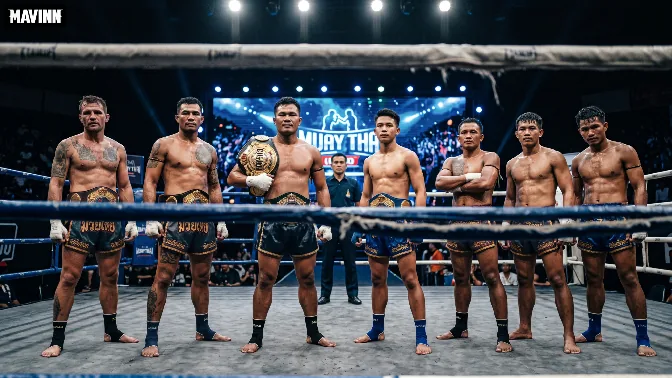
- Muay Thai Integration – Fighters often adopt these tattoos as “spiritual armor,” believing the sacred ink enhances resilience and mental focus during high-stakes combat.
- Traditional Methodology – Each design is applied using a “Khem Sak” (long metal rod) by a monk or Arjan, who performs specific chants to activate the power within the tattoo.
- Discipline and Conduct – The efficacy of the tattoo depends on the wearer following a strict moral code, reinforcing the discipline required in both combat sports and a street-focused lifestyle.
Sak Yant is a sacred traditional Thai tattoo that blends Buddhist imagery with spiritual protection for the wearer. Practitioners believe these traditional designs, hand-tapped by masters using long steel needles, bestow specific powers like invincibility or good fortune. Many Nak Muay wear designs like the Hah Taew (five lines) to gain a competitive edge and spiritual defense in the ring.
At MAVINN, we recognize how these ancient symbols have evolved from battlefield protection into a global icon of combat culture and street style. The art form relies on a combination of prayers and specific geometric patterns to activate the tattoo’s spiritual power. You will often see the Twin Tigers or Hanuman designs on elite athletes representing strength and agility.
What Makes a Sak Yant Tattoo Different from a Regular Tattoo ?
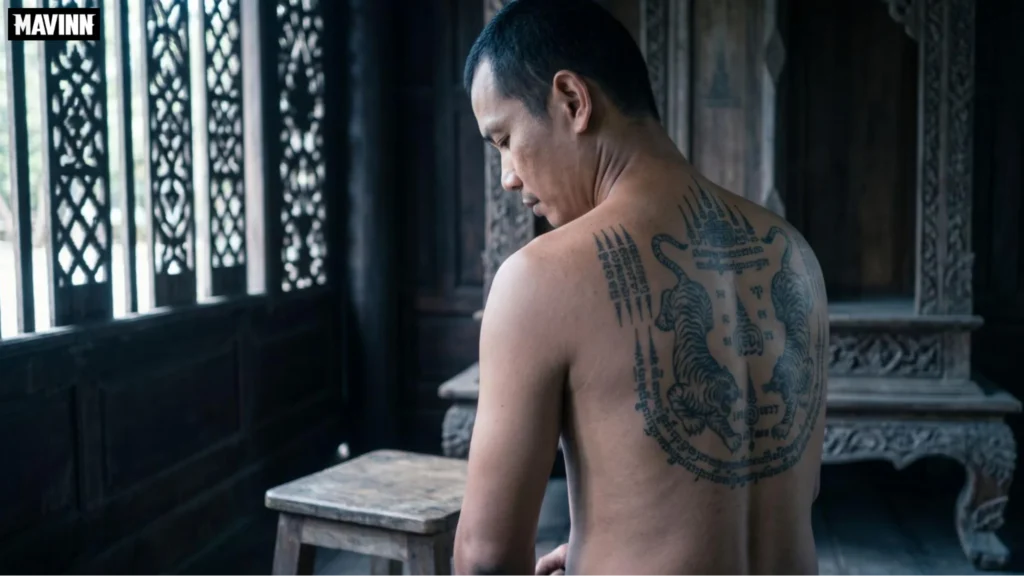
A Sak Yant is a spiritual rite of passage that functions as a protective talisman, whereas a regular tattoo is primarily a form of aesthetic self-expression. Traditional practitioners apply these sacred designs using a long metal or bamboo spike called a Khem, rather than a motorized rotary machine. During the tattooing process, the master recites specific *Kata* (incantations) to infuse the ink with spiritual power.
| Feature | Regular Tattoo | Sak Yant |
|---|---|---|
| Primary Purpose | Aesthetic & Art | Protection & Talisman |
| Application Tool | Electric Machine | Bamboo or Metal Spike |
| Practitioner | Tattoo Artist | Monk or Lay Master (Ajarn) |
| Activation | None | Chanting & Blessings |
Unlike modern art, Sak Yant requires the wearer to adhere to strict moral precepts to keep the spiritual protection active. These rules often include prohibitions against lying or disrespecting mentors to ensure the Hah Taew (Five Lines) remains effective for the wearer. Many Muay Thai fighters carry these marks to provide mental focus and perceived invincibility during high-stakes bouts at stadiums like Rajadamnern.
Spiritual Meanings Behind Classic Thai Tattoo Designs
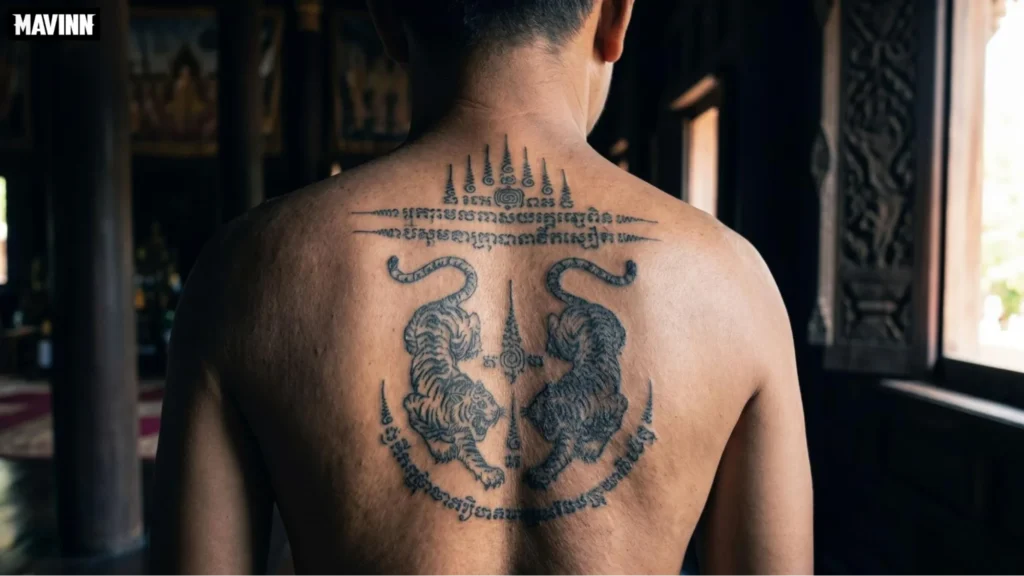
Sak Yant designs function as spiritual armor designed to provide you with specific supernatural benefits such as protection, physical strength, and success. These sacred tattoos combine ancient Khmer script with intricate geometry to create a permanent talisman directly on the skin. Combat sports athletes often choose patterns like the Hah Taew (Five Lines) to guard against bad luck and attract prosperity in and out of the ring.
Each geometry serves a distinct purpose, ranging from the Gao Yord (Nine Spires) which offers universal protection to animal designs that bestow the creature’s traits. You will find that Muay Thai practitioners favor the Tiger (Suea) for its representation of raw power and authority over opponents. This tradition requires you to follow strict ethical codes to keep the tattoo’s spiritual power active during high-stakes competition.
The placement of these designs is equally significant, as the head and upper back are considered the most sacred parts of the body for receiving a blessing. Traditionally, an Ajarn (master) or monk performs the ritual using a long bamboo or steel needle to infuse the ink with specific prayers. Modern practitioners often integrate these traditional symbols into street-style aesthetics to represent a commitment to discipline and the warrior spirit.
Hah Taew The Five Lines of Fate
Hah Taew is the most iconic sak yant design, consisting of five vertical rows of sacred Khmer script traditionally tattooed on the back of the left shoulder. Each line carries a distinct prayer intended to provide spiritual protection and enhance your life’s path. Many Muay Thai fighters wear this script to fortify their mental grit and physical resilience during intense training and professional bouts.
The first row guards your home from unwanted spirits, while the second line turns negative luck into positive opportunities. Your third line acts as a shield against black magic and the ill-wishes of those who might stand in your way. This script serves as a spiritual defense system that keeps you focused on your daily training goals.
The fourth line draws in success, while the fifth row enhances your charisma to help you influence those around you. These ancient rows function as spiritual armor that aligns your energy with your professional ambitions. Global athletes often choose the Hah Taew to represent their unwavering discipline and spiritual readiness.
Gao Yord The Nine Sacred Peaks of Protection
The Gao Yord is the most foundational “Master Yant” in the sak yant tradition, representing the nine sacred peaks of Mount Meru. We often see this geometric design placed at the base of the neck to provide universal protection, ranging from physical safety to increased personal authority. Practitioners consider it the essential gateway tattoo because it establishes a spiritual base before you add more specific or complex designs.
Each of the nine peaks contains a small Buddha image, symbolizing distinct powers such as invincibility (Kong Grapan) and success in demanding physical pursuits. For Muay Thai fighters and athletes, this yant serves as a spiritual shield against injury and misfortune during intense training or competition. It is traditionally applied using a long bamboo or steel needle to ensure the complex script’s sacred geometry remains precise and effective.
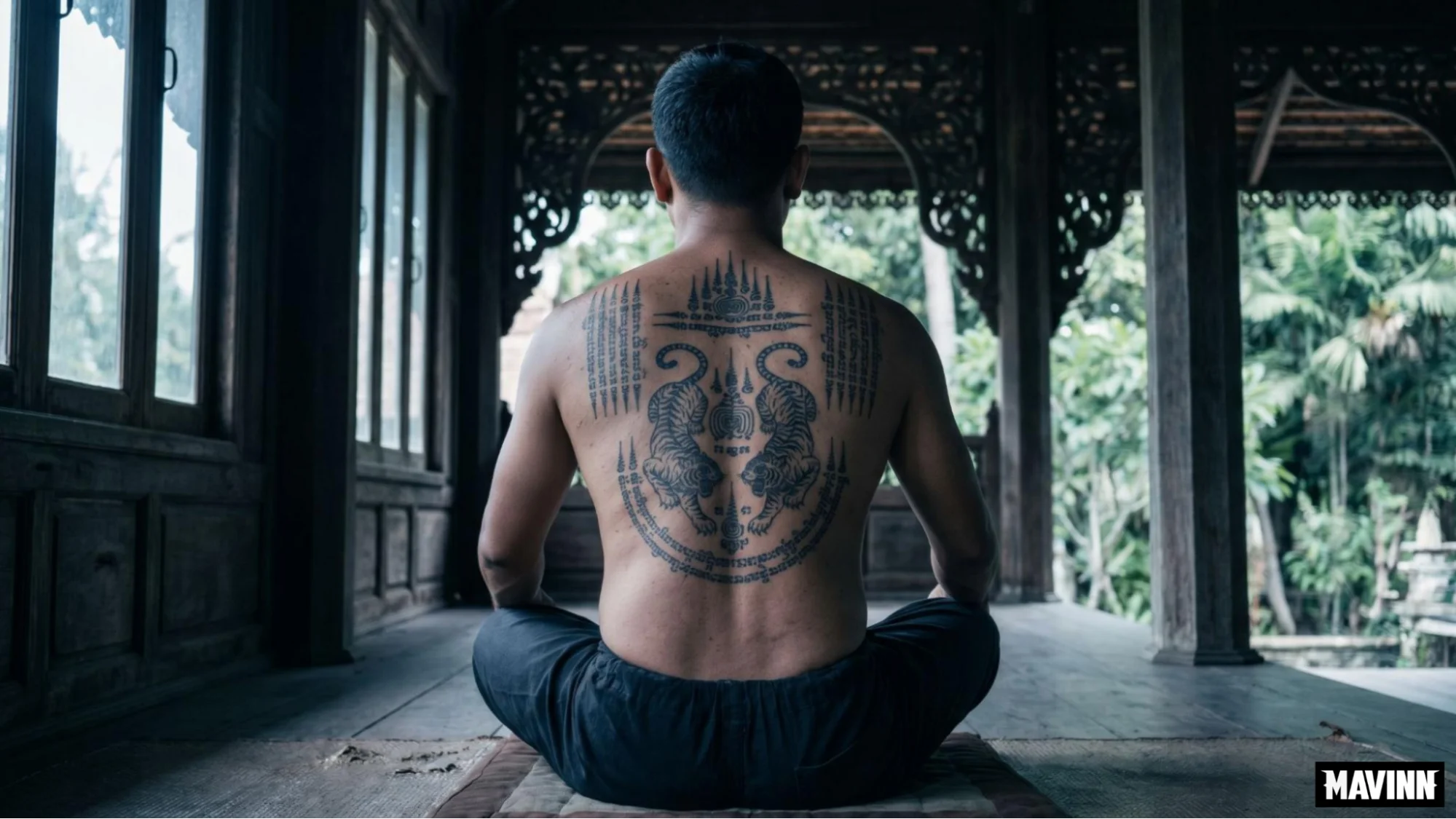
Suea (Twin Tigers) Power and Authority
The Twin Tigers sak yant represents ultimate power, authority, and protection, making it a primary choice for Muay Thai fighters and those in leadership roles. These symmetrical tigers represent the Amnaj (authority) required to command respect and overcome opponents in the ring. You will often see this design tattooed on the lower back to provide a spiritual shield against physical harm during high-impact combat.
Beyond physical strength, the twin tigers symbolize the duality of speed and aggression needed to dominate both inside and outside the ring. We see many athletes choose this specific design because it embodies the relentless spirit of a predator who never backs down from a challenge. This ink serves as a permanent reminder to channel the unstoppable energy of the tiger in every training session or professional pursuit.
Hanuman Strength and Unwavering Devotion
Hanuman sak yant designs represent the pinnacle of warrior energy, granting you the legendary strength, speed, and endurance of the Hindu monkey god. Combat athletes often choose this ink to cultivate Itthi, a form of power believed to help you dominate physically superior opponents. This symbol goes beyond physical prowess, representing a total dedication to your gym and the 108 traditional virtues of the warrior.
You will typically see these designs placed on the back or upper arms to act as a spiritual shield during heavy sparring or competition. Different variations offer specific benefits, such as the Hanuman Cho-Shai which is intended to bring victory in every confrontation. For instance, the Hanuman Tua Ha configuration specifically targets five core blessings to protect your body from specific impact injuries.
Monks vs. Ajarns Choosing Your Authentic Sak Yant Master
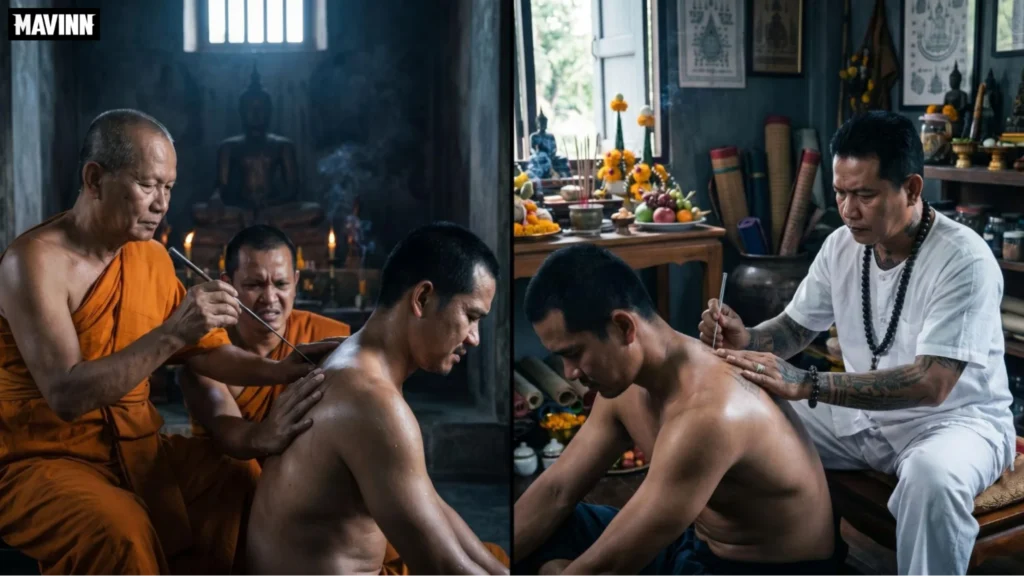
Choosing between a monk and an Ajarn depends on whether you seek a traditional temple ritual or a personalized spiritual consultation. Monks perform sak yant within a Buddhist temple (Wat) as a form of merit-making, strictly following religious protocols and traditional lineages. You generally do not choose your design, as the monk selects a protective yantra, like the Gao Yord, based on your aura and spiritual needs.
| Feature | Monk (Phra) | Ajarn (Lay Master) |
|---|---|---|
| Setting | Buddhist Temple | Private Studio (Samnak) |
| Female Access | Strictly prohibited or restricted | Fully permitted |
| Design Selection | Determined by the monk | Collaborative and custom |
| Financials | Small ritual donation | Professional session fee |
Ajarns are lay masters who often trained as monks but now operate private studios, offering more time for detailed artistry and specific placement. This is the preferred route for combat athletes who want a particular yantra, such as the Suea Hiaw Lang (Tiger Looking Back), to boost their presence in the ring. Regardless of your choice, verify that your master uses sterile, single-use needles to ensure safety alongside spiritual empowerment.
The Sak Yant Ritual Offerings, Etiquette, and the Final Blessing
You initiate the process by presenting the Phan Khru, a traditional offering tray that signals your respect for the master’s lineage. This tray must be handed over with both hands while kneeling, as maintaining a physical position lower than the Ajarn is a non-negotiable sign of humility. Proper conduct requires modest attire that covers your shoulders and legs while keeping your feet tucked away from sacred objects.
- The Offering: A bundle typically containing incense, candles, and fresh flowers like lotus or marigolds.
- The Donation: A small cash amount, presented alongside the offering, symbolizing your commitment to the tradition.
- The Activation: A final blow (Phao) from the master to transfer spiritual energy directly into the fresh ink.
The ceremony concludes with the Katha, a series of ancient chants that activate the spiritual properties of your sak yant. The master recites these Pali or Sanskrit verses and then blows onto the tattoo to awaken its specific powers of protection or strength. This final act creates a sacred bond, requiring you to uphold specific moral codes like avoiding alcohol or disrespecting parents to keep the tattoo’s power active.
Honest Truth About Sak Yant Pain and Traditional Bamboo Tattooing
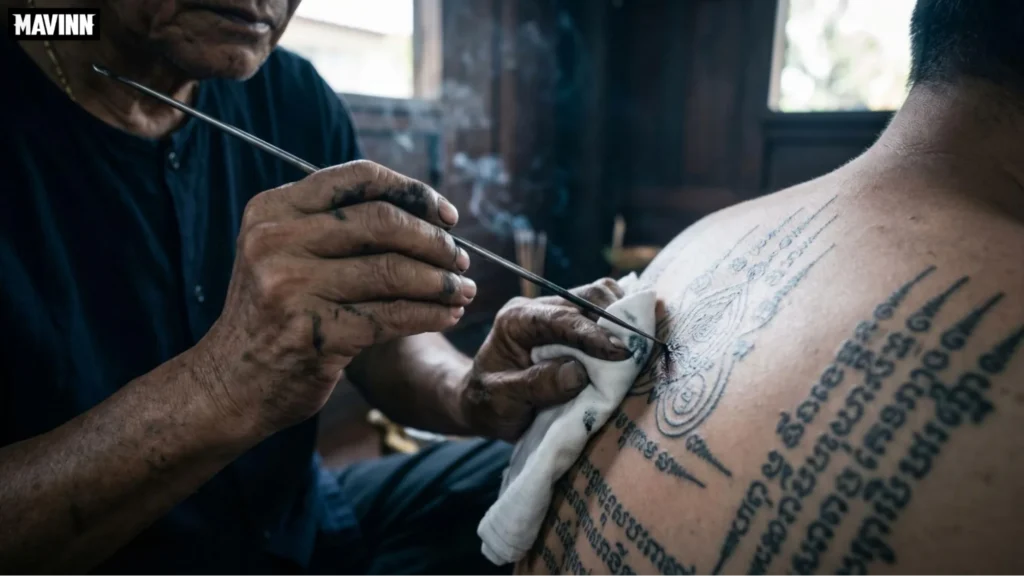
Sak Yant tattoos are painful, but the sensation is a rhythmic, sharp stinging rather than the constant, burning vibration of a modern machine. Because the artist uses a long bamboo or steel needle (Khem Sak) to manually punch ink into the skin, the impact is more localized and precise. You will feel each individual strike, which many fighters compare to the repetitive, concentrated sting of a firm leg kick during sparring.
| Feature | Traditional Bamboo (Hand-Poked) | Modern Electric Machine |
|---|---|---|
| Skin Damage | Minimal; less tearing | Higher; more surface trauma |
| Healing Time | 1–2 weeks | 2–4 weeks |
| Sensation | Sharp, rhythmic pokes | Constant high-frequency heat |
The lack of motor-driven vibration means your skin suffers significantly less trauma, often resulting in minimal scabbing or bleeding if performed by an experienced Ajarn. Most practitioners should still pause heavy Muay Thai training for at least 7 to 10 days to let the surface heal cleanly, since the needle separates skin fibers rather than slicing through them. Most practitioners find the ribs and spine to be the most intense zones during the typical 20 to 60-minute application process.
How Much Does a Sak Yant Cost ? Temple Donations vs. Studio Pricing
A Sak Yant costs anywhere from a small temple donation (typically around 100 to 200 THB with offerings) to over 15,000 THB at a premium tattoo studio. You must decide if you want a raw, communal spiritual experience or a private session focused on modern safety protocols. At a traditional temple, you pay through an offering tray called “Kha Khru,” which typically includes flowers, incense, and a small cash gift for the monastery’s upkeep.
| Feature | Temple (e.g., Wat Bang Phra) | Professional Studio |
|---|---|---|
| Cost Structure | Small donation (Kha Khru) | Fixed fee or hourly rate |
| Safety Level | Traditional/Shared needles | Single-use/Sterile equipment |
| Design Choice | Selected by the Monk | Custom or pre-selected |
| Average Price | 100 – 200 THB (with offering) | 3,000 – 15,000+ THB |
Professional studios bridge the gap for athletes and collectors who require hospital-grade sterilization and high-quality ink. These artists often charge per piece or by the hour, providing a more predictable schedule than the “first-come, first-served” chaos of a temple. A medium-sized Gao Yord (Nine Spires) design at a reputable Bangkok studio usually starts around 5,000 THB.
Strict Sak Yant Rules and Taboos to Keep the Magic Alive
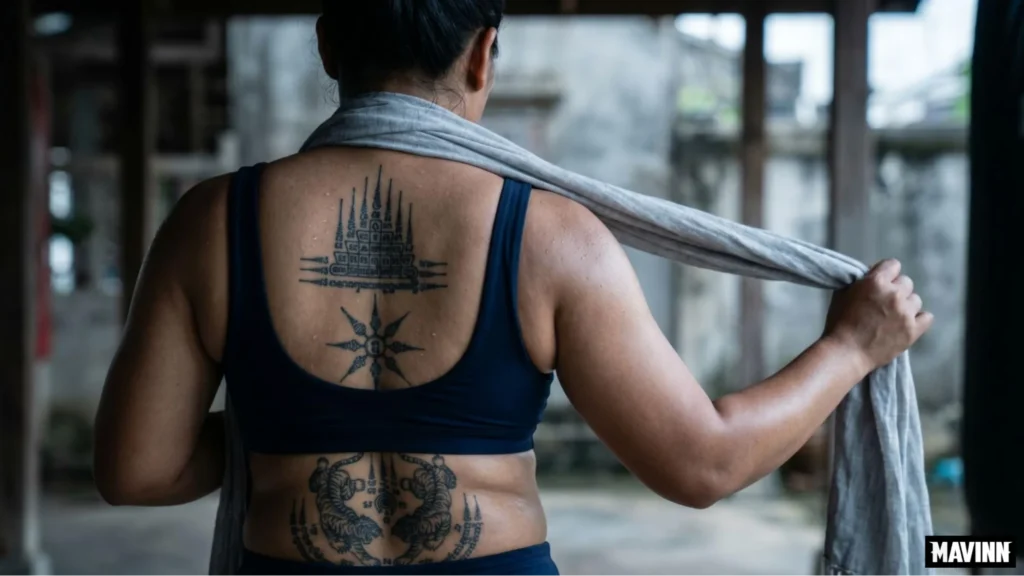
Sak Yant magic stays alive only if you adhere to a strict code of conduct that blends Buddhist morality with ancient Khmer sorcery. You must strictly uphold the Five Precepts: no killing, no stealing, no lying, no sexual misconduct, and no intoxication. Many Ajarns also forbid passing under laundry lines or bridges, as contact with “unclean” energy is believed to strip the tattoo of its spiritual power.
- Do not commit adultery or disrespect your parents.
- Avoid eating “forbidden” foods such as starfruit, pumpkin, or funeral leftovers.
- Never speak ill of the master who performed the ceremony.
Fighters often view these restrictions as a mental discipline that mirrors the rigors of a Muay Thai camp. If you violate these taboos, the ink remains, but the protective “Khom” is considered dead. You must return to your Ajarn for a re-blessing ceremony using incense and traditional gold leaf to reactivate the Yantra.
Safety, Hygiene, and Aftercare for Your Sak Yant Tattoo
Prioritizing hygiene is the most critical step when getting a sak yant tattoo to prevent bloodborne infections and ensure the sacred ink heals with sharp precision. You must verify that the practitioner uses a fresh, sterilized needle or a modern disposable tip for every individual session. Traditional samnaks should demonstrate their disinfection process using medical-grade autoclaves or high-proof alcohol.
Combat sports athletes must pause training for at least 7 to 10 days to prevent sweat and friction from damaging the ritual ink. Friction against mats or sparring partners during the healing phase introduces bacteria that can lead to staph infections or permanent scarring. Follow these specific steps to protect your work:
1. Clean the area gently with lukewarm water and fragrance-free soap.
2. Apply a thin layer of specialized tattoo balm or unscented lotion twice daily.
3. Avoid pools, salt water, and direct sunlight for a minimum of 14 days.
FAQ About Sak Yant Tattoos
Can Women Get a Sak Yant from a Monk?
Women can receive a Sak Yant from a monk, but strict traditional rules prohibit any physical contact between the monk and a female. To follow the monastic code, the monk typically places a small piece of cloth over the skin to ensure no direct touch occurs. Most temples, such as Wat Bang Phra, use these specific protocols to allow women to receive a sacred thai tattoo while respecting ancient vows.
Alternatively, many female practitioners and Muay Thai athletes opt for an Ajarn, or lay master, to avoid these contact restrictions. Because Ajarns are not ordained monks, they can touch the skin directly, resulting in a more precise and comfortable tattooing process on the back or shoulders without violating any religious vows.
Do I Have to Be Buddhist to Get a Sak Yant?
No, you do not need to be Buddhist to receive a sak yant. While these tattoos are deeply rooted in Buddhist and animist traditions, the masters welcome anyone who shows genuine respect for the craft. Many professional Muay Thai fighters from diverse religious backgrounds get a sak yant tattoo to seek protection and mental fortitude before entering the ring.
You must, however, commit to the spiritual rules of conduct dictated by the Ajarn, which often include basic mandates against lying, stealing, or disrespecting your parents. Most practitioners focus on your intent and sincerity rather than your specific religious label, treating the ink as a spiritual tool to reinforce a disciplined lifestyle.
Is the Ink Used in Sak Yant Safe?
The safety of the ink depends heavily on where you choose to get your sak yant tattoo. Traditional temples may use a shared batch of ink mixed with natural ingredients like charcoal, herbs, or palm oil, which can carry a higher risk of cross-contamination if the needle isn’t properly sanitized. However, modern professional studios and reputable Ajarns now utilize high-quality, pre-sterilized tattoo ink alongside single-use disposable needles to ensure complete safety.
If hygiene is your primary concern, it is highly recommended to visit a private studio or a master who explicitly follows strict sanitation protocols. This allows you to experience the full spiritual power and authenticity of a traditional thai tattoo without compromising your physical health, training schedule, or recovery safety.
What Happens If You Break the Sak Yant Rules?
If you accidentally or intentionally violate the strict moral precepts dictated by your master, practitioners believe the sak yant loses its magical protection and spiritual power. While the physical ink remains permanently on your skin, the sacred talisman is considered “dead” or dormant, meaning it will no longer shield you from misfortune or grant you strength.
To reactivate the spiritual defense and magic of your tattoo, you must return to your Ajarn for a traditional re-blessing ceremony. This ritual typically involves presenting a new offering tray (Phan Khru), reciting specific prayers, and applying sacred gold leaf to breathe life back into the geometric script.
Conclusion
Sak Yant is a sacred blend of spiritual protection and Thai cultural identity that remains central to the Muay Thai community. It represents more than just ink; it is a lifelong commitment to a specific code of conduct and ancient tradition. Many fighters believe these designs, like the Gao Yord or Hah Taew, provide essential physical and mental fortification during high-stakes bouts.
Choosing to get a Sak Yant requires respecting the ritualistic process and the Ajarn who performs the ceremony. We see this tradition constantly bridging the gap between ancient mysticism and the modern combat sports lifestyle. You should research the specific meanings of each design, such as the Twin Tigers for power, before committing to the needle.