Key Takeaways
- Roundhouse Kick – Generating maximum power requires a coordinated rotation of the hips and a full pivot on the lead foot to drive your weight through the target.
- Proper impact involves striking with the lower third of the shin bone, which provides a much denser hitting surface than the fragile bones of the foot.
- Stepping diagonally off the centerline before launching the kick creates the necessary angle to bypass an opponent’s guard and maintain personal balance.
- Keeping the non-kicking hand high while using the kicking-side arm for momentum protects your chin from counter-strikes during the execution.
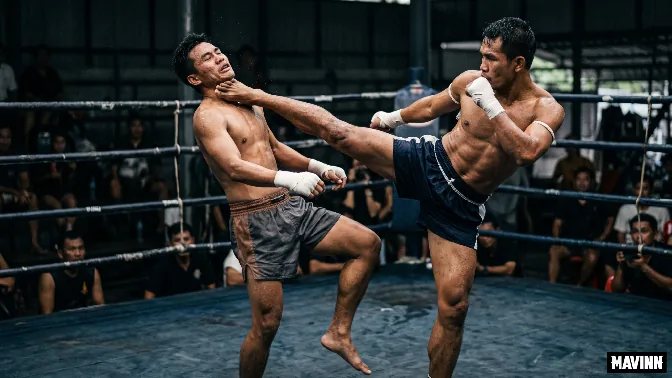
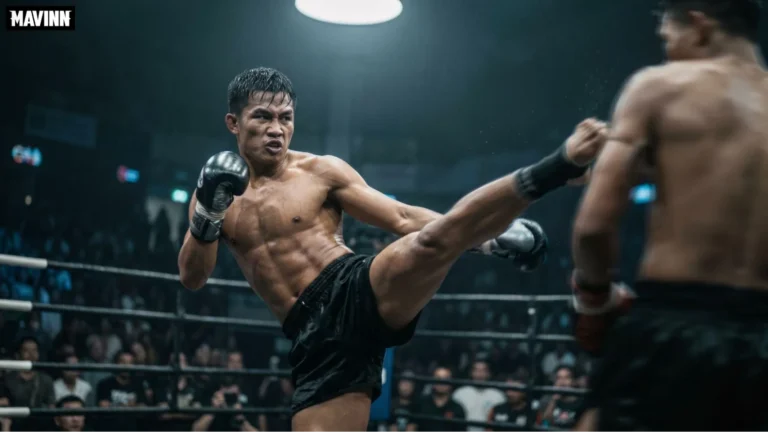
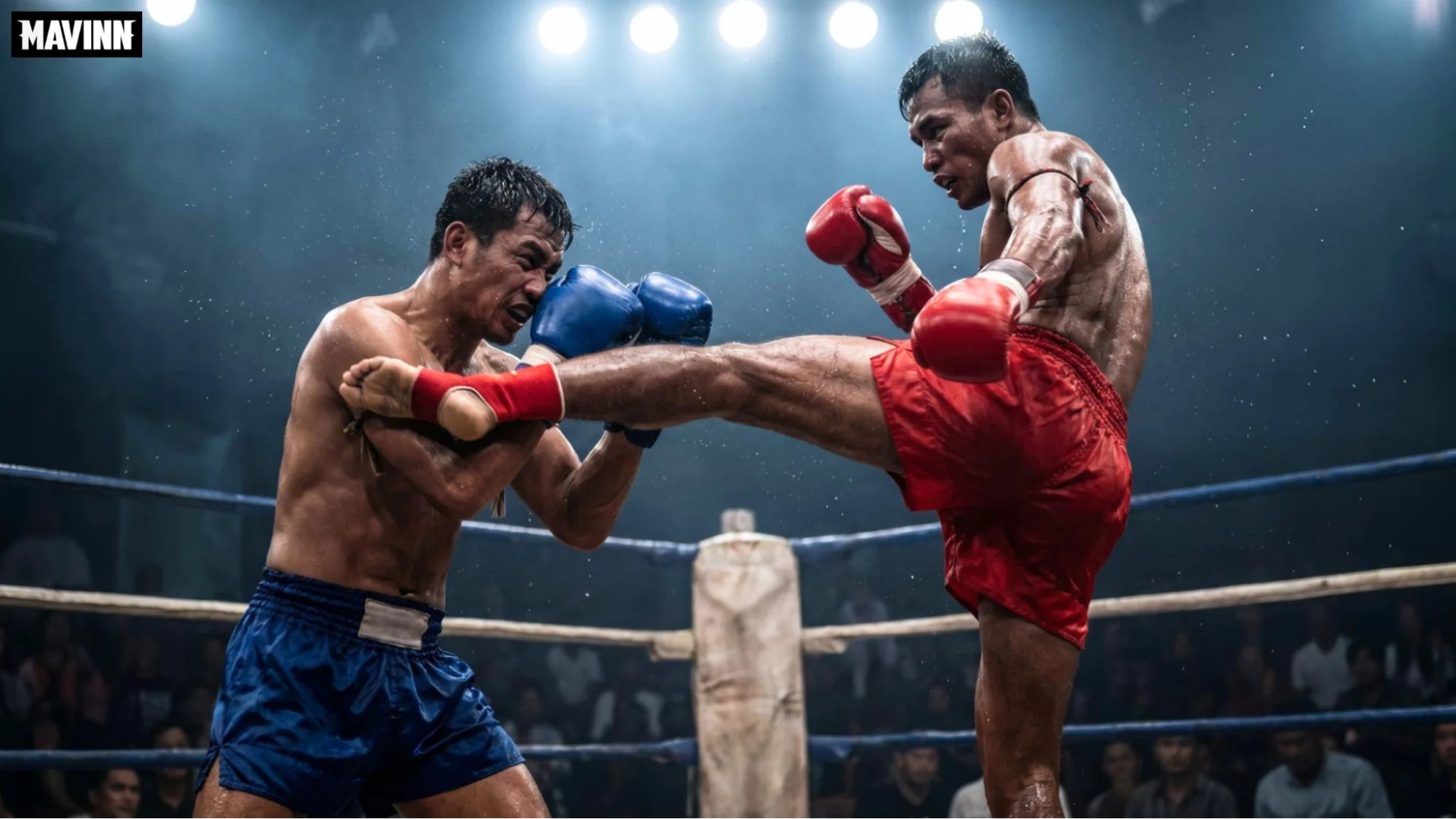
The roundhouse kick is the most versatile power strike in martial arts, delivering devastating impact through full-body rotation. By pivoting your standing foot and snapping your hips over, you drive your leg into the target like a heavy lever. In the roundhouse muay thai system, practitioners specifically aim to land with the lower shin bone to maximize structural damage and improve kicking power.
Mastering your roundhouse kick technique requires a perfect balance of speed and structural alignment. Whether you are training for competition or hitting the heavy bag, launching the strike with a fluid motion without telegraphing your intent allows you to generate massive force, proving why it remains a fundamental weapon in combat sports.
What Makes the Roundhouse Kick So Effective ?
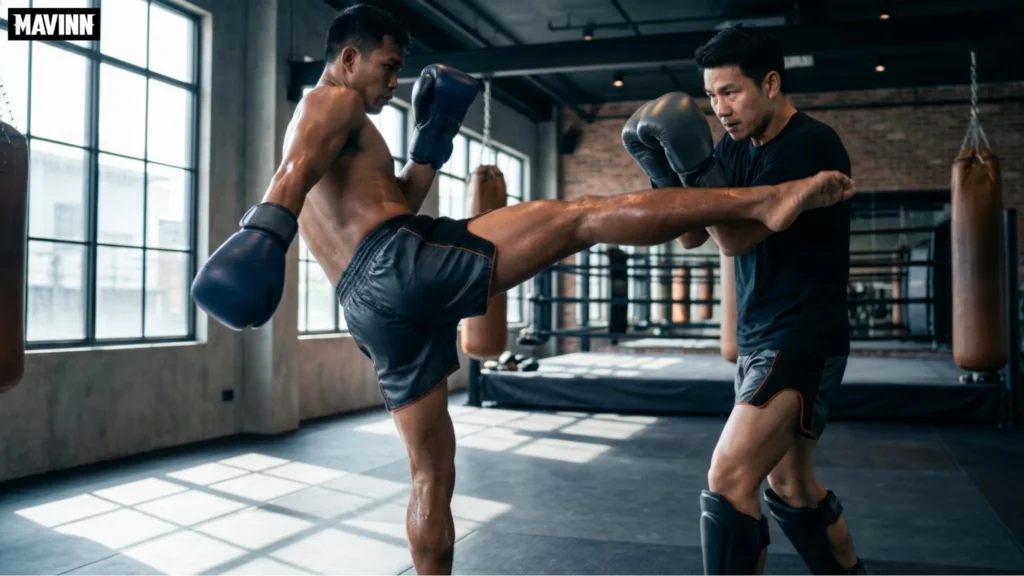
The roundhouse kick generates devastating power through full-body rotation and the centripetal force created by pivoting the lead foot. Unlike linear strikes, this movement utilizes your entire body mass to turn your shin into a heavy lever that cuts through a defensive guard. A professional fighter can land this strike with over 1,200 pounds of force upon impact.
Its effectiveness also stems from an unpredictable trajectory and the ability to target multiple levels of the body. You use the same initial chambering motion to attack the thigh, ribs, or head, which makes it nearly impossible for an opponent to read the landing zone.
- Pivoting the standing foot opens the hips to maximize rotational torque.
- The shin provides a dense striking surface that is more durable than the small bones in the foot.
- Following through the target ensures energy transfers deep into the muscle tissue.
We see practitioners use the low kick specifically to deaden the peroneal nerve, which can neutralize an opponent’s mobility in a single strike. Even when blocked, the sheer impact can damage the defender’s forearms and drain their energy. This constant pressure breaks down a guard and creates openings for follow-up punching combinations.
Technique Step by Step Guide for Perfect Form
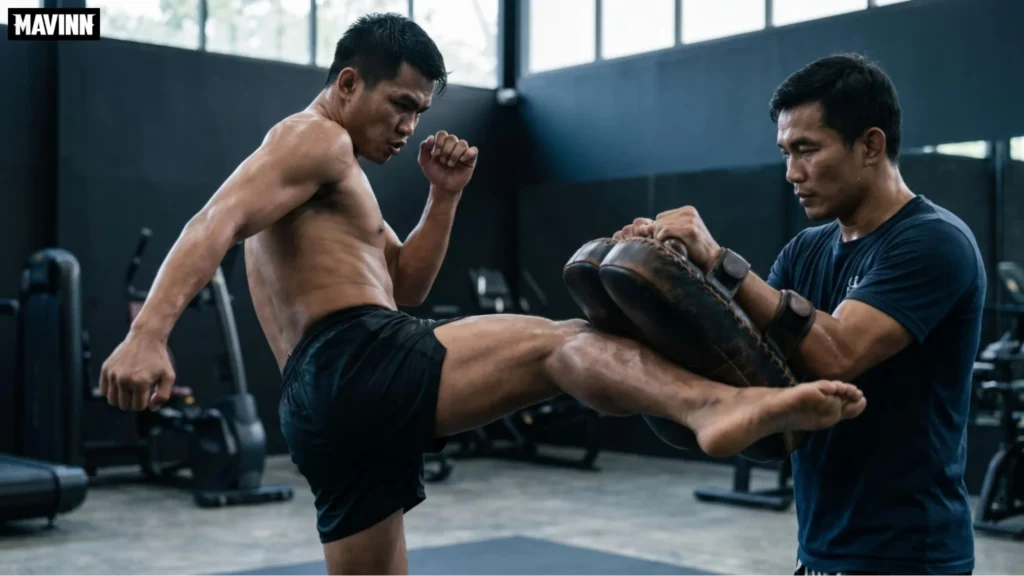
A perfect roundhouse kick relies on a synchronized pivot of the standing foot and a whip-like rotation of the hips to generate maximum impact power. You must turn your standing heel toward the target while swinging your leg in a horizontal arc, ensuring your shin makes contact rather than your foot. This mechanical chain converts your body weight into kinetic energy, typically delivering over 1,000 pounds of force in professional-level strikes.
To execute the movement, step out at a 45-degree angle with your lead foot to open your hips before swinging the rear leg. Your arm on the kicking side should swing downward and backward to act as a counterbalance, keeping your torso upright and protected. Maintaining a slight bend in the standing knee prevents joint injury and provides the stability needed to reset quickly for a follow-up 3-hit combination.
Focus on turning your hip over completely so that your knee points slightly downward at the moment of impact. This ensures you are cutting through the target rather than just hitting the surface. For maximum efficiency, aim to land with the lower third of your shin bone, which is the densest part of the leg and least likely to fracture during heavy heavy bag training.
Starting Stance and Perfecting the Pivot
Your roundhouse kick starts with a balanced, active stance where your weight sits primarily on the balls of your feet. Maintain a shoulder-width gap between your legs and keep your guard high to protect against immediate counters. This posture allows you to generate explosive torque instantly without losing your center of gravity during the transition.
The pivot requires you to rotate your lead foot 90 to 180 degrees away from the target as the kicking leg swings upward. This movement opens your hips and allows your full body weight to transfer into the strike rather than relying on leg muscle alone. Stepping outward at a 45-degree angle before the pivot creates the necessary space for your hip to roll over the impact zone.
Keep your standing knee slightly bent to act as a shock absorber and maintain balance during the follow-through. Ensure your lead heel points directly toward your opponent at the moment of impact to confirm maximum hip engagement. This specific mechanical alignment substantially increases striking power compared to a stationary, flat-footed approach.
Hip Rotation How to Get a Stronger Kick
If you are wondering how to get a stronger kick, you generate maximum power in a roundhouse kick by rotating your hips completely over so your shin connects horizontally with the target. This mechanical shift transfers your entire body weight into the strike, transforming a simple leg swing into a high-impact blow. Pivot your standing foot at least 90 to 180 degrees to fully unlock the pelvic range of motion required for deep penetration.
Mastery of hip torque relies on these specific technical cues:
1. Pivot your lead heel toward the target to open the hip gate.
2. Drive the kicking hip over the standing leg to create a downward “chopping” angle.
3. Engage the obliques and glutes to snap the leg forward with maximum velocity.
Many beginners make the mistake of kicking “at” the bag rather than “through” it. Professional fighters focus on the lead hip leading the leg, ensuring the shin hits with maximum bone density and force. Consistent heavy bag work helps you calibrate the timing between your foot pivot and hip turnover for a meaningful increase in striking power.
Proper Shin Conditioning to Avoid Injury
Conditioning your shins for a powerful roundhouse kick requires consistent impact on heavy bags to trigger Wolff’s Law, which naturally increases bone density. You should start with softer synthetic bags before progressing to high-density leather to avoid early-stage stress fractures. Aiming for 100 kicks per leg each session builds a resilient base without overtaxing the tibia.
1. Kick a heavy bag daily to desensitize the skin and nerves.
2. Drill with Thai pads to simulate the impact of a moving target.
3. Engage in light technical sparring to test your shin durability in live scenarios.
Recovery is critical because bones only densify during the rest periods between your training sessions. Avoid harmful myths like rolling glass bottles or hitting your shins with wooden sticks, which can cause permanent nerve damage or bone chips. Maintaining a diet high in calcium and Vitamin D provides the essential minerals needed to repair and strengthen your shins effectively.
Roundhouse Kick Kickboxing vs. Roundhouse Muay Thai
The primary difference is that a kickboxing roundhouse uses a snappy knee chamber for speed, whereas the Muay Thai version acts like a heavy baseball bat for raw power. Kickboxing requires you to lift the knee toward the chest before flicking the leg to strike with the top of the foot. This snapping motion allows you to retract the leg instantly to stay mobile during high-volume sparring exchanges.
| Feature | Kickboxing Roundhouse | Muay Thai Roundhouse |
|---|---|---|
| Striking Surface | Top of foot / Lower shin | Mid-to-lower shin bone |
| Leg Path | Snappy chamber (bent knee) | Wide, straight-leg arc |
| Core Movement | Hip snap and leg flick | Full body rotation |
| Primary Goal | Speed and rapid recovery | Structural damage and power |
To generate maximum force in the roundhouse muay thai technique, you step out at a 45-degree angle and swing your leg through the target rather than at it. You must rotate your hips and standing foot in unison to ensure the strike carries your full body weight into the opponent’s ribs or thighs. For better balance, swing your same-side arm downward to create a counterbalance that stabilizes your posture upon impact.
How to Improve Roundhouse Kick Power and Speed
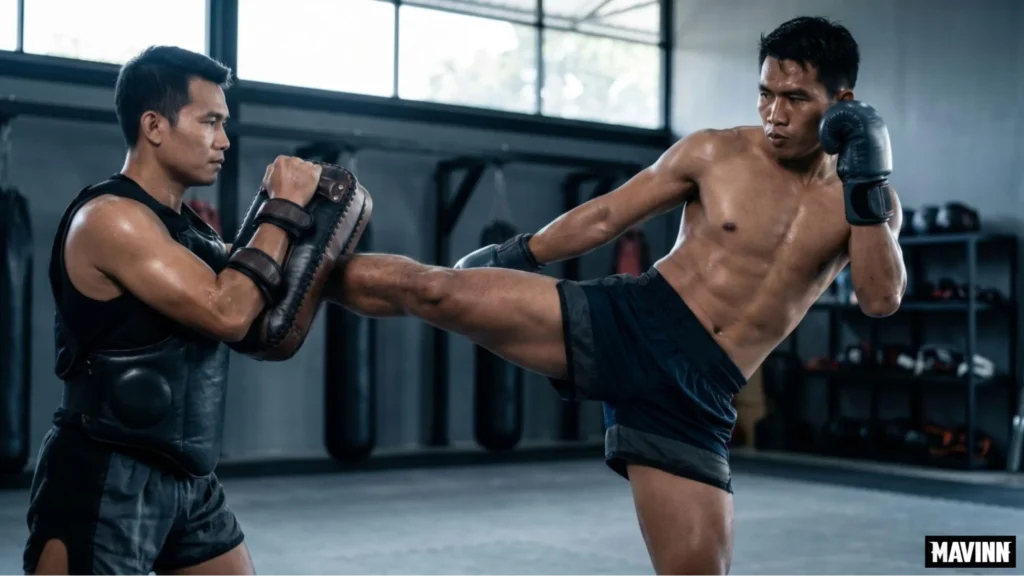
To truly improve roundhouse kick execution, you maximize power and speed by perfecting the 180-degree pivot of your standing foot and driving your hips through the target. This rotation creates the necessary torque to turn your leg into a heavy pendulum rather than a lifting limb. If your heel stays planted, you lose a significant portion of your potential force and risk straining your knee joint.
Speed depends on staying relaxed until the moment of impact to prevent “stiffening” which telegraphs your movement to an opponent. You should visualize your shin as a whip, accelerating through the target rather than simply hitting the surface. High-level strikers focus on landing with the lower third of the shin to ensure the hardest bone makes contact.
Explosive power is built through heavy bag work and specific plyometric drills like broad jumps or weighted rotational swings. Strengthening your obliques is critical because your core acts as the engine that transfers energy from the ground to your leg. Professional fighters can massively increase kicking power by combining these technical and physical elements.
Effective Thai Kicking Drills for Daily Practice
You build a devastating roundhouse kick by performing 100 repetitions daily on a heavy bag to condition the shin bone. This high-volume approach develops the necessary bone density to strike hard targets without sustaining injury. Focus on rotating your standing foot to at least 90 degrees to fully unlock the hip and generate maximum torque.
1. Heavy Bag Power Singles: Throw individual kicks with 100% power, focusing on resetting your stance and balance after every strike.
2. Rapid-Fire “Double-Ups”: Fire two or more kicks in succession without returning your foot to the floor to build core stability.
3. Slow-Motion Wall Drills: Lean against a wall and move through the kicking phases at 25% speed to fix technical trajectory flaws.
We recommend incorporating these thai kicking drills for 5 sets of 10 repetitions to ensure your muscles reach the point of functional fatigue. This specific volume ensures your leg travels in a tight upward arc rather than a wide, telegraphic swing.
How to Increase Kick Power Through Heavy Bag Training
To understand how to increase kick power, you must maximize hip rotation and drive your total body weight through the center of the bag during a roundhouse kick. Treat the target as if it is located six inches inside the padding to ensure you are not merely slapping the surface. This mechanical shift transforms a stinging strike into a crushing blow that carries your full body mass.
1. Pivot your standing foot 90 to 180 degrees to fully unlock your hip’s kinetic energy.
2. Strike with the lower third of your shin bone to ensure the highest density of impact.
3. Execute 10 sets of 10 maximum-effort “power singles,” resetting your stance completely between repetitions.
Heavy bags weighing 100 to 130 pounds provide the necessary resistance for building explosive strength and conditioning the tibia. Consistent training on these dense bags forces you to maintain balance against significant blowback. Pro-level strikers often pair these sessions with high-quality ankle support to protect joints during heavy impact drills.
Using the Roundhouse Kick in a Sparring Fight
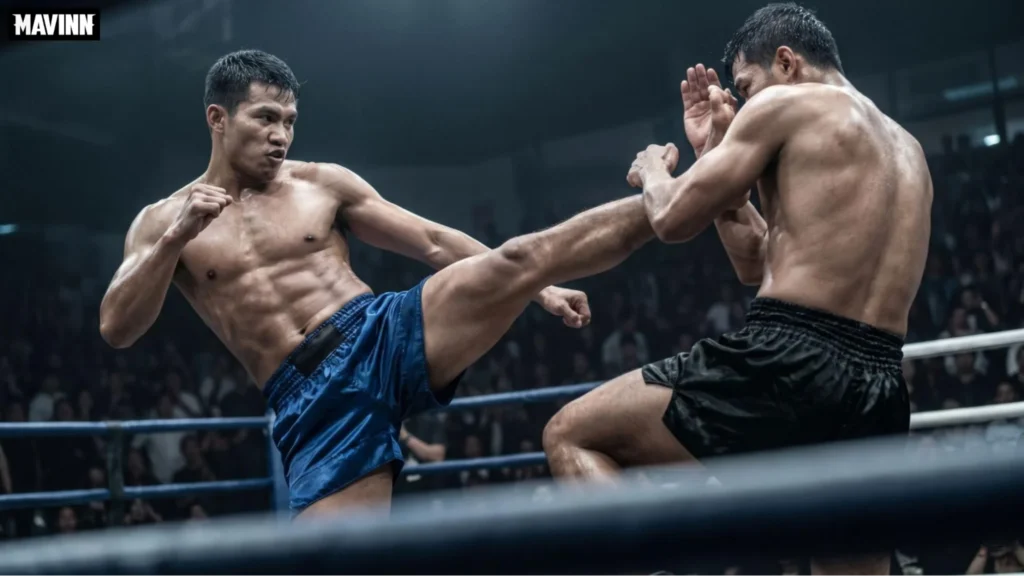
You must prioritize timing and setup over raw power to land a roundhouse kick effectively in a live sparring fight without being countered or swept. Throwing a “naked” kick without a distraction often leads to your leg being caught or your opponent moving inside your striking range. We recommend initiating with a jab-cross combination or a subtle feint to force your opponent to adjust their guard before you commit to the kick.
Targeting the soft tissue of the outer thigh or the floating ribs provides the highest impact while reducing the risk of hitting a hard elbow. You must pivot your lead foot to a 45-degree angle to fully open your hips and generate the necessary whip-like torque for the strike. This mechanical adjustment ensures your shin bone makes contact rather than the fragile bones in your foot.
Retracting your leg quickly back to your stance is vital to prevent getting countered or taken down during the reset phase. If the kick misses, continue the momentum into a controlled rotation or step back immediately to regain your defensive balance. Many elite Thai boxers utilize a double-tap rhythm, where a low calf kick serves as a decoy to land a second roundhouse to the ribs once the opponent’s hands drop.
Setting Up the Leg Kick and Low Kick to Control the Pace
Control the pace by using a low roundhouse kick to punish movement and disrupt your opponent’s rhythm. By targeting the lead leg early with a sharp leg kick, you force them to choose between standing still or taking damage every time they try to close the distance. This constant threat slows their footwork and limits their ability to launch power-hand crosses.
1. Throw a stiff jab to force their high guard and obscure their vision.
2. Step your lead foot out at a 45-degree angle to create a power lane for your shin.
3. Aim for the peroneal nerve just above the knee to maximize immediate impact.
Repeat these strikes periodically to make the opponent hesitant to plant their weight for heavy punches. If they begin checking the kick, switch to a feint followed by a punch or a high-line attack. Keeping them guessing about the strike level allows you to control the three-minute round without overextending.
Best Muay Thai Kicks for Defensive and Offensive Situations
As one of the best muay thai kicks, the roundhouse kick is the undisputed king of offense due to its devastating power and versatility across all three levels of the body. You maximize damage by rotating your hips 45 to 90 degrees and striking with the lower third of the shin bone. In professional competition, a single well-placed kick to the liver or neck can end a bout instantly.
| Context | Primary Kick | Primary Objective |
|---|---|---|
| Offensive | Roundhouse Kick | Target the ribs or head to score a knockout. |
| Defensive | Teep (Push Kick) | Jam the opponent’s rhythm and reset the distance. |
| Tactical | Low Kick | Attack the lead leg to limit an opponent’s mobility. |
Effective defense often involves kicking the “power side” of your opponent to neutralize heavy punches. We recommend practicing the “check-and-return” drill to fire a counter strike almost instantly after impact. This timing ensures you exploit the brief window when an opponent is off-balance after their own attack.
Common Mistakes That Slow Down Your Roundhouse Kick
Failing to pivot your lead foot is the primary culprit behind a slow, restricted roundhouse kick. When you keep your heel flat on the floor, your hips lock up and prevent the rotational force needed for a high-velocity strike. You must pivot on the ball of your foot at least 90 degrees to allow your shin to cut through the target efficiently.
“Winding up” or pulling your shoulder back before the kick alerts your opponent and adds a split second of travel time. This telegraphing ruins the element of surprise and forces your leg to travel a longer path than necessary. Maintaining a tight guard while driving the hip forward noticeably increases your striking speed compared to a segmented movement.
- Striking with the toes or instep instead of the lower third of the shin.
- Leaning too far backward, which shifts your center of gravity away from the impact zone.
- Dropping the lead hand, which kills your balance and leaves your face open to a counter-hook.
Essential Training Gear to Improve Kicking Power
High-density heavy bags and reinforced Thai pads provide the specific resistance needed to build explosive torque in your roundhouse kick. Multi-layered foam padding absorbs high-velocity impact and prevents the gear from bottoming out against your shins. This structural integrity lets you train at full power without risking bone bruising or equipment failure.
- Heavy Bags: Built with industrial-grade synthetic leather to withstand daily high-impact sessions.
- Quality Thai Pads: Feature curved designs to catch kicks flush and reduce wrist strain for the trainer.
- Well-Fitted Shin Guards: Utilize a dual-strap locking system to prevent shifting during high-speed pivots.
Increasing your kicking volume requires gear that balances protection with mobility to avoid fatigue-related injuries. Look for shin guards with a reinforced tibial ridge that dissipates energy across a wider surface area during heavy contact. Training with gear that maintains its position during rapid-fire transitions ensures your muscle memory remains consistent and precise.
Conclusion
Mastering the roundhouse kick requires a balance of hip flexibility, shin conditioning, and core stability to generate maximum force. It is a kinetic chain starting from the pivot of your lead foot, which allows your hips to turn over completely. This technique ensures the impact lands with the lower third of your shin to prevent injury to the smaller bones in your foot.
Consistency in your daily training routine separates a flashy strike from a functional weapon. You must focus on a fast retraction to remain balanced and ready to defend against immediate counter-attacks. Incorporating dynamic stretching into your warm-up steadily increases your kicking height and reach over a few months of consistent practice.