
Key Takeaways
- Sparring serves as the essential bridge between static drills and live combat, focusing on timing, distance, and reaction under pressure rather than maximum power.
- Use specific technical goals for each round, such as perfecting a counter-hook or refining head movement, to ensure sessions prioritize skill development over winning.
- Safety gear is mandatory; high-quality 16oz gloves, a fitted mouthguard, and protective headgear are the minimum requirements to maintain long-term brain health.
- Controlled intensity is the hallmark of elite gyms, where keeping strikes at 20-30% power allows practitioners to experiment with complex combinations safely.
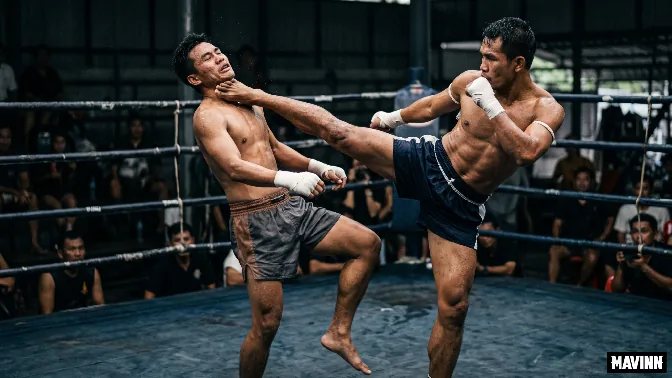
Sparring is the practical application of combat techniques in a controlled, live environment against a resisting partner. It bridges the gap between hitting pads and actual competition by testing your timing, distance, and defensive reactions under pressure. Rather than aiming to win a gym spar fighting bout, these sparring sessions exist primarily to help you refine your fight IQ and test the durability of your cardiovascular endurance.
Effective sessions prioritize technical precision over raw power to ensure long-term skill progression. Beginners should maintain a controlled 20% intensity to develop muscle memory while minimizing the risk of injury. Always wear high-grade protection, such as 16oz sparring gloves, to maintain safety during high-output exchanges and ensure both partners can train consistently without setbacks.
What is Sparring in Martial Arts Really About ?
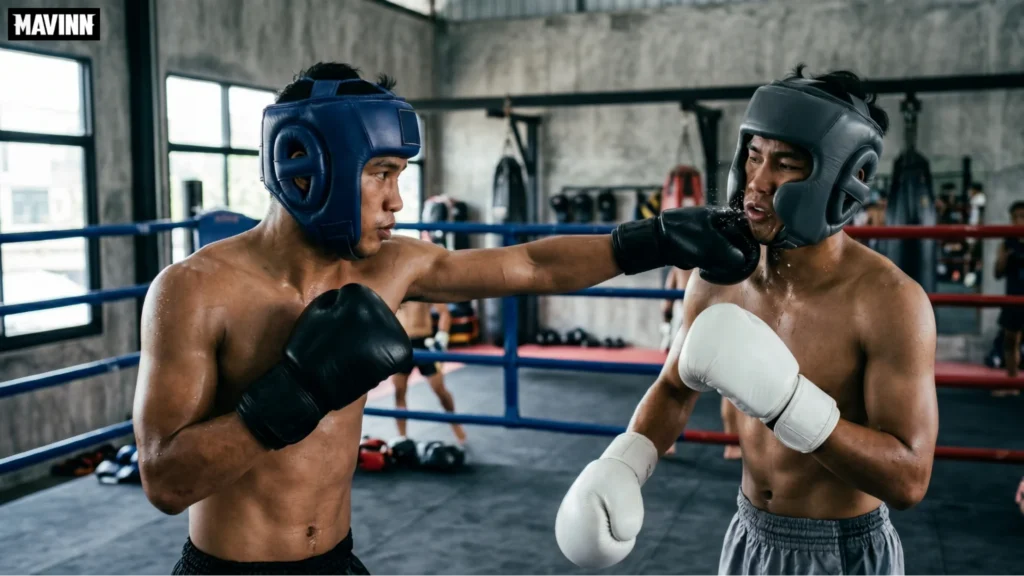
The true value of sparring in martial arts lies in identifying defensive holes that remain invisible when striking a stationary heavy bag. It is the bridge between hitting pads and actual competition, where you test your skills against a resisting partner in a controlled environment. You use these sessions to develop timing and manage your heart rate under physical pressure.
We view sparring in martial arts as a high-stakes conversation where every strike or block is a direct response to your opponent’s movement. You must learn to control your power-usually maintaining 20% to 30% intensity-to ensure both athletes can sharpen their reflexes. This live resistance forces your brain to process tactical information significantly faster than any static drill.
Professional sessions often focus on specific scenarios, such as working solely on counter-punching or escaping the corner, rather than mindless brawling. It builds the mental resilience required to stay calm when an unexpected jab breaks through your guard. A successful round ends with both partners identifying exactly which technical movement failed under the stress of a live exchange.
How a Spar Match Differs from Real Fighting
A spar match focuses on skill development within a controlled environment, whereas real fighting involves high-stakes intent where safety is secondary to victory. In the gym, you prioritize technical execution and mutual growth with your partner to refine your movement patterns. A competitive bout removes these safety nets, often triggering an adrenaline spike that can degrade fine motor control under pressure.
Understanding these structural differences in sparring fighting dynamics helps you transition from the mats to the ring without developing dangerous habits. We categorize the core distinctions based on gear, intensity, and the ultimate objective of the engagement.
| Feature | Sparring Session | Real Fight |
|---|---|---|
| Objective | Technical growth and timing | Effective neutralization or scoring |
| Protection | 16oz gloves and shin guards | 4oz-10oz gloves or no padding |
| Intensity | Controlled (usually 20-30% power) | 100% force with maximum intent |
Real fighting lacks the “reset” button found in training where a coach can intervene to correct your form. You must account for variables like unpredictable environments and the absence of a standard three-minute timer. Train with the awareness that practice is merely a tool to build the reflexes you need when the stakes are absolute.
Why Sparring Fighting is the Ultimate Physical Chess
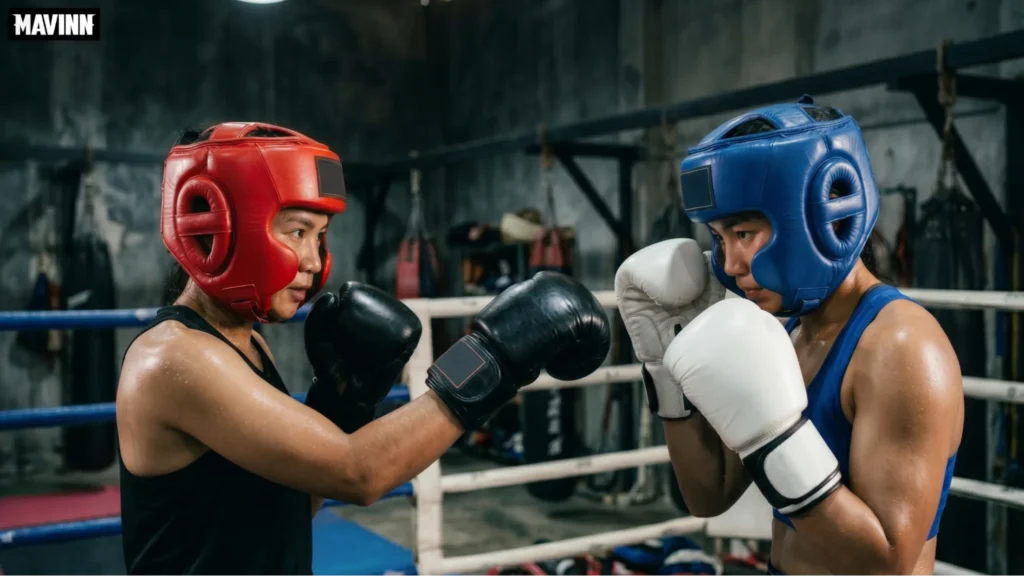
During any spar fighting session, you are forced to solve high-pressure problems in real-time by reading an opponent’s patterns and baiting specific reactions. While physical conditioning is essential, the outcome of a round often depends on who can manipulate their opponent’s rhythm through strategic feints and footwork. You aren’t just throwing strikes; you are analyzing visual cues like a twitching lead shoulder to predict the next three seconds of the exchange.
Successful fighters use “probing” strikes to collect data on how an opponent defends. If you notice a partner drops their hand when throwing a jab, you store that information to execute a high-percentage counter later in the round. This mental processing happens while your heart rate often exceeds 160 BPM, demanding a level of cognitive endurance that standard gym workouts cannot replicate.
The tactical depth of sparring fighting exchanges increases as you layer techniques, such as using lateral movement to create angles that force an opponent into a defensive disadvantage. You are constantly calculating risk versus reward, deciding whether to trade shots or reset to a neutral position. Professional strikers spend years mastering the split-second timing required to catch an opponent mid-transition.
Sharpening Reflexes and Managing Distance in a Sparring Sport
In any sparring sport, dominating the distance starts with maintaining a dynamic stance that allows you to exit or enter the pocket instantly. You must use your lead hand as a sensory tool, flicking out a range-finding jab to keep your opponent at the end of your reach. This constant movement forces your partner to reset their feet, buying you vital reaction time to anticipate their next strike.
Sharpening your reflexes depends on visual cues rather than simply watching the gloves. We recommend practicing “slip-and-counter” drills where you react to specific visual triggers without over-committing your weight. Fighters often use double-end bags or shadowboxing with light resistance bands to increase their hand-to-eye coordination under fatigue.
Different Ways to Train Types of Sparring
You train various modalities to transition from repetitive pad drills to the high-stakes environment of a live match. Technical sessions emphasize movement and precision over raw power, providing a safe space to refine your defensive shell. Keep your impact at roughly 30% intensity to maintain a pace where you can analyze and exploit your partner’s rhythmic patterns.
Situational drills hone your tactical awareness by isolating specific threats, such as escaping the clinch or defending against a southpaw. This targeted approach prevents you from falling into predictable habits. Furthermore, limit your high-intensity sessions to preserve your neurological health while building the necessary grit for competition.
| Sparring Method | Training Purpose | Impact Level |
|---|---|---|
| Technical | Muscle Memory & Flow | Minimal |
| Situational | Tactical Problem Solving | Moderate |
| Hard | Stress Testing & Timing | High |
Technical Sparring for Skill Development

Technical practice focuses on refining your movement and timing at a controlled 20% to 30% power level. You use these sessions to practice specific sequences, such as a counter-check followed by a lead hook, without the risk of heavy impact. Keeping the intensity low ensures your brain stays in a learning state rather than a survival response.
During these rounds, you and your partner should isolate specific scenarios. This environment allows you to identify gaps in your guard that often go unnoticed during high-intensity training. Professional gyms typically dedicate at least two sessions per week to technical work to build muscle memory while preventing athlete burnout.
Why You Should Think Twice Before You Spar Hard

When you choose to spar hard, it significantly increases your risk of chronic neurological damage and acute injury while often slowing your actual technical progression. When you prioritize power over precision, your brain shifts into a survival state that prevents you from identifying technical flaws in real-time. Frequent heavy impacts lead to sub-concussive trauma, which is associated with an increased risk of Chronic Traumatic Encephalopathy (CTE), particularly when repeated over many years.
- Diminishing Returns: Cognitive retention of new techniques drops significantly when you are under the physical duress of heavy shots.
- Training Consistency: Sustaining a broken rib or a concussion can sideline you for 4 to 8 weeks, completely halting your progress.
- Defensive Regression: High-intensity rounds often force you to shell up and “survive” rather than practicing nuanced head movement.
If you must spar hard, ensure it is limited to stress-testing specific skills in the weeks leading up to a competition. Elite gyms increasingly favor “technical flow” sessions to ensure you spend more time on the mats and less time recovering.
Beginner Survival Guide for Your First Spar Fighting Session
Your primary goal during your debut spar match is to manage your breathing and heart rate rather than landing heavy strikes. Focus on maintaining a tight guard and keeping your eyes open even when punches are thrown your way. This is a controlled practice environment designed to test your techniques against a live opponent while prioritizing safety.
You must communicate with your partner to set a power level, which we recommend capping at 30% intensity for beginners. This light contact allows you to recognize movement patterns without the fear of sustaining an injury. Always wear 16oz gloves and a properly molded mouthguard to ensure maximum protection.
Movement is your best defense, so stay active on the balls of your feet to create angles. Avoid the common mistake of “hunting” for a single big shot, as this leads to rapid exhaustion. Instead, use a consistent jab to measure range and prevent your partner from closing the gap too quickly.
Dealing with Fatigue Breathing and Relaxation

Control your fatigue by exhaling sharply on every strike to prevent carbon dioxide buildup and oxygen debt. This rhythmic breathing pattern keeps your core engaged while ensuring your heart rate stays within a manageable threshold. Focus on deep nasal inhalations when moving out of range to keep your nervous system calm.
Excessive muscle tension drains energy faster than movement, so you must consciously relax your shoulders and jaw between exchanges. Adopting a “loose-to-tight” physical state ensures you only contract muscles at the split second of impact. Staying relaxed helps maintain reaction speed and can extend your effective cardio output significantly.
Unwritten Rules & Leaving Your Ego at the Door

This is a collaborative drill where your primary goal is to sharpen technique and timing without causing injury to your partner. You must check your ego at the door and match the power level of the person across from you. If you are significantly larger or more experienced, it is your responsibility to dial back the force to allow your partner to learn.
Professional gym etiquette dictates that you never “hunt heads” or try to “win” a training round. We treat every session as a workshop where a glove touch signifies that the growth of the team outweighs any individual’s desire to look dominant.
Essential Gear for a Safe Spar Match
You must prioritize protective equipment that maximizes impact absorption to ensure a highly productive spar match. High-quality gear transforms a high-risk exchange into a controlled environment where you can sharpen your technique safely. At MAVINN, we highly recommend using 16oz gloves as the baseline standard to provide enough padding to protect both your hands and your partner’s face.
Your kit should focus on high-density materials, specifically regarding shin guards and multi-layered mouthguards. Thin, entry-level foam often bottoms out during a heavy check, leading to bone bruises that sideline your training. For maximum longevity, professional-grade leather gear is designed to withstand the friction and sweat of hundreds of intense rounds.
Hand wraps and a reinforced groin cup are non-negotiable additions that provide essential structural support. Wraps stabilize the small bones in your hand, while a cup prevents life-altering impact injuries. Using 180-inch semi-elastic wraps ensures you have enough length to create a solid cast around your wrist.
Choosing the Right Protection to Improve Performance
Choosing the right protection allows you to commit to high-intensity exchanges without hesitating for fear of injury. We recommend using 16oz gloves to provide maximum padding for your partner while shielding the small bones in your hands. High-density foam shin guards are equally vital to prevent painful bone-on-bone contact during heavy leg kicks.
| Gear Type | Key Performance Benefit |
|---|---|
| 16oz Gloves | Maximizes hand safety and partner protection during strikes. |
| Shin Guards | Enables hard kick checks without sustaining deep bone bruises. |
| Mouthguard | Stabilizes the jaw to help maintain focus under pressure. |
Performance improves when your equipment acts as a second skin rather than a constant distraction. Ensure your gear features strong hook-and-loop closures to keep the padding locked in place throughout five-minute rounds.
Conclusion
Sparring is the essential bridge between technical drills and real-world application in any competitive sparring sport. It forces you to manage distance and timing against a resisting opponent who reacts to every move in real time. By prioritizing technical control over raw power, you master the nuances of defense without subjecting your body to unnecessary injury.
Consistent sessions reveal specific vulnerabilities in your footwork and guard that stationary bag work will never expose. Maintaining a training ratio of 70% light flow rounds to 30% situational or higher-intensity work will maximize your skill retention. This disciplined approach builds the elite-level composure and stamina required for continuous, long-term athletic progression.