Key Takeaways
- Thai Clinch – This close-range grappling system allows you to control an opponent’s posture and deliver dominant knee and elbow strikes.
- Proper collar tie positioning and hand placement are essential to control the inside space and prevent counter-attacks.
- Off-balancing your opponent through pivots and sweeps creates clear openings for offensive maneuvers.
- Consistent training builds the core strength and neck endurance required to execute these techniques effectively under pressure.
The Thai Clinch is the grappling system of Muay Thai that allows you to control opponents at close range using leverage. This stand-up wrestling method neutralizes long-range strikes while opening pathways for knee and elbow attacks. Proper execution requires active hand fighting to break your opponent’s posture. If you are still building the basics, work through our full guide to Muay Thai technique before you drill the clinch.
Understanding these mechanics prevents you from taking damage during close-quarters transitions. We focus on securing the inside position immediately to dictate the pace of the exchange. Placing your forearms against the collarbones acts as a frame that blocks incoming knee strikes.
What is the Thai Clinch ?
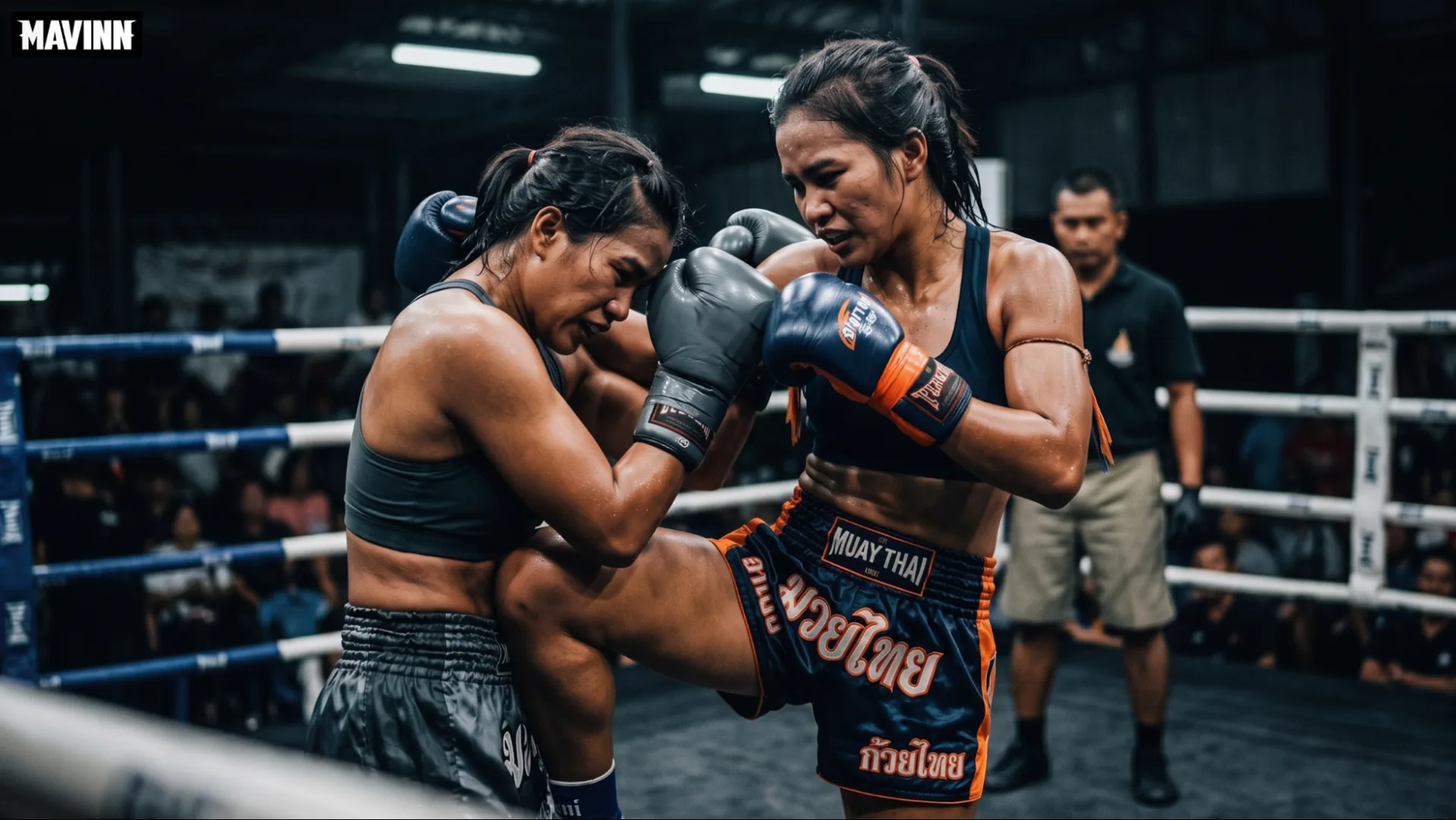
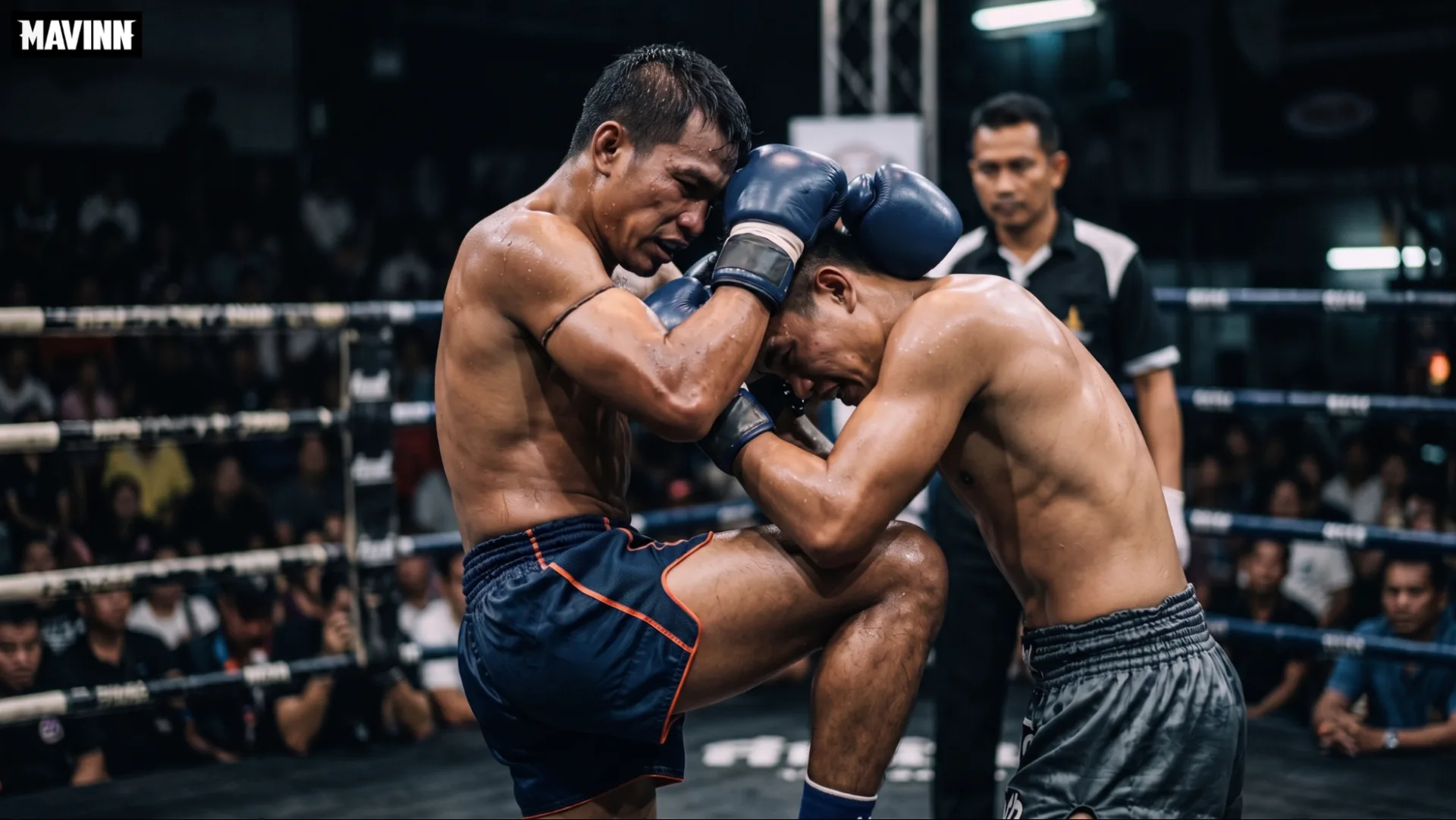
The Thai Clinch, locally known as Pam, is a stand-up grappling system used in Muay Thai to control an opponent’s upper body and land close-range strikes. Unlike wrestling, you do not shoot for takedowns but instead fight for dominant hand placement around the neck, head, and arms. This dominant positioning allows you to execute knee strikes, short elbows, and off-balancing sweeps to score points under traditional stadium rules.
Effective control in this position relies on spinal alignment and leverage rather than raw physical strength. By securing the back of your opponent’s head, you can break their posture and completely neutralize their power to strike back. World-class specialists use this upright posture control to shut down aggressive punchers and dictate the pace of a five-round stadium fight.
Mastering Thai Clinch Control
Mastering the Thai Clinch requires you to secure dominant hand positioning and control your opponent’s posture to neutralize their weapons. You must use your forearms as frames against the opponent’s collarbones while keeping your hips close to eliminate the space they need to strike. A strong grip focuses on clamping the back of the opponent’s crown rather than the neck to maximize your leverage.
We train fighters to keep their spines aligned and chins tucked to prevent being pulled downward into incoming knees. Constant footwork and lateral movement prevent your opponent from establishing a stable base to counter-attack. Keeping your elbows tucked tightly inside their armpits allows you to transition easily into the plum position or execute a quick sweep.
The Double Collar Tie and Plum Position Setup
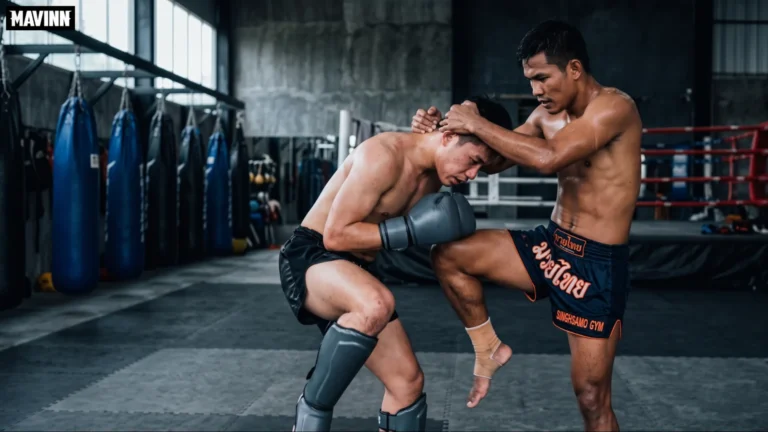
You control your opponent’s posture in the double collar tie by placing both hands behind the crown of their head rather than their neck. Sliding your palms to the back of the skull gives you the mechanical leverage needed to force their head downward. We recommend squeezing your elbows tightly against their collarbones to block any space with a firm forearm frame that rests directly on their clavicle. You can secure this dominant position using three precise physical alignments.
- Place your dominant palm on the crown of the opponent’s head to immediately disrupt their balance.
- Stack your second hand directly over the first without interlocking your fingers to avoid broken joints.
- Keep your elbows tucked inward and tight together to neutralize incoming shoulder strikes.
Securing Inside Control and Managing Distance
You secure inside control in the Thai Clinch by sliding your hands inside your opponent’s arms to dominate the inner space of their collarbones. This position prevents your opponent from executing their own offensive strikes and allows you to dictate the movement of the exchange. To maintain this control, press your forearms firmly against their chest and stay chest to chest so there is no room for them to land an elbow.
Managing distance requires constant footwork and hip alignment to stop your opponent from generating power. If they attempt to back away, pull their head down while stepping forward to keep your hips close. Keep your lead hip pressed against theirs to completely shut down their ability to throw straight knee strikes.
Devastating Knee Strikes in the Thai Clinch
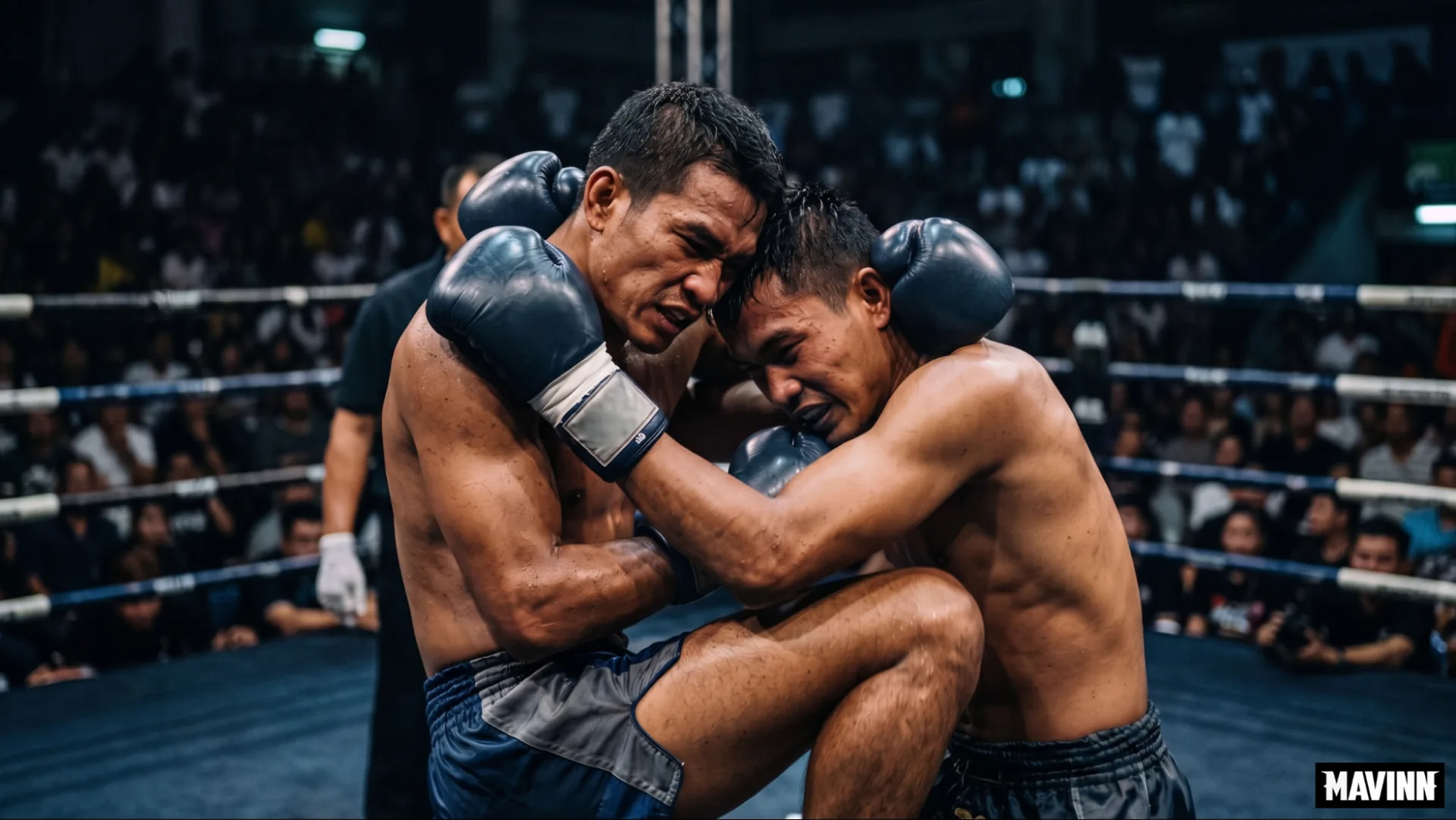
You land devastating knee strikes in the Thai clinch by pulling your opponent’s posture down while driving your hips forward to generate maximum penetration. The straight knee, or Khao Trong, requires you to extend your hips fully and point your toes downward to create a sharp, penetrating weapon. This strike targets the solar plexus or liver, utilizing a straight upward trajectory that bypasses the opponent’s guard.
When your opponent blocks the center line, you must transition to side knees by arching your leg outward and slapping the ribs with the inside of your knee. This lateral strike, known as Khao Khong, forces your opponent to address the rib pain, which inevitably opens up vertical gaps in their defense. Fighters angle the strike outward to bypass tight elbow blocks and score clean points under traditional Muay Thai scoring criteria.
Landing Clean Straight and Side Knees
You land clean straight knees in the Thai clinch by driving your hips forward and pushing your opponent’s hips back to create a direct path to the midsection. Pointing your toes downward sharpens your kneecap to penetrate deep into the solar plexus. This frontal strike delivers maximum impact when you pull your opponent’s upper body down simultaneously to create a high-velocity collision at the sternum.
Side knees require a horizontal swinging motion to bypass your opponent’s frontal hip defense and elbow blocks. You must rotate your standing foot outward to open your hips and generate maximum whipping power. This lateral trajectory allows you to dig the inner side of your knee directly into the floating ribs or thighs.
Clinch Work Sweeps, Dumps, and Off Balancing
You off-balance your opponent in the Thai clinch by disrupting their center of gravity using footwork, leverage, and sudden directional changes. We focus on pulling the opponent’s head down while stepping outside their lead foot to create an angle. This movement breaks their posture, and pulling their head toward your right hip while stepping your left foot outward forces their weight onto one leg.
To execute clean dumps and sweeps under standard Muay Thai rules, you must avoid lifting the opponent or using your calf to trip them. Instead, we use legal off-balancing techniques that rely on rotational force and quick hip positioning. Try these two primary methods:
- The Steering Wheel Turn: Rotate your opponent’s upper body downward while stepping your foot back and away.
- The Inside Foot Sweep: Tap the inside of their ankle using your instep right as they take a step.
Defending and Escaping the Thai Clinch
You defend the Thai Clinch through immediate posture control by preventing your opponent from locking their hands behind your neck. Once your opponent attempts to secure their grip, you must keep your hips close to theirs and press your forehead against their collarbone. This positioning denies them the leverage needed to pull your head down, which takes much of the force out of incoming straight knees.
To escape, swim one hand inside their grip to establish your own collar tie or push their chin upward to break their alignment. You can also frame against their hip with your forearm while stepping backward to break the connection entirely. Breaking the grip early, before they settle their hands, lets you reset safely to striking range.
Read next: Sparring Defined, an Essential Guide to Combat Practice
Rules and Scoring Standards for the Thai Clinch
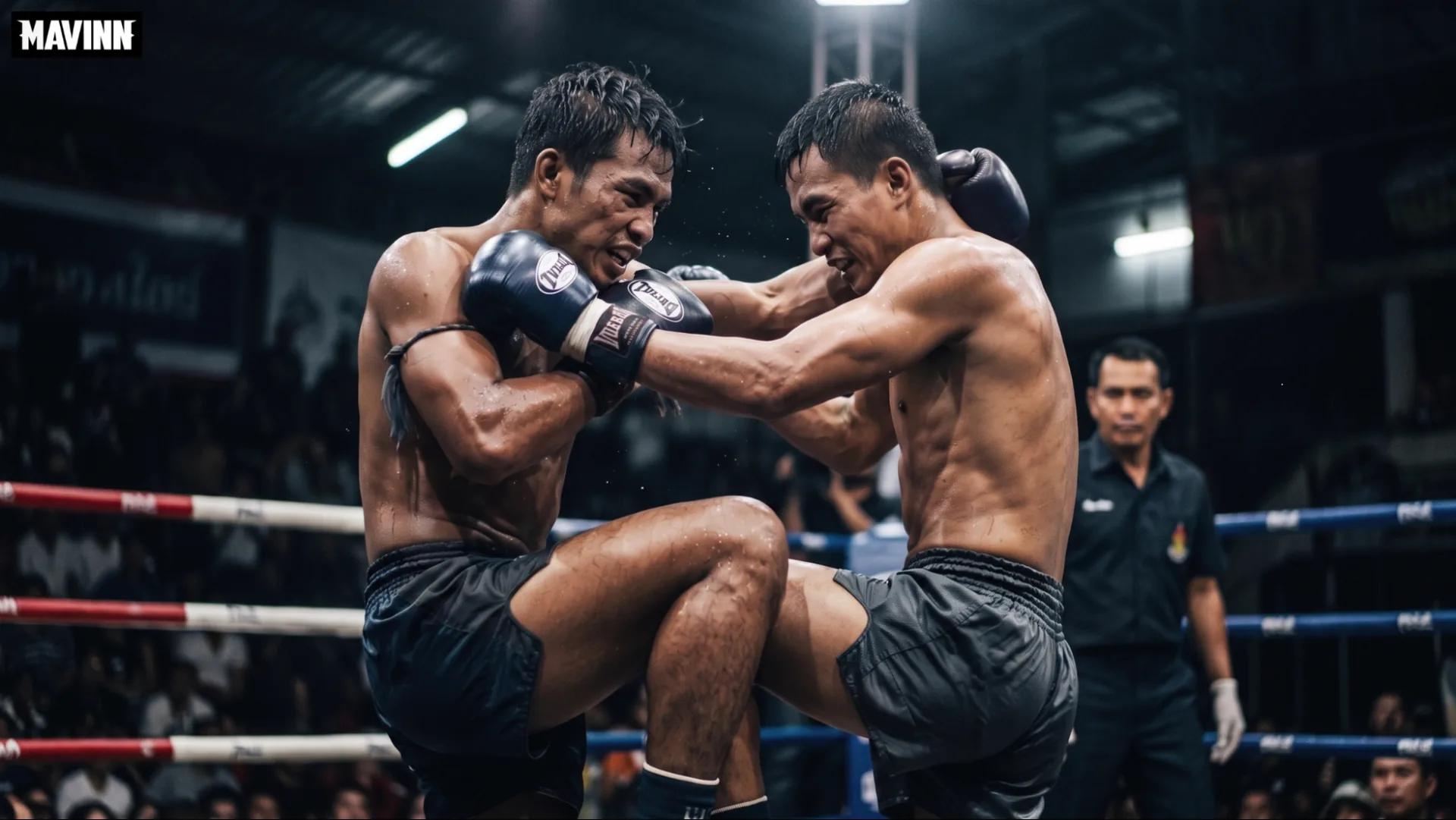
Muay Thai scoring heavily rewards active clinch work that displays dominance, physical damage, and off-balancing techniques. Judges award points for clean knee strikes that land flush on the target, while passive holding without striking results in a referee break within three seconds. You must maintain continuous offensive action, as simply locking your opponent in place without throwing knees yields zero points.
Legal clinch techniques require you to strike with the knee or elbow while maintaining a standing position, and the wider rules of Muay Thai set out how the referee handles every other foul. Executing a sweep by catching the leg and tripping with the calf, or lifting the opponent off the ground, is an illegal foul that can cost you one point. You must rely on rotational force to dump your opponent, ensuring you land on top to secure a decisive scoring advantage under stadium rules.
Essential Drills Muay Thai Students Need for Clinch Mastery
You must practice specific, repetitive partner drills Muay Thai fighters use to build the muscle memory and neck strength required to control the Thai clinch. Continuous swimming drills and neck resistance exercises teach you how to fight for inside control while under constant pressure. Doing these drills for 10 minutes daily builds the endurance needed for active sparring. We focus on three foundational drills to accelerate your defensive and offensive clinch skills.
- Pummeling: You and your partner constantly swim your arms inside to secure the dominant plum position.
- Knee isolation: Both fighters exchange light, controlled knee strikes to perfect hip projection and balance.
- Posture defense: One fighter tries to pull the head down while the other resists using core strength to maintain alignment.
Master the Thai Clinch at Mavinn Muaythai
You can master the Thai clinch at Mavinn Muaythai through our specialized training programs designed for all skill levels. We offer hands-on coaching that breaks down the mechanics of posture, grip fighting, and off-balancing techniques. Our structured curriculum allows you to practice these techniques safely at either our Bangkok gym in Nuanchan or our Pattaya gym.
Our training system incorporates elite-level expertise, including insights from world-class striking specialist Superbon Singha Mavinn. You will learn how to transition from long-range strikes into dominant inside control positions. We offer these programs through both interactive online courses and our dedicated Stay & Train package.
Conclusion
You must practice clinch control and the Thai clinch consistently to transition from a basic practitioner to a complete Muay Thai fighter. Effective clinch work requires a balance of neck control, off-balancing sweeps, and well-timed knee strikes. Dedicating just 15 minutes of focused sparring to this position during each workout will rapidly build your muscle memory.
We help you build these technical habits through structured drilling under the guidance of active stadium fighters. You can train these close-range tactics directly with elite coaches at our Bangkok or Pattaya locations. Book your spot in our Stay & Train package today to begin mastering control in the ring.