Key Takeaways
- lethwei – Known as the “Art of Nine Limbs,” this combat sport permits headbutts alongside punches, kicks, knees, and elbows, which alters standard defensive guards.
- Competitors fight bare-knuckle with only gauze and tape, requiring precise hand conditioning and knuckle alignment to prevent fractures.
- Traditional matches are won only by knockout, forcing an aggressive fighting pace because finished bouts otherwise end in a draw.
- Training these raw striking concepts builds elite clinch control, physical toughness, and realistic defensive habits.
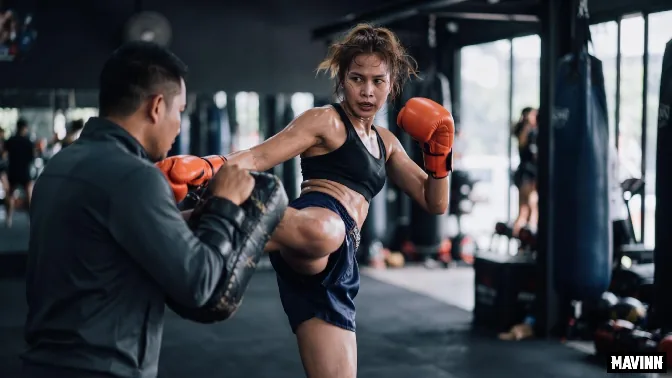
Lethwei, or Burmese bare-knuckle boxing, is a combat sport that allows headbutts alongside punches, kicks, knees, and elbows. Fighters wrap their hands in only gauze and tape, making it one of the most demanding striking arts in the world. At our Muay Thai camps in Bangkok and Pattaya, we build the striking foundation that underpins demanding arts like this.
Our structured programs condition your body for maximum impact through targeted bone-hardening drills and tactical sparring. You can build that foundation through our online Muay Thai courses or our onsite stay-and-train packages.
What is lethwei ?
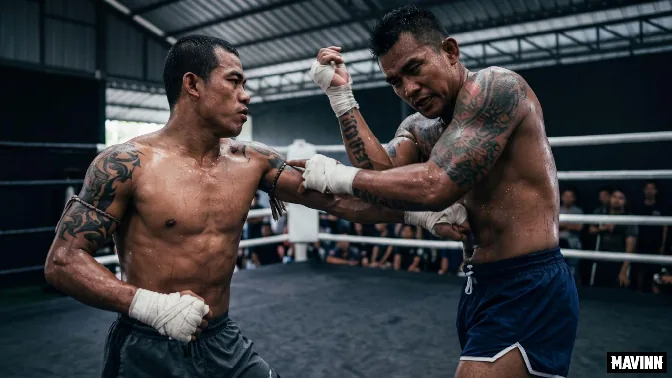
Lethwei is a full-contact combat sport from Myanmar defined by its bare-knuckle rules and the allowance of headbutts. You fight wearing only gauze and tape on your hands rather than padded boxing gloves. This system is known as the Art of Nine Limbs because you attack using fists, elbows, knees, feet, and your forehead.
Traditional matches only end in a knockout, meaning if both fighters remain standing after five rounds, the bout is declared a draw. The sport also utilizes a unique two-minute recovery timeout where a knocked-out fighter can be revived by their corner to continue fighting. We analyze these extreme physical demands to help strikers build the highest level of mental toughness and physical conditioning.
The history and origins of lethwei
Lethwei traces back over a thousand years, with roots in the battlefield traditions and temple art of early Myanmar. Ancient warriors tested their physical readiness in regional tournaments held during seasonal festivals and royal ceremonies. These historic duels had no gloves, utilizing only hemp wraps and allowing headbutts to secure victory.
The modern ruleset was codified in 1996 by the Myanmar Traditional Lethwei Federation for ring competition. This transition preserved the ancient nine-limb strike system, which uniquely permits headbutts alongside standard punches, kicks, knees, and elbows. Modern athletes still honor these battlefield roots by fighting with bare hands wrapped only in gauze and tape.
Why lethwei is called the art of nine limbs
Lethwei earns its reputation as the “art of nine limbs” by permitting the headbutt as a legal striking weapon alongside your fists, elbows, knees, and shins. While traditional striking systems like Muay Thai employ eight contact points, this Burmese martial art adds the cranium to create a highly unpredictable combat environment. Fighters use the forehead to target the opponent’s nose and orbital bones during close-range clinches.
Weaponizing the head completely changes how you manage distance and defend inside the pocket. You cannot rely on traditional guards because a sudden forward surge can end the fight instantly. Fighters tuck their chins and drill neck strength to withstand these impact forces.
How lethwei rules make it the most brutal martial art
Lethwei achieves its reputation as the world’s most brutal martial art through a rule set that permits headbutts and enforces a bare-knuckle fighting format. Unlike modern Muay Thai or kickboxing, fighters wrap their hands only in gauze and tape, exposing the raw knuckles to maximize impact. This allowance of the “ninth limb” (the head) drastically alters defensive strategy, as clinches often result in direct, skull-on-skull strikes.
The brutality is further intensified by the injury timeout rule, which allows a knocked-out fighter’s corner to revive them and send them back into the match. Under traditional rules, a fight can only be won by a clean knockout; if both fighters are standing at the end of the final round, the match is declared a draw. This system eliminates the tactical stalling seen in point-based combat sports, forcing athletes to hunt for a finishing blow during every exchange.
The bareknuckle setup and hand wraps
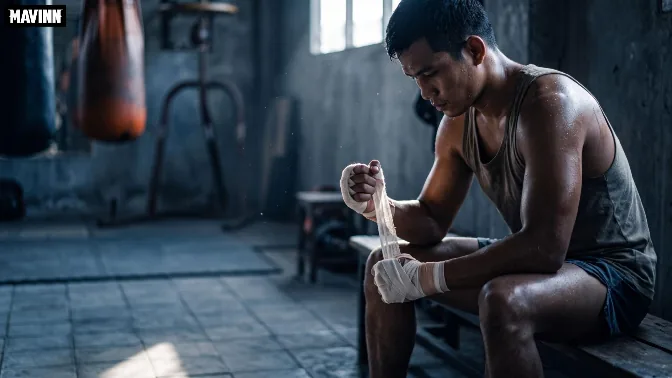
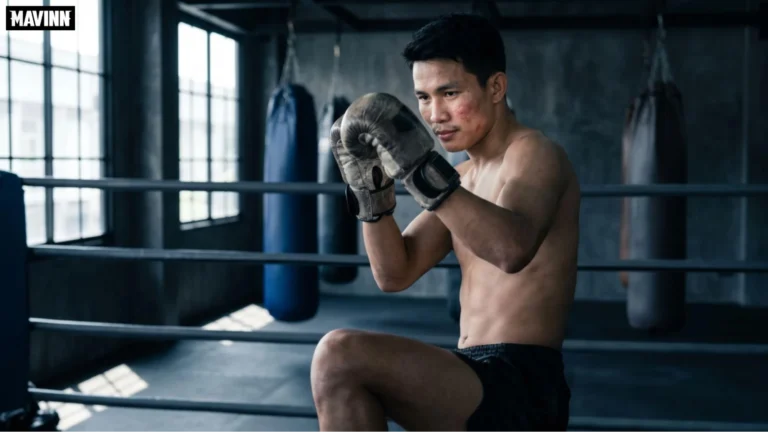
Lethwei fighters secure their hands using only raw cotton gauze and surgical tape, completely bypassing the cushioned gloves used in modern combat sports. This bareknuckle setup forces you to align your knuckles perfectly upon impact to prevent fractures. The wrap acts strictly as structural support for the wrist and small hand bones rather than a weapon-softening cushion.
- Gauze limit: Fighters wrap the hands only in non-elastic cotton gauze, with no padded glove.
- Tape placement: Medical tape secures the wrist and wraps between fingers to lock the gauze in place.
- Exposed knuckles: The striking surface remains virtually bare, with only a thin layer of gauze permitted over the knuckles.
Properly binding the metacarpals prevents the hand from splaying when delivering raw power strikes or headbutts. We train fighters to tighten the wrap while making a fist to ensure the support grips the hand during high-velocity impacts. This precise tension prevents the wrist from buckling during a 90-degree impact angle.
The notorious lethwei headbutt rule
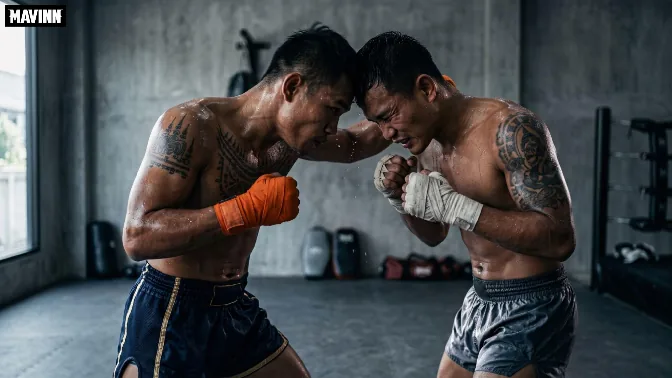
The headbutt is the defining weapon of lethwei, making it the only major striking art that allows fighters to strike with the cranium. While Muay Thai uses eight contact points, this bare-knuckle sport is known as the Art of Nine Limbs due to this brutal addition. Fighters typically target the opponent’s nose or orbital bone using the hard frontal bone of the forehead during close-range clinch work.
Defending against this attack requires a completely different defensive posture than traditional kickboxing. You must keep your chin tucked and forehead angled forward to prevent clean impact to your facial structure. Fighters like Dave Leduc popularized this devastating tool globally by using headbutts to break clinches and secure stoppages.
Victory by knockout only
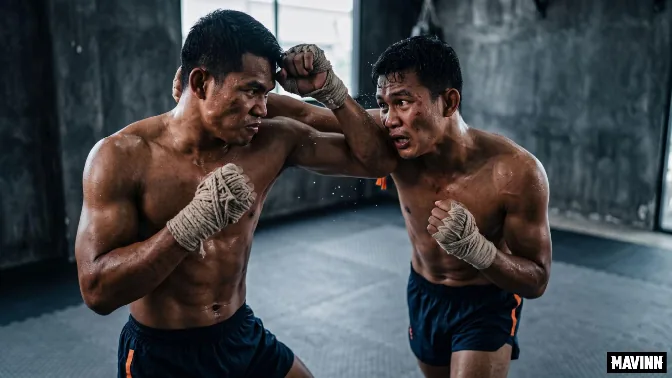
Traditional lethwei matches can only be won by knockout, technical knockout, or injury stoppage. If both competitors are still standing when the final bell rings, officials declare an automatic draw regardless of who dominated the bout. This rule eliminates passive point-scoring strategies and forces you to fight aggressively for all five rounds.
To secure a victory, you must utilize the “art of nine limbs” including punches, kicks, elbows, knees, and headbutts. Even if a fighter is knocked unconscious, the corner can call a unique two-minute recovery timeout to revive them once per fight. This extreme rule set demands elite physical conditioning.
What are the traditional rituals of lethwei ?
Traditional lethwei rituals center on the Lekkha moun challenge gesture and the Lethwei yay victory dance. Fighters perform the Lekkha moun by clapping their right hand three times into the bend of their left elbow, creating a distinct clapping sound that serves as an honorable challenge to the opponent. This ritual demonstrates courage, respects the spirits of the arena, and dates back centuries to ancient Burmese battlefield practices.
After executing the challenge, fighters perform the Lethwei yay, a fluid, rhythmic warrior dance mimicking the movements of birds or animals. A traditional musical orchestra, known as the hsaing waing, plays live during these rituals and accelerates its tempo during the actual fight to match the combat intensity. This performance honors the fighter’s teachers, family, and training camp while mentally preparing the athlete for bare-knuckle combat.
The meaning of lekkha moun
Lekkha moun is the traditional gesture in lethwei where a fighter bends one arm and claps the opposite hand into the hollow of the elbow. This action creates a sharp cracking sound that serves as a direct invitation to fight, showing courage and respect. The motion historically mimics the flapping wings of a fighting bird of prey, symbolizing a warrior’s readiness for battle.
In modern combat, you will see fighters use this gesture to break an opponent’s focus and ignite the crowd’s energy. It acts as a psychological tool to demonstrate absolute fearlessness under intense pressure in the ring. Many fighters execute this gesture three times in succession right before engaging in a clinch exchange to assert dominance.
The lethwei yay challenge dance
The Lethwei Yay is the traditional challenge dance performed by Burmese bare-knuckle boxers to display courage, respect, and physical readiness before a bout begins. Fighters execute specific rhythmic movements to warm up their muscles and signal their absolute fearlessness to their opponent. This dance is performed to the live beat of traditional Myanmar musical instruments like the hsaing waing orchestra.
During the ritual, fighters beat their hands against their chest and underarms, creating a slapping sound to mimic a bird of prey flapping its wings. This aggressive gesture serves as a direct invitation to fight while demonstrating the athlete’s mental toughness and pride. In professional rings, mastering this pre-fight ritual is just as crucial as perfecting the sport’s signature headbutts.
What is the difference between lethwei and muay thai ?
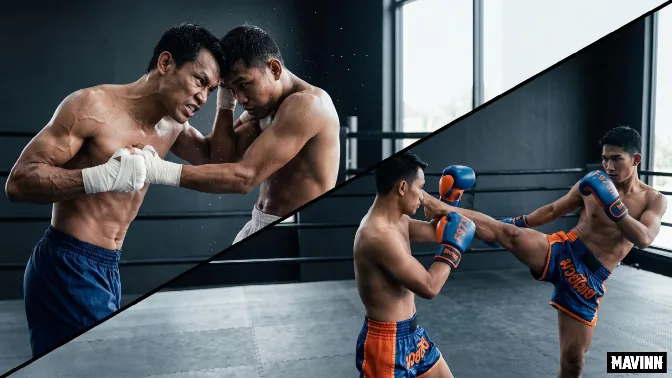
The primary difference between lethwei and Muay Thai lies in the allowed weapons and hand protection: lethwei permits headbutts as a ninth weapon and uses only gauze wraps, while Muay Thai bans headbutts and mandates padded boxing gloves. In traditional Burmese matches, you can only win by scoring a knockout, resulting in automatic draws if the fight finishes the scheduled rounds.
These distinct rules transform the defensive strategy you must adopt in the ring. The constant threat of a headbutt in the clinch prevents you from using standard Muay Thai collar-tie positions safely. Instead, you must rely on active head movement and tighter hand guards to survive the impact of bare-fisted strikes.
| Feature | Lethwei | Muay Thai |
|---|---|---|
| Permitted Weapons | 9 weapons (includes headbutts) | 8 weapons (no headbutts) |
| Hand Protection | Gauze wraps and tape | Padded boxing gloves |
| Victory Path | Knockout only | Points decision or knockout |
| Special Rule | 2-minute recovery timeout after KO | No recovery timeout |
Striking techniques and rules comparison
Lethwei differs from Muay Thai primarily by allowing headbutts as a legal weapon and requiring a knockout to secure a victory.
| Feature | Lethwei | Muay Thai |
|---|---|---|
| Striking Limbs | 9 limbs (includes head) | 8 limbs (no headbutts) |
| Hand Protection | Tape and gauze only | Standard padded gloves |
| Match Decision | Knockout only (otherwise a draw) | Points decision or knockout |
This ruleset completely changes how you manage distance and clinch work during combat. In lethwei, fighters use the forehead to strike during close-range grappling, rendering traditional Muay Thai collar ties highly dangerous. Without padded gloves, you must also align your knuckles precisely on impact to prevent hand fractures during high-velocity exchanges.
Lethwei physical demands and safety differences
Lethwei demands a higher level of physical conditioning and carries significantly greater trauma risks than Muay Thai due to its bare-knuckle rules and the inclusion of headbutts. Fighters compete without gloves, using only gauze and tape, which leads to frequent facial lacerations and hand fractures. Preparing for these extreme conditions centers on neck strengthening and bone conditioning.
| Feature | Lethwei | Muay Thai |
|---|---|---|
| Hand Protection | Gauze and tape only | 8oz to 10oz gloves |
| Legal Strikes | Punches, kicks, elbows, knees, headbutts | Punches, kicks, elbows, knees |
| Victory Condition | KO only (traditional) | KO, TKO, or points |
Eliminating gloves reduces wrist support, forcing you to align your knuckles perfectly to avoid the boxer’s fracture. The inclusion of headbutts requires fighters to adapt their defensive guard to protect the forehead and temples. In lethwei training, padded headgear during sparring safely builds close-range defensive reflexes.
Can you transition from muay thai to lethwei ?
You can transition from Muay Thai to lethwei successfully because both arts share a similar upright stance, kicking techniques, and active clinching. However, the transition requires you to adapt to fighting without gloves and brace for the impact of headbutts. Muay Thai fighters must immediately adjust their defensive guard because thin hand wraps leave much larger target gaps than standard boxing gloves.
In the clinch, standard Muay Thai hand-fighting opens you up to immediate headbutt strikes from your opponent. To stay safe, you must keep your forehead pressed tightly against the opponent’s chest to neutralize their attacking angles. You must also prepare for the two-minute recovery timeout, which allows knocked-out fighters to be revived by their corner and continue the match.
To transition safely, you must prioritize knuckle conditioning on hard heavy bags to prevent hand fractures. Former Muay Thai athletes have successfully made this jump by focusing on neck-strengthening drills to absorb head strikes.
Why muay thai provides the perfect striking foundation
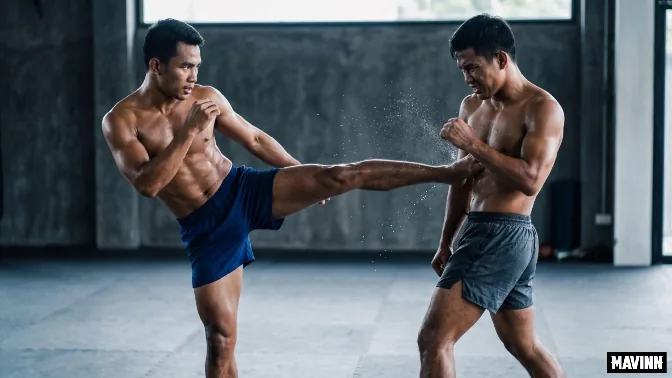
Muay Thai builds the ultimate striking foundation because it teaches you to control distance and generate power using all eight natural weapons of the body. Mastering the hip rotation required for Thai kicks allows you to transition effectively into other combat sports, including lethwei. Without this structural baseline, fighters struggle to generate power or defend against complex combinations.
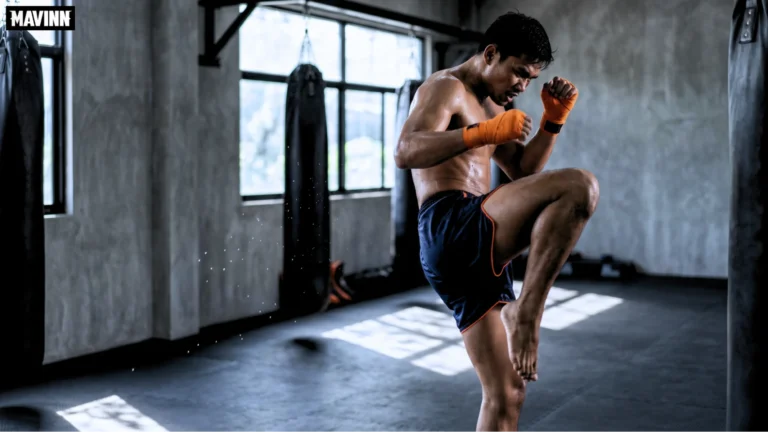
We focus on teaching the precise weight distribution and footwork that keeps you balanced during high-impact exchanges. This stance prevents you from falling off-balance when throwing heavy knees or catching incoming kicks. Our training programs emphasize the clinch game, which is vital for controlling opponents in both kickboxing and MMA.
Training packages at Mavinn Muaythai for all levels
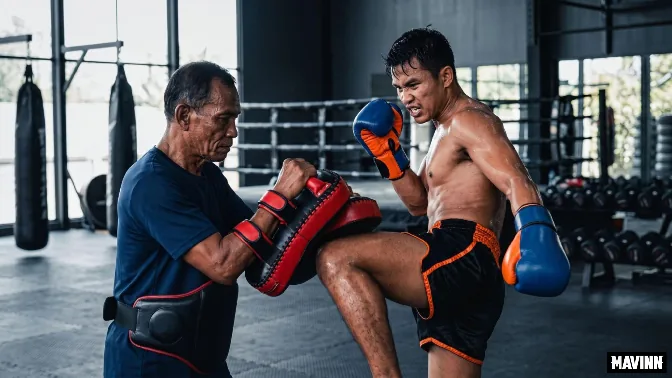
We design our training packages to build elite striking power and cardiovascular endurance for every experience level. Our curriculum integrates the technical precision of Muay Thai with the relentless conditioning principles found in lethwei to forge high-performance athletes. You can choose from structured on-site programs at our Bangkok or Pattaya locations to match your personal athletic goals.
| Package Type | Core Focus | Best For |
|---|---|---|
| Stay & Train | Immersive camp training | Travelers and fighters |
| Group Class | Group technique and sparring | All experience levels |
| Online Courses | Technical video breakdowns | Remote learning |
Every package provides direct access to world-class coaching supervised by elite trainers, including Superbon Singha Mavinn. Beginners focus on fundamental stance work, while advanced fighters undergo rigorous sparring and clinch drills. We limit group sizes to ensure you receive direct feedback on your striking form during every training session.
Conclusion
Lethwei delivers unmatched physical conditioning and striking power through its brutal bare-knuckle format. This combat system requires you to fight with only gauze and tape on your hands, forcing precise knuckle alignment during high-velocity impacts. We help you adapt to these extreme conditions by building elite neck strength to absorb the impact of legal headbutt strikes.
You can build a strong striking foundation through our online Muay Thai courses or onsite stay-and-train packages. Our elite programs are available in Bangkok and Pattaya to accommodate your specific athletic goals. Every training camp session is supervised by world-class specialists like Superbon Singha Mavinn to ensure your technical precision.