Key Takeaways
- Kick box – training develops explosive power and sharpens your striking reflexes through structured combination drills.
- Learning from a world-class striking specialist like Superbon Singha Mavinn ensures you master proper technique and championship-level fight strategies.
- Flexible training options, including online courses and Stay & Train packages, allow you to progress whether training at home or at dedicated camp locations.
- Structured programs accommodate everyone from beginners mastering basics to active fighters preparing for their next bout.
You can master the kick box discipline and transform your striking power through structured, fighter-led training. We deliver authentic combat conditioning designed to sharpen your reflexes, build explosive endurance, and perfect your mechanics. Our curriculum scales from basic movements to elite ring preparation under reigning world champion Superbon Singha Mavinn.
Train at our physical locations in Bangkok and Pattaya, or access our hybrid coaching online. Every session combines high-intensity conditioning with defensive drills to build practical combat skills. Select a structured stay-and-train package to jumpstart your athletic progress immediately.
What is a kick box and how does it work ?
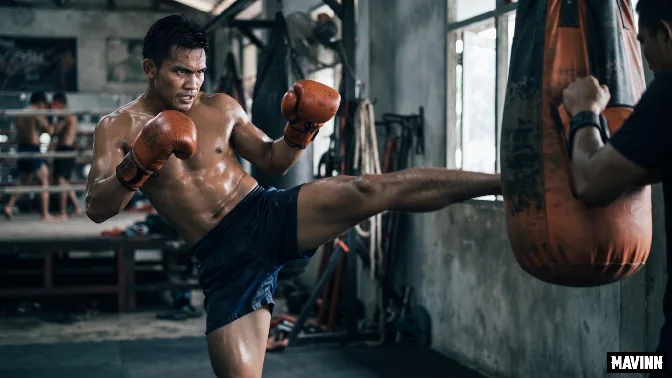
Kick box training is a stand-up combat sport and fitness discipline that combines boxing punches with martial arts kicks to build explosive power and elite cardiovascular endurance. You train your entire body by rotating through high-intensity rounds of heavy bag work, pad work, and sparring drills. A standard 60-minute session burns up to 800 calories while actively developing your core stability and striking precision.
You generate force through a kinetic chain, transferring energy from your feet through your hips to deliver rapid punches, knees, and kicks. We teach you to control distance and angle your footwork so you can land strikes with maximum power while remaining defensively sound. Our training structure relies on high-intensity interval timers, typically running 3-minute rounds with 1-minute rest periods to mimic real-fight pacing.
Origins and evolution of kick box
Modern kick box disciplines emerged during the 1950s and 1960s when Japanese karate practitioners blended full-contact strikes with Muay Thai techniques. Boxing promoter Osamu Noguchi coined the term and organized the first official events in Osaka to test styles against each other. This cross-training led to the elimination of elbow strikes and throws to create a fast-paced, spectator-friendly ruleset.
By the 1970s, the sport expanded to the United States, spawning American full-contact karate where competitors wore long trousers and foot pads. We trace the global standardization of the sport to the founding of organizations like WAKO in 1976 and later the emergence of K-1 in 1993. Today, global champions like Superbon Singha Mavinn apply this hybrid evolution to dominate international promotions like ONE Championship.
Core kick box rules and what makes it different
Kick box rules strictly prohibit elbow strikes and grappling throws, which instantly separates the sport from Muay Thai and mixed martial arts. You must maintain continuous, active striking, with referees breaking up clinches within seconds if no immediate weapon is thrown. This high-octane pace forces fighters to rely on rapid punch-kick combinations rather than grinding close-quarters control.
The scoring system heavily penalizes defensive stalling and rewards high-volume, clean damage. Under standard kick box regulations, you cannot hold a caught leg, so you must strike immediately and then release it. We train our athletes to strike instantly upon catching a kick to ensure they score without getting penalized by the referee.
Different styles of kick box you should know
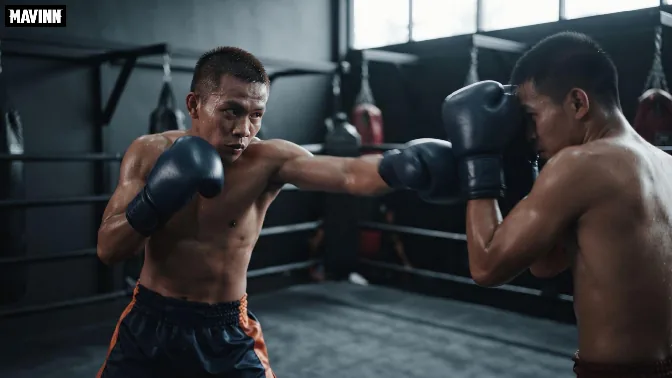
The global sport of kick box comprises three primary competitive styles defined by their legal striking targets: K-1, American kickboxing, and Dutch Style. Each ruleset fundamentally changes how you position your stance, manage distance, and defend incoming attacks. For example, K-1 rules forbid elbow strikes but permit a single-collar clinch to deliver a knee strike to the torso.
Understanding these distinct variations allows you to select the training system that aligns with your competitive goals. The American style prohibits low kicks, forcing fighters to master high-volume boxing combinations and kicks delivered strictly above the waist. Conversely, Dutch-style training emphasizes devastating low kicks at the end of punching sequences, a tactic that dominated the early K-1 World Grand Prix tournaments.
Japanese kickboxing versus American freestyle
Japanese kickboxing allows low kicks and knee strikes, whereas American freestyle restricts all kicks to above the waist. This rule change completely alters how fighters defend and move inside the kick box ring. American stylists rely on bouncing, boxing-heavy footwork, while Japanese fighters use a planted, heavy-pressure stance to check leg kicks.
| Rule / Feature | Japanese Kickboxing | American Freestyle |
|---|---|---|
| Leg Kicks | Allowed | Prohibited |
| Knee Strikes | Allowed | Prohibited |
| Footwear | Barefoot | Foot pads required |
We train fighters to adapt to both rule sets by mastering distance management. In American freestyle, some organizations require a minimum of eight kicks per round, forcing high-volume kicking. Understanding these tactical boundaries prevents costly point deductions during active competition.
K 1 and Glory rulesets explained
K-1 and Glory rulesets define modern kick box competition by limiting traditional Muay Thai clinch work to promote fast-paced striking. Both systems ban elbow strikes and focus heavily on continuous punching and kicking combinations. The main difference lies in how they handle clinching and knee strikes during active engagements.
| Rule Feature | K-1 Ruleset | Glory Ruleset |
|---|---|---|
| Clinching Limit | One single knee strike allowed per clinch | Allowed only during an immediate knee attack |
| Catching Kicks | Brief catch allowed to land one strike | Brief catch allowed to land one counter strike |
| Elbow Strikes | Banned entirely | Banned entirely |
These subtle rule variations force fighters to adapt their defensive guards and footwork to maintain high-volume output. We train you to transition from traditional Muay Thai stances to the explosive lateral movement required for these rulesets. Our training programs feature insights from Superbon Singha Mavinn, a world-class striking specialist who mastered these exact pacing demands to dominate the global stage.
Essential strikes used in a kick box match
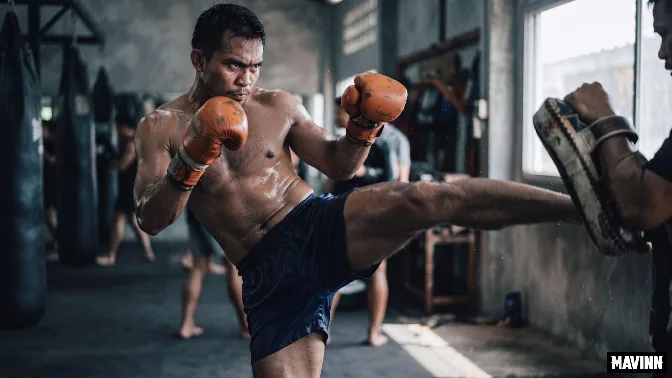
Winning a kick box match requires mastering four primary strike categories: punches, kicks, knees, and defensive counters. You must combine these elements to disrupt your opponent’s rhythm and create openings for clean scoring blows. For instance, we train fighters to transition from a jab-cross combination directly into a rear roundhouse kick to maximize impact.
Precision and timing dictate the effectiveness of each strike rather than raw power alone. Elite fighters like Superbon Singha Mavinn control the ring by executing teeps (push kicks) to maintain distance and setup powerful left hooks. Landing a clean strike requires you to rotate your hips fully to transfer maximum kinetic energy from the floor through your target.
Defensive head movement and footwork must accompany every offensive combination to avoid devastating counter-attacks. You can practice these high-level sequences through dedicated pad work during our training programs. Our coaches focus on refining the rear knee strike to target the ribs when fighting in close range.
Kick box punching combinations and footwork
Effective kick box striking relies entirely on synchronizing your hands with your feet to maintain balance and generate maximum power. Without proper footwork, your punches lose power and leave you vulnerable to swift counters. We train you to shift your weight dynamically to land heavy combinations while staying elusive.
- The Jab-Cross-Pivot: Step forward on the jab, drive the cross from your rear hip, and pivot 45 degrees to escape.
- The Double Jab-Low Kick: Push off your rear foot to advance, then step outward to open your hips for a kick.
Mastering these transitions requires consistent lateral cutting and linear footwork drills. Reigning ONE Featherweight Kickboxing World Champion Superbon Singha Mavinn maintains a 50-50 weight distribution to stay highly mobile. You can practice these exact patterns through our online courses or Stay & Train packages in Bangkok (Nuanchan) and Pattaya.
Kicking techniques and why elbows are usually banned
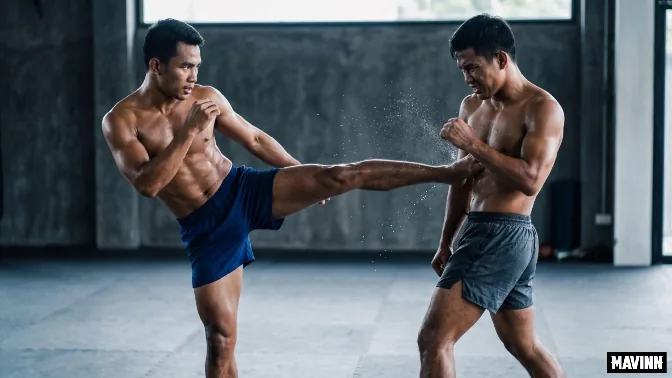
Kickboxing rules prioritize fluid, high-volume striking, which is why fighters use devastating roundhouse kicks and push kicks while banning elbows to prevent severe cuts and keep fights moving. In a standard kick box match, you must master two primary kicking styles to control the distance and damage your opponent:
- Roundhouse kicks: Target the thighs, ribs, or head using the shin bone to deliver maximum impact.
- Teeps: Disrupt your opponent’s rhythm and reset your offensive range, just as reigning ONE Featherweight Kickboxing World Champion Superbon does.
Elbows are banned in kickboxing because their sharp bones easily slice open skin, causing heavy bleeding that forces premature medical stoppages. While Muay Thai allows these slicing strikes, kickboxing promotions focus on continuous punching and kicking volume rather than clinch-heavy elbow battles. This rule keeps the action fast-paced and reduces the risk of fight-ending facial lacerations.
Kick box versus Muay Thai striking differences
The primary striking difference lies in the eight limbs of Muay Thai compared to the four limbs of a standard kick box ruleset, which bans elbows and active clinching. Muay Thai uses punches, kicks, knees, and elbows, whereas kick box competitors must rely solely on punches, kicks, and limited knees. Our coach Superbon Singha Mavinn mastered this tactical shift by adapting his distance control to capture the ONE Featherweight Kickboxing World Championship.
| Striking Element | Muay Thai | Kick Box Rules |
|---|---|---|
| Permitted Weapons | Punches, kicks, knees, elbows | Punches, kicks, limited knees |
| Clinch Work | Active throwing and sweeping | Immediate referee break |
| Defensive Guard | High, open stance for kicks | Tight boxing-style guard |
Clinch fighting represents another major divergence because traditional Thai stylists use the collar tie to dominate with sweeps and knee strikes. In contrast, kick box rules require the referee to break fighters almost immediately to keep the action fast-paced. This rule forces you to focus on high-volume combination punching and low kicks rather than close-quarters grappling.
Safety and head trauma in competitive kick box
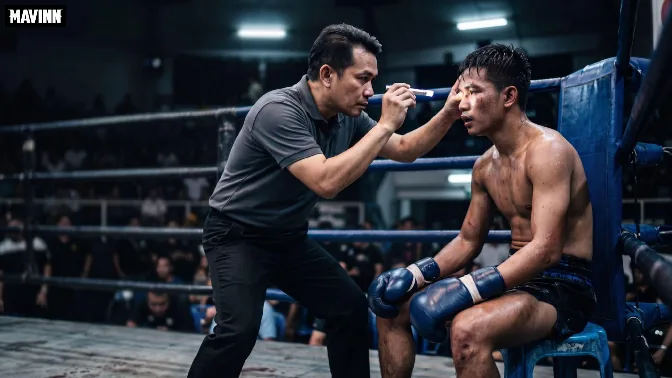
Managing head trauma in competitive kick box matches requires strict adherence to medical protocols, including pre-fight neurological screenings and immediate ringside evaluations. Fighters subject their brains to high-velocity impacts, making rapid recognition of concussive symptoms critical to preventing second-impact syndrome. We enforce a mandatory medical suspension for any athlete who suffers a knockout to allow full neurological recovery.
Ringside physicians use the SCAT5 tool to evaluate cognitive function immediately after a suspected head injury. Acute symptoms like pupillary asymmetry or loss of balance dictate an immediate medical stoppage of the fight. During training, fighters must wear custom-molded mouthguards and 16-ounce sparring gloves to reduce rotational acceleration of the brain.
Understanding brain injury risks in kick box
Repetitive head impacts in combat sports like a kick box sparring session can cause traumatic brain injuries, ranging from acute concussions to long-term neurological damage. When you absorb a direct strike, your brain accelerates and rotates inside the skull, stretching and damaging delicate neural pathways. We focus heavily on defensive head movement during sparring to reduce the rotational forces that trigger concussions.
Recognizing the early symptoms of a concussion is vital, as returning to combat too early increases the risk of dangerous second-impact syndrome. You must monitor for immediate headaches, dizziness, delayed reaction times, and light sensitivity after any hard head strike. If you experience these signs, you must stop contact training immediately and rest for a minimum of 7 to 10 days.
How modern gyms protect fighters during training
Modern gyms protect fighters by enforcing strict sparring protocols, utilizing shock-absorbing flooring, and mandating high-grade protective gear. We minimize impact injuries during high-intensity kick box sparring by requiring 16-ounce gloves and thick shin guards. Coaches actively supervise every round to manage fighter fatigue and prevent heavy head collisions.
To safeguard joints and ligaments, advanced training facilities install high-density EVA foam flooring that dampens shock during heavy kicks and takedowns. We also implement structured recovery protocols, including scheduled mobility sessions and ice baths to reduce muscle inflammation. These combined safety measures allow athletes to train at peak performance six days a week without risking long-term injuries.
Is cardio kick box different from competitive fighting ?
Yes, cardio kick box and competitive fighting are entirely different disciplines designed for completely different athletic goals. Cardio-focused classes strip away live contact to prioritize high-rep cardiovascular conditioning and calorie burn. In contrast, true fighter training focuses on technical defense, hard sparring, and ring strategy to prepare you for actual combat.
| Feature | Cardio Kick Box | Competitive Fighting |
|---|---|---|
| Primary Goal | Aerobic fitness & weight loss | Winning bouts & technical mastery |
| Contact Level | Zero contact (air/pads only) | Full contact sparring & competition |
| Key Equipment | Light gloves & yoga mats | 16oz sparring gloves, shinguards, mouthguards |
| Session Length | 45 to 60 minutes | 2 to 3 hours per session |
While fitness classes keep you moving continuously to music, authentic combat preparation requires split-second reaction drills and heavy bag work designed by striking specialists. At our gyms, we ensure you learn real mechanics even during conditioning drills so you never build bad habits that would fail in a real fight. For example, a proper fighter’s stance uses a 45-degree angle to minimize target area, whereas cardio classes often use wide, square stances solely for balance.
Fitness benefits of cardio kick box workouts
High-intensity cardio workouts accelerate fat loss, skyrocket cardiovascular endurance, and build explosive athletic power by keeping your heart rate in the anaerobic zone. When you train to kick box, you trigger the EPOC effect, burning calories for up to 24 hours after your session ends. This training forces your cardiorespiratory system to adapt rapidly to intense physical stress.
- VO2 max improvement: Rapid intervals of striking and defensive footwork force your body to use oxygen more efficiently under pressure.
- Caloric expenditure: A single focused session can burn up to 800 calories while simultaneously building lean muscle tissue.
- Functional core strength: Rotational movements used during heavy bag work build deep abdominal strength and pelvic stability.
We design our training programs to simulate these exact athletic demands, ensuring you build combat-ready conditioning. You can experience this physiological adaptation firsthand through our structured online training courses or direct pad-work sessions.
Why kick box training burns more fat
Traditional combat training burns more fat because it forces your body into a state of continuous High-Intensity Interval Training (HIIT) through explosive, multi-planar movements. When you kick box and drill authentic combinations, your body recruits multiple major muscle groups simultaneously to generate rotational power. This intense physical demand triggers an afterburn effect (EPOC), which keeps your metabolic rate elevated for up to 24 hours post-workout.
Active pad work and sparring drills require constant footwork, head movement, and core stabilization. This constant shifting of weight prevents your muscles from adapting, forcing your cardiovascular system to work harder than it would on a standard treadmill. For example, a single 45-minute traditional striking session can burn up to 600 calories while building lean, fat-burning muscle mass.
Where to start your kick box journey in Thailand
You start your kick box journey in Thailand by choosing an environment that aligns with your specific athletic goals. Bangkok offers urban, high-tempo sparring and technical precision, while our Pattaya location offers focused, high-endurance training. We design programs ranging from foundational striking to elite-level fight preparation under the guidance of our world-class striking specialist, Superbon Singha Mavinn.
Bangkok gym packages for beginner and advanced levels
We provide specialized training packages tailored to your current skill level, whether you want to master basic kick box mechanics or prepare for a professional bout. Beginners focus on fundamental stance, balance, and clean striking technique under strict supervision. Advanced athletes skip the basics to focus on high-intensity sparring, tactical counters, and professional fight conditioning.
| Package Level | Core Focus | Training Elements |
|---|---|---|
| Beginner | Stance & Fundamentals | Pad work, basic combinations, shadow boxing |
| Advanced | Sparring & Fight Tactics | Clinching, hard sparring, professional conditioning |
Our stay & train packages combine intensive daily sessions with on-site accommodation to maximize your progress. You will train directly under the guidance of elite coaches, including world-class striking specialist Superbon Singha Mavinn. Beginners typically start with 2 daily sessions to build muscle memory without risking overtraining.
Training kick box at Mavinn Muaythai in Pattaya
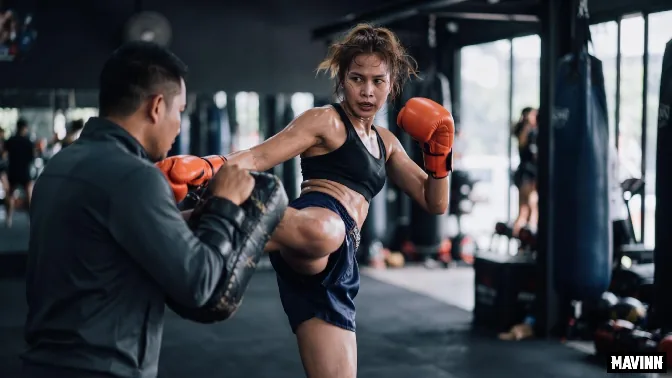
You can train kick box sessions at our Pattaya location to elevate your striking power under elite-level instruction. We design our programs to challenge fighters of all levels, from beginners to competitive athletes. Our daily regime focuses on heavy bag work, pad drills, and technical sparring to refine your footwork and striking combinations.
Our Pattaya facility offers a fully immersive experience with our Stay & Train package, combining high-intensity workouts with onsite accommodation. Each session targets core conditioning, defense patterns, and high-kick mechanics to build a complete fighting foundation. You will train under the direct training methodology of reigning ONE Featherweight Kickboxing World Champion Superbon Singha Mavinn during twice-daily sessions.
Conclusion
You can master the kick box discipline to build explosive power, sharpen your reflexes, and burn up to 800 calories per hour. Our structured programs scale from basic mechanics to elite ring tactics, ensuring you progress safely at your own pace. Every session uses high-intensity 3-minute rounds of pad work to build authentic cardiovascular endurance.
We deliver this training through online courses and immersive Stay & Train packages in Bangkok and Pattaya. You will learn directly from methodologies designed by reigning ONE Featherweight Kickboxing World Champion Superbon Singha Mavinn. This systematic approach ensures you develop sharp striking mechanics while maintaining safety with 16-ounce sparring gloves.