Key Takeaways
- Elbow Strike Muay Thai – This close-range striking method delivers devastating force and can easily penetrate an opponent’s guard.
- Proper execution relies on generating power from hip rotation while maintaining a tight defensive guard to prevent counterstrikes.
- Practitioners can refine these techniques through tailored training programs available both online and through physical packages in Bangkok and Pattaya.
- Learning from elite specialists, including Superbon Singha Mavinn, ensures fighters develop correct form and combat application.
The Elbow Strike Muay Thai weapon is one of the most devastating close-range techniques in martial arts due to its ability to cut opponents and cause quick knockouts. We teach this skill to help fighters use the “eight limbs” of Muay Thai with maximum efficiency. You must generate power from your hips and shoulders, pivoting your lead foot at a 45-degree angle to drive the strike home.
Mastering this strike requires precise understanding of angles, timing, and defensive positioning. This guide breaks down five essential elbow variations, clinch integration tactics, and official competition rules to elevate your striking game. For a complete overview of all weapons, read our complete guide to Muay Thai technique. You can practice these exact movement patterns at our Bangkok and Pattaya training facilities.
Why the Elbow Strike in Muay Thai is a Dangerous Close Range Weapon
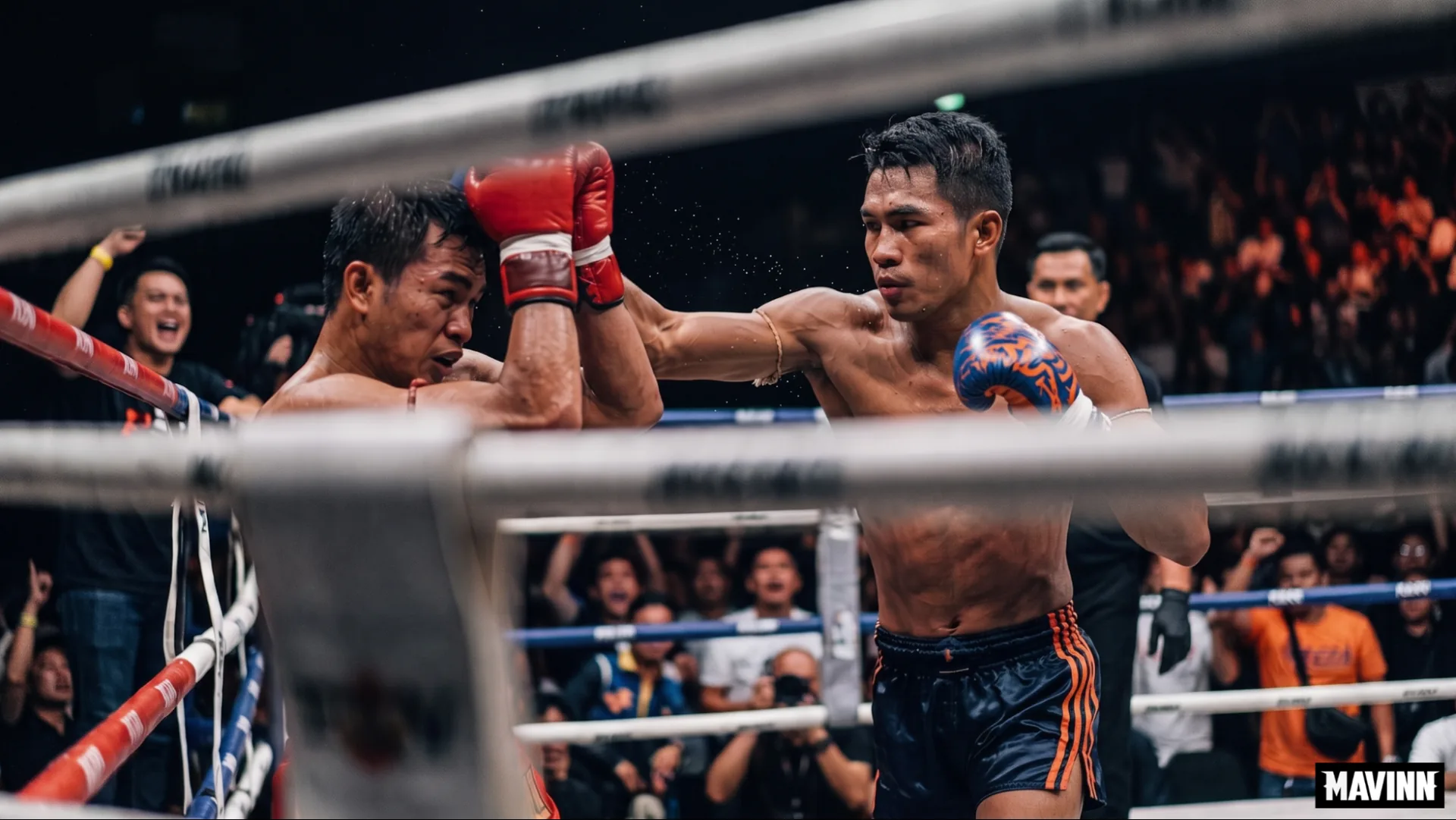
An elbow strike Muay Thai fighters use acts as a highly dangerous close-range weapon because the sharp, unpadded surface of the ulna bone easily slices skin and causes severe lacerations. We emphasize this tool during tight exchanges where standard punches lose their acceleration and power. You can use the point of your elbow to pierce defensive guards and target the opponent’s orbital bone.
- Zero padding: Unlike fists wrapped in gloves, the elbow strikes with raw, concentrated force directly on impact points.
- Cutting potential: The slicing motion across facial bones frequently targets the eyebrow ridge to impair an opponent’s vision and secure an advantage.
- Leverage in the clinch: You can generate high rotational torque from your hips even when standing chest-to-chest.
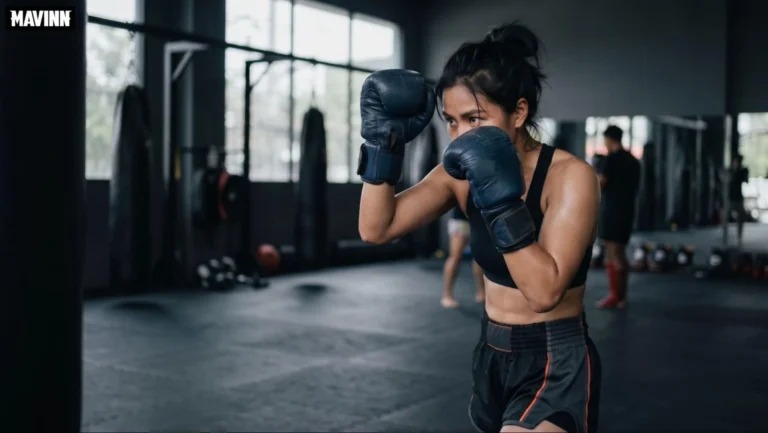
These mechanics allow you to generate fight-ending power within a distance of less than 12 inches. Fighters must keep their non-striking hand glued to their temple to prevent getting countered during the swing. We train fighters to rotate the torso at a 90-degree angle to maximize this impact force safely.
Read next: Sparring Defined, an Essential Guide to Combat Practice
5 Essential Elbow Strike Muay Thai Techniques You Should Know
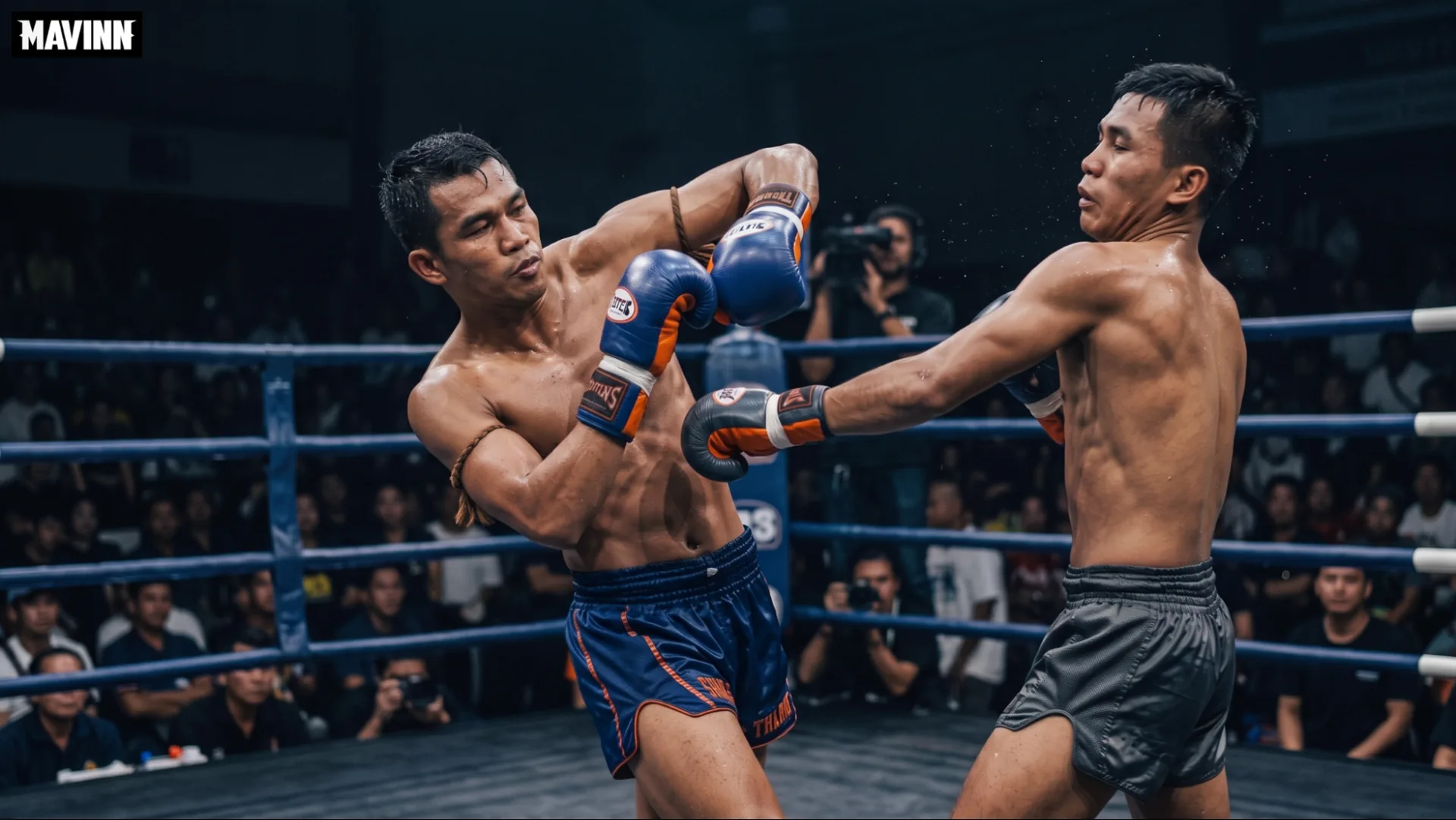
When learning elbow strikes, Muay Thai fundamentals divide the system into five core trajectories designed to penetrate any guard. Each variation exploits a specific vulnerability by shifting the striking angle between 45 and 90 degrees.
These movements slice, pierce, or lift hands during close-range exchanges. You rotate your hips to drive the sharp tip of your ulna bone into the opponent’s brow.
- ### Horizontal Elbow (Sok Tad) Cutting the Opponent
The horizontal elbow, known as *Sok Tad*, travels parallel to the floor to slice directly across your opponent’s forehead or eyebrow line. You execute this strike by bringing your arm up to shoulder height and throwing it in a flat, sweeping arc. To generate maximum cutting force, you must pivot your lead foot and rotate your hips at a 90-degree angle.
Keeping your forearm parallel to the ground ensures the sharpest part of your ulna bone makes direct contact with the target. You must glue your opposite glove to your temple to protect against a simultaneous counter-strike. During training, we instruct students to aim for the partner’s shoulder collarbone to practice the trajectory without causing facial injuries.
- ### Diagonal Elbow (Sok Chieng) Finding the Guard’s Gaps
The diagonal elbow (*Sok Chieng*) strikes downward at a 45-degree angle to slip directly between the vertical forearms of an opponent’s high guard. This downward trajectory bypasses standard defensive blocks by cutting from the temple area straight through to the nose bridge. To execute this cleanly, you must step forward and rotate your shoulder to extend your reach.
You must keep your opposite hand glued to your temple to protect against a simultaneous counter hook. Letting that guard hand drop during the hip rotation exposes your jaw to immediate danger. Practicing this path on focus mitts helps you consistently slice across the opponent’s orbital bone.
- ### Upward Elbow (Sok Ngad) Lifting the Guard
The upward elbow, or *Sok Ngad*, slices vertically upward through the center of your opponent’s guard to force their hands apart and expose the chin. You execute this strike by bending your arm sharply and driving your elbow straight up from your chest. To generate maximum power, you must bend your knees and lift your rear heel to drive the strike upward.
This vertical trajectory targets the jaw or the nose by exploiting the narrow gap between your opponent’s forearms. As your striking elbow ascends, your non-striking glove must remain pressed against your temple to block incoming counters. We teach fighters to step inside the opponent’s stance to land this strike at a range of less than 12 inches.
- ### Spear Elbow (Sok Poong) Piercing the Defense
The spear elbow (*Sok Poong*) thrusts straight forward to pierce directly through the center of your opponent’s tight defensive guard. Unlike sweeping elbows, this technique relies on a linear, driving motion that resembles a jabbing punch. To maximize penetration, you must step forward aggressively and extend your shoulder to gain reach.
Your non-striking hand must stay glued to your forehead to block any incoming counter punches during your forward entry. Keep your striking arm’s hand open and facing inward toward your chest to sharpen the alignment of your elbow tip. This alignment allows you to target soft tissue areas like the throat or the nose bridge from just outside clinch range.
- ### Spinning Back Elbow (Sok Klap) The Surprise Knockout
The spinning back elbow, or *Sok Klap*, uses rotational momentum to deliver a blindside knockout strike when an opponent anticipates a missed punch or kick. You execute this technique by pivoting on your lead foot, spinning your torso 180 degrees, and whipping your elbow horizontally across the target. Looking over your shoulder before striking ensures you locate the opponent’s temple and put the full rotation of your body behind the elbow.
Throwing this strike requires precise footwork to prevent slipping or losing your balance during the rapid spin. Keep your non-striking hand pressed firmly against your temple to protect against a counter hook during the rotation. This high-risk counter works best immediately after a missed roundhouse kick at a tight range of 2 feet.
Mastering the Timing of Elbow Strikes Muay Thai Style
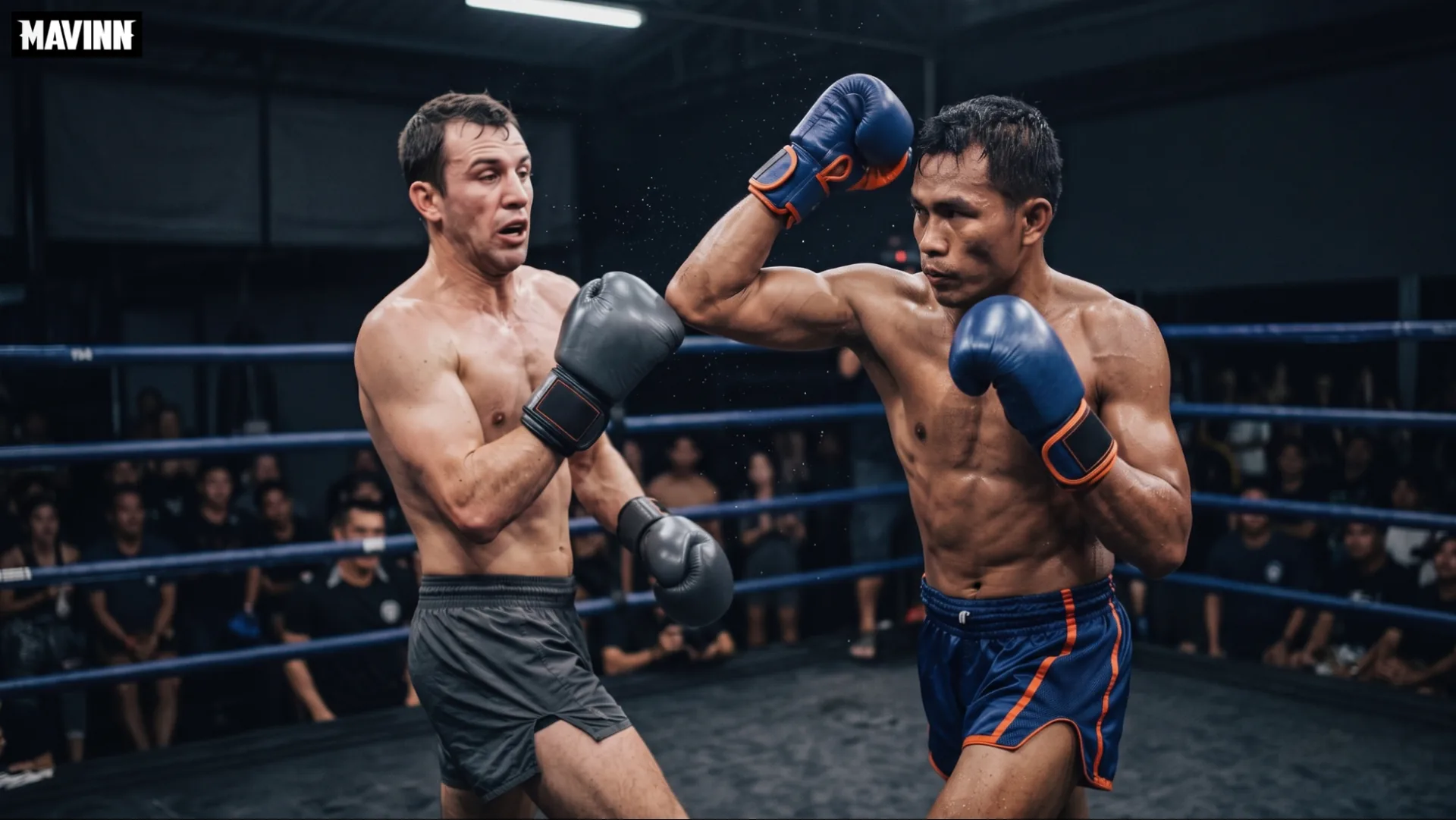
Timing an elbow strike Muay Thai technique requires you to exploit the exact moment your opponent commits to an attack or loses defensive posture. You must strike when their guard splits or during close-range transitions to avoid counter-attacks. Catching an opponent mid-punch or during a clinch entry offers the highest success rate for landing these 90-degree slicing blows.
Utilizing the Clinch to Land Clean Elbow Strikes
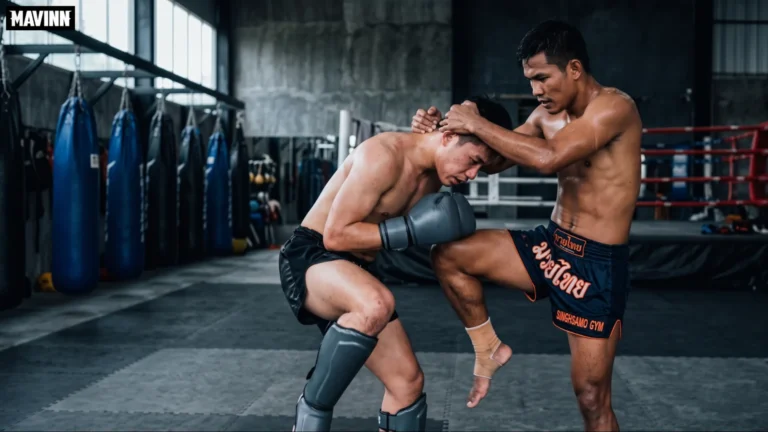
Landing clean elbow strikes Muay Thai style requires securing dominant control inside the clinch, which our guide to Thai clinch control breaks down step by step, to limit your opponent’s movement. When you control the back of your opponent’s neck with a collar tie, you can pull their head directly into your striking zone. For example, pulling down on the crown of the head with a two-handed collar tie opens up a direct path for a horizontal strike across the guard.
To maximize safety while striking from this close range, you must use your non-striking hand to block your opponent’s free arm. Pinning their shoulder or bicep prevents them from counter-striking while your guard is temporarily open. Keep your lead shoulder high to shield your chin, ensuring you maintain a 45-degree angle relative to your opponent’s chest to minimize their counter options.
Countering Punches and Creating Angles
Slip outside your opponent’s straight punch to position your body at a 45-degree angle. This movement takes you out of their line of fire while opening a direct path to their temple or jaw. You can then step forward with your lead foot to anchor your stance and deliver a sharp horizontal elbow directly over their dropped shoulder.
Duck slightly under a sweeping hook to load your hips for an upward counter elbow strike. This defensive slip creates a tight passing lane right through the center of their exposed guard. Fighters who master this diagonal footwork can shut down aggressive punchers by turning a basic evasion into a counter strike that lands while the opponent’s arm is still extended.
Rules and Regulations for Elbow Strikes in Muay Thai Competitions
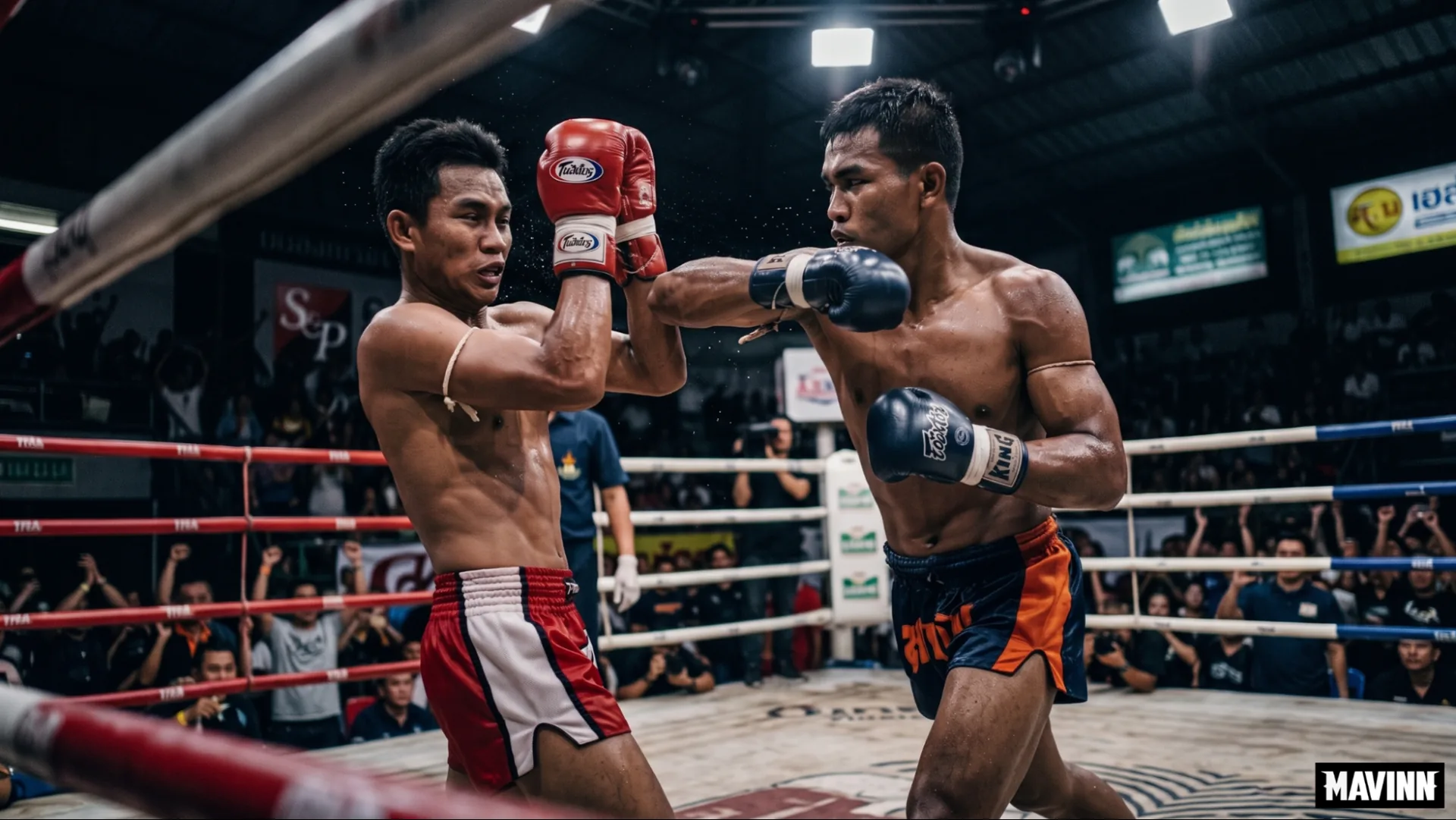
Professional Muay Thai promotions permit all types of elbow strike Muay Thai techniques to any legal target on the body, including the head, face, and torso. However, regulatory bodies enforce strict safety protocols regarding protective gear and banned targets to prevent severe injuries. The full rules of Muay Thai cover how these strikes are scored and what counts as a foul. Major stadiums like Lumpinee and Rajadamnern allow full-force elbow strikes, while amateur organizations enforce mandatory safety gear. The standard regulations governing these strikes in official bouts include.
- Elbow pads: Amateur divisions require soft padded guards to reduce the risk of deep lacerations.
- Banned targets: Strikes aimed directly at the spine, groin, or the back of the head are strictly illegal under standard stadium rules.
- Doctor stoppages: Ringside physicians can halt a bout immediately if an elbow strike causes a cut that bleeds into a fighter’s eyes and impairs their vision.
Learn Authentic Elbow Strike Muay Thai Techniques at Mavinn Muaythai
We teach authentic elbow strike Muay Thai techniques directly from world-class striking specialists at our high-performance gyms. Our programs accommodate every skill level, helping you master the precise mechanics, timing, and defensive drills needed for close-range combat. You will train under elite instructors, including reigning ONE Featherweight Kickboxing World Champion Superbon Singha Mavinn, who trains at our Bangkok gym.
You can choose between structured daily classes and immersive multi-day camps designed to elevate your striking game. Our facilities provide specialized equipment and sparring partners to help you safely practice landing clean elbows from the clinch. We offer targeted programs across our physical gyms and digital platforms to fit your schedule.
| Location | Program Type | Training Focus |
|---|---|---|
| Bangkok (Nuanchan) | Group Classes | Technical precision, clinch work, and fight strategy |
| Pattaya | Stay & Train Packages | Intensive multi-day camp training |
Training Packages for All Levels at Our Bangkok and Pattaya Gyms
We offer structured Muay Thai training programs designed for all skill levels at our Bangkok and Pattaya locations. Beginners can learn the foundational elbow strike Muay Thai mechanics, while advanced fighters can refine their sparring tactics. Our coaching staff includes world-class striking specialist Superbon Singha Mavinn to ensure high-quality technical instruction.
| Package Type | Location | Best For |
|---|---|---|
| Group Classes | Bangkok (Nuanchan) & Pattaya | Daily group classes and technique refinement |
| Stay & Train | Pattaya | Immersive multi-day camp experience |
| Online Courses | Remote / Global | Flexible home learning for fundamental drills |
You can choose the training format that best fits your lifestyle and schedule. Our Stay & Train package runs intensive daily workouts across a structured multi-day block. This setup allows you to focus entirely on mastering complex combinations like the spinning back elbow strike.
FAQs Elbow Strikes Muay Thai
How do you protect your partner during elbow practice ?
You protect your training partner during elbow strike Muay Thai practice by wearing specialized elbow pads and strictly controlling the speed of your movements. Safety in the gym relies on mutual respect and using the correct protective gear to prevent cuts or concussions. We train fighters to pull their strikes well short of the target when practising without gear.
- Padded Sleeves: Slip-on elastic elbow pads reduce the sharp impact of the ulna bone.
- Thai Pads: Direct your strikes toward the thick sides of your partner’s forearm pads rather than their bare skin.
- Sparring Speed: Keep the power light and controlled to prevent accidental slips.
Are elbow strikes allowed in amateur vs. professional bouts ?
Elbow strike Muay Thai rules differ significantly between amateur and professional bouts to balance athlete safety with traditional combat realism. Amateur competitions prioritize protection, whereas professional promotions allow the full force of these strikes.
| Feature | Amateur Bouts | Professional Bouts |
|---|---|---|
| Elbow Pads | Mandatory padding required | No pads allowed |
| Target Areas | Restricted to the body in some youth divisions | Permitted to strike the head and face |
| Scoring Weight | Lower scoring impact unless clean damage is shown | High scoring impact, especially when causing cuts |
Amateur fighters must wear thick elbow pads to minimize cuts and concussions during multi-day tournament formats. Professional fighters compete with bare elbows, allowing sharp bone-to-skin contact that often results in fight-stopping cuts. Professional promotions like ONE Championship and traditional stadiums like Lumpinee reward decisive elbow strikes heavily on the judges’ scorecards.
What is the best way to defend against an elbow strike ?
The best way to defend against an elbow strike in Muay Thai is to establish a high, tight guard or close the distance to clinch before the strike lands. Keeping your hands glued to your forehead blocks the horizontal trajectory of the elbow. Alternatively, stepping forward into a tight clinch completely smothers the leverage of the incoming strike before it can travel. You can utilize three specific defensive actions to neutralize elbows.
- Forearm Shield: Press your glove against your temple and raise your shoulder to block the bone-on-skin contact.
- The Pivot: Take a 45-degree step backward to slip the elbow and counter with a low kick.
- Bicep Control: Grab your opponent’s lead arm at the joint to shut down their swinging rotation.
Conclusion
Mastering the elbow strike Muay Thai system gives you a highly destructive close-range weapon that can pierce any defensive guard. You must generate power from hip rotation and maintain a tight guard to strike effectively without leaving yourself open to counterattacks. Applying these movement patterns under pressure requires consistent practice of the five core elbow trajectories.
We help you refine these advanced striking mechanics through structured training programs at our Bangkok and Pattaya facilities, as well as our flexible online courses. Our curriculum is led by world-class specialists like Superbon Singha Mavinn to ensure your form is accurate and combat-ready. You can join our next intensive training camp in Pattaya to master these close-range skills safely under professional supervision.