Key Takeaways
- Muay Thai Combos – Combining punches, kicks, knees, and elbows systematically increases striking efficiency and keeps opponents off balance.
- Structured fight combinations are essential for all progression levels, helping fighters transition fluidly between offense and defense.
- Training under the guidance of world-class striking specialists like Superbon Singha Mavinn ensures proper execution, balance, and power.
- Integrating these striking sequences into dedicated programs like Stay & Train packages helps build muscle memory and cardiovascular conditioning through repetitive practice.
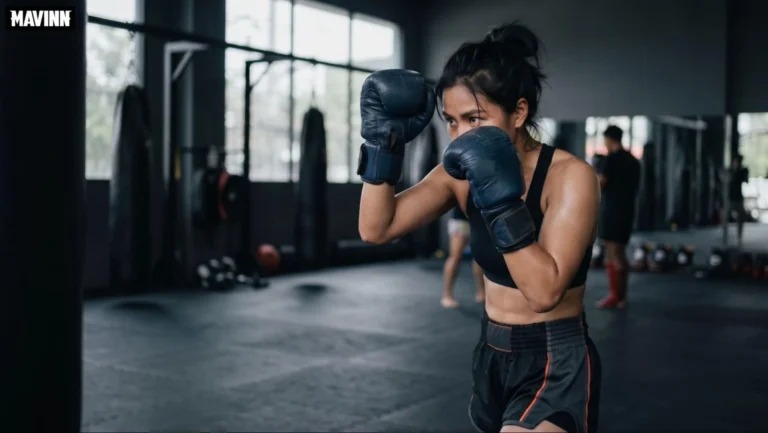
Mastering Muay Thai combos allows you to transition from single strikes to fluid, unpredictable attacks that overwhelm your opponent. Combining punches, kicks, knees, and elbows forces defenders to block multiple levels at once. For example, throwing a simple jab-cross-low kick sequence changes the strike target from the head to the thigh in one continuous motion.
Building a foundation with five reliable combinations helps you develop automatic muscle memory during sparring. This structured approach prevents you from freezing under pressure or throwing wild, unbalanced strikes. Practice these sequences on the heavy bag for 3 rounds daily to lock in your distance and timing.
Why You Need Effective Muay Thai Combos
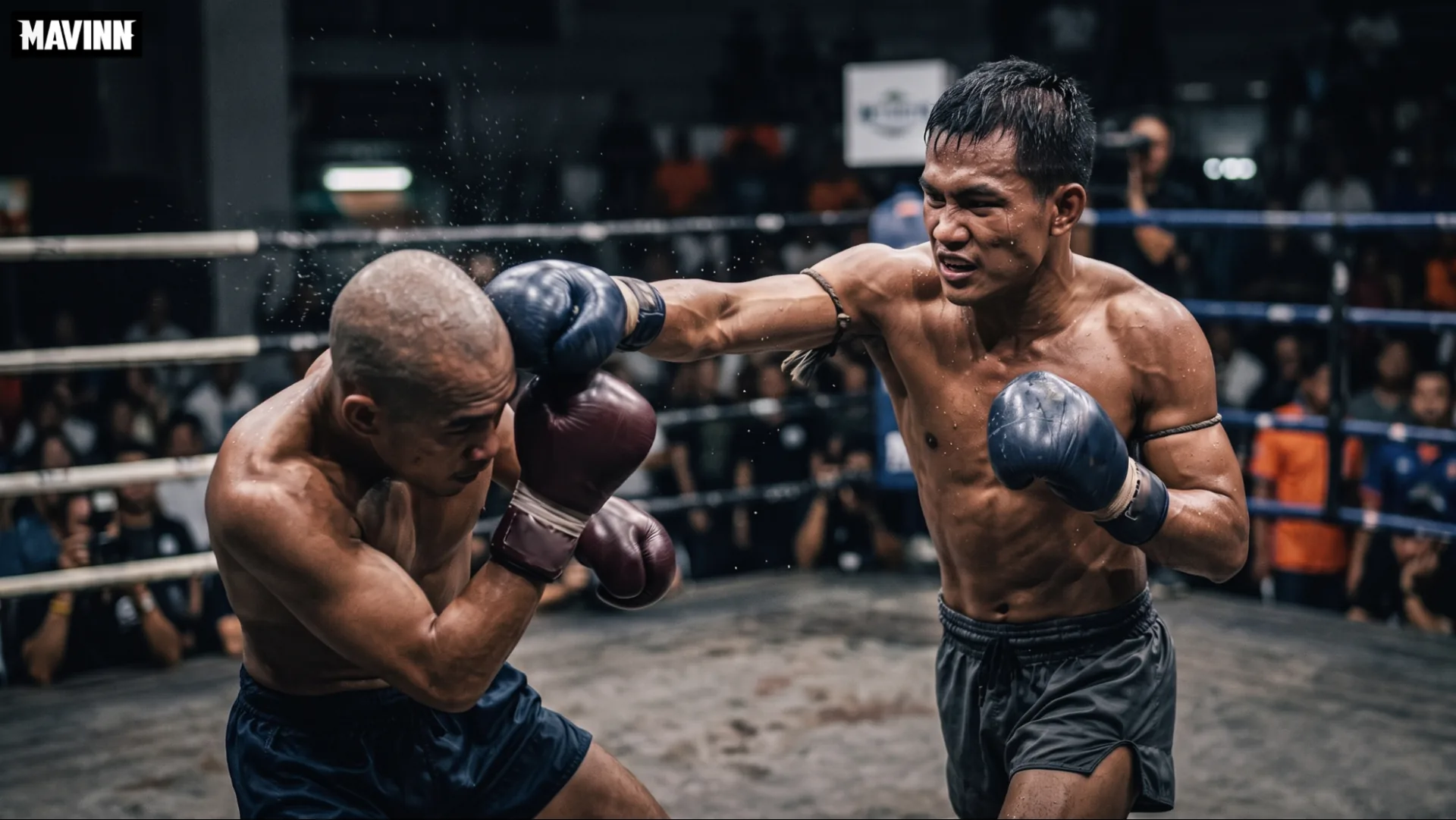
Effective Muay Thai combos overwhelm your opponent’s guard by chaining strikes together rather than throwing single, predictable attacks. Throwing one strike at a time allows defenders to easily block, counter, and track your movement. Combining punches, kicks, and knees forces your opponent to defend multiple levels simultaneously, which sets up a heavy low kick to the thigh.
Structured combinations also help you maintain balance and defensive positioning during a fast-paced sparring session. Using the momentum of one strike to launch the next saves stamina and keeps your guard high. Regular repetition of these sequences sharpens your reaction time so the next strike fires without you having to think about it.
The First 5 Basic Muay Thai Combos You Should Master
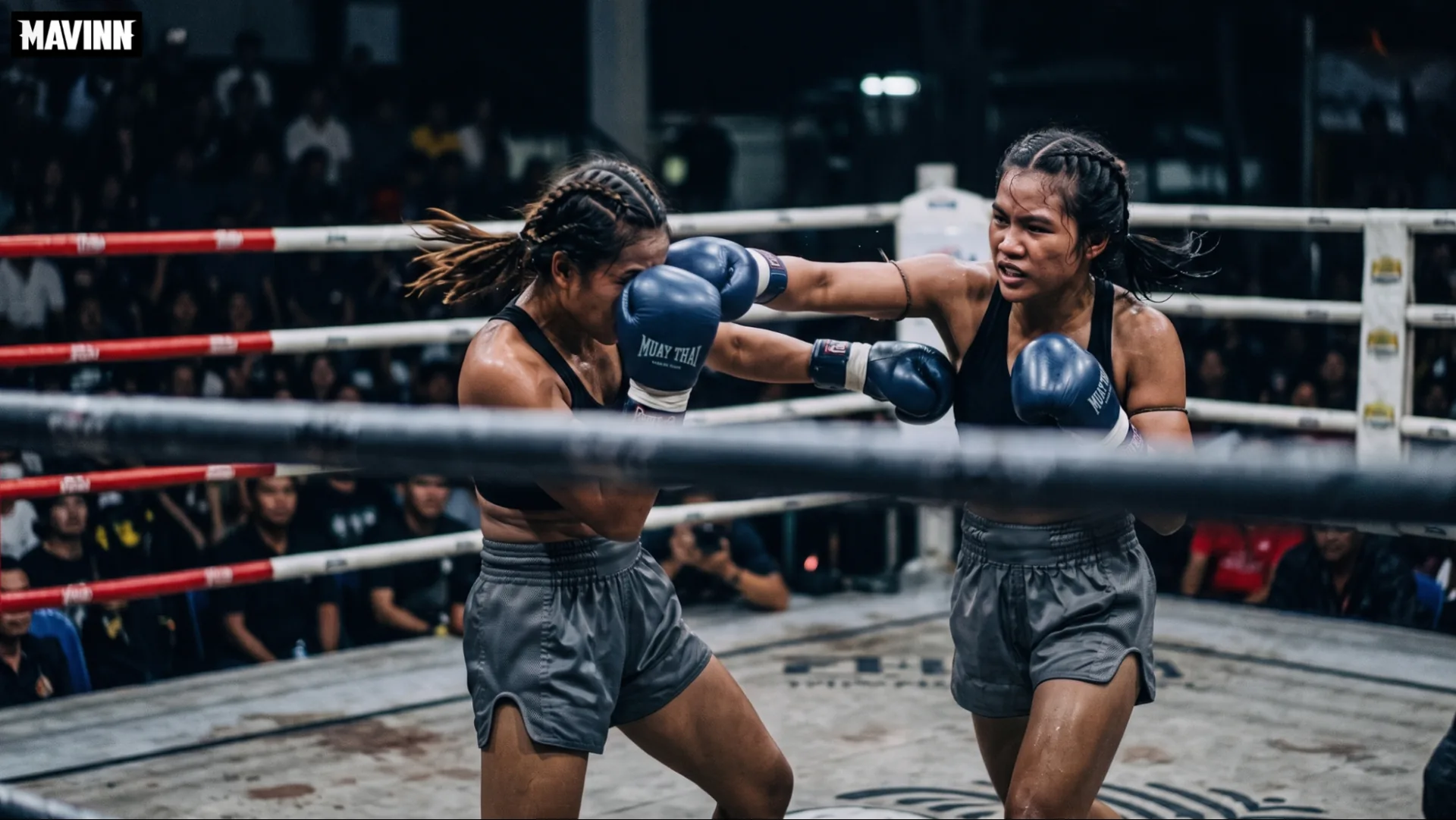
You must master five fundamental Muay Thai combos to build a functional striking foundation and improve your overall martial arts techniques. These core sequences teach you to transition between punches, kicks, teeps, and knees. Each one assumes you already have the individual strikes, so review our guide to Muay Thai technique first if any of them feel unfamiliar. Practicing these specific drills develops the muscle memory and balance needed to land clean strikes under pressure.
Combo 1. Jab, Cross, and Rear Leg Roundhouse Kick
The jab, cross, and rear leg roundhouse kick is the fundamental three-strike Muay Thai combo designed to set up a powerful finishing blow. This sequence uses straight punches to force your opponent to raise their guard, leaving their ribs and thighs exposed. To execute this correctly, step your lead foot out to the side to clear the path for your kicking leg.
- Throw a quick lead jab to occupy your opponent’s vision and measure your distance.
- Deliver a straight rear cross while pivoting your back foot to shift your weight forward.
- Pivot on your lead foot and swing your rear shin directly into the opponent’s ribs or thigh.
This classic combination works because the hand strikes mask the transition of your weight to the kicking leg. You must keep your lead hand high to guard your chin throughout the entire kicking motion. Practice this sequence slowly on kick pads for three rounds of three minutes to build muscle memory, and see our guide to building faster kicks if your rear leg feels slow off the mark.
Combo 2. Jab, Cross, Lead Hook, and Low Kick
The jab, cross, lead hook, and low kick combination targets multiple levels to disrupt your opponent’s guard and compromise their balance. By throwing high punches first, you force your opponent to raise their hands and block their vision. This opening allows you to land a devastating leg kick to the thigh with maximum power.
You can execute this combination using these three sequential steps:
- Throw a quick lead jab to establish distance and measure the target.
- Follow instantly with a straight rear cross to shift your weight forward.
- Deliver a sharp lead hook to pull their guard to the side, then pivot on your lead foot to chop their leg with a heavy rear low kick.
You must shift your weight dynamically from your back foot to your front foot during this sequence. Keep your non-striking hand glued to your temple to protect against counter-punches. Aim for the outer thigh, where the big quadriceps muscle sits, to maximise the impact.
Combo 3. Double Jab, and Rear Teep
The double jab and rear teep combination is your go-to tool for managing distance and keeping aggressive opponents at bay. You use the consecutive jabs to blind your opponent and force them to guard high, which exposes their midsection. Once their guard is up, you drive your rear foot into their torso to push them back.
To execute this effectively, step forward slightly with each jab to close the gap. Chamber your rear knee high before extending your leg to maximize the push power of the teep. Land your striking foot back into a balanced stance immediately to defend against counterattacks.
Combo 4. Jab, Cross, and Lead Knee
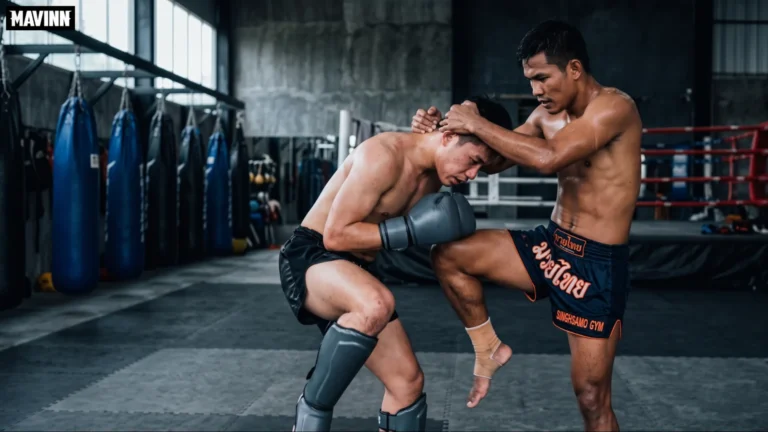
The jab, cross, and lead knee combination bridges the gap between boxing distance and close-range striking. Your initial two-punch combination forces your opponent to cover up and blocks their line of sight. This distraction creates the perfect opening for you to step in and drive your knee straight into their solar plexus.
To maximize the power of the lead knee, you must slide your rear foot forward while throwing the cross to load your hips. Pushing off the ball of your foot provides the leverage needed to thrust your hip forward. Always keep your rear hand glued to your temple to protect against a counter left hook.
Combo 5. Jab, Rear Teep, and Right Cross
The jab, rear teep, and right cross combination is an exceptional tool for controlling distance and catching your opponent as they try to rush back into range. You begin with a quick jab to blind or distract your opponent, immediately following up with a powerful rear teep to push them away. As they attempt to close the gap you just created, you drive a straight right cross directly through their guard.
To maximize the power of this sequence, you must plant your kicking foot firmly back on the canvas before throwing the punch. This stable base allows you to rotate your hips fully and transfer your body weight into the final strike. Keep your lead hand high during the kick to block potential counter-punches.
Common Mistakes When Practicing Muay Thai Combos
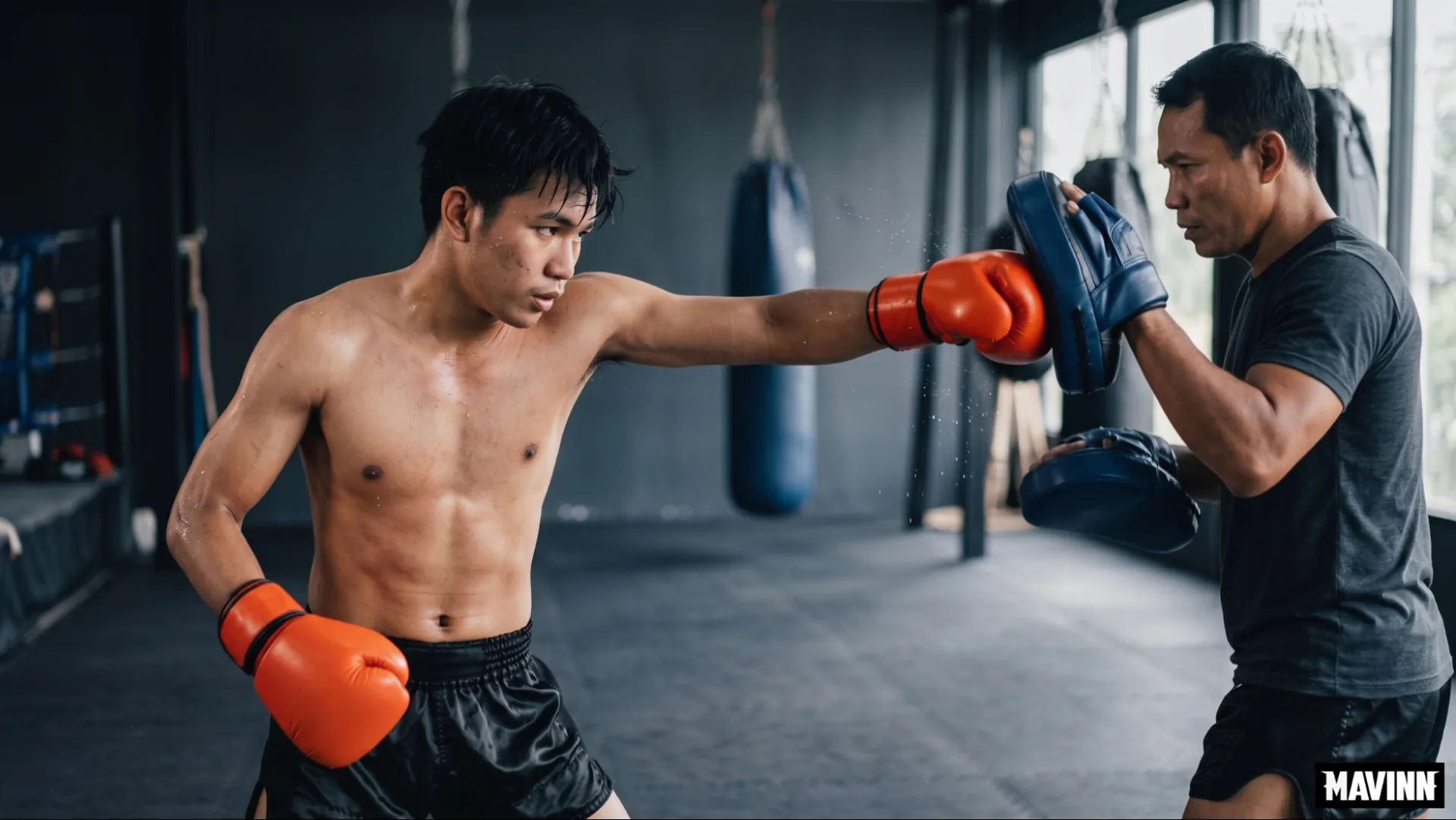
Dropping your hands while striking is the most frequent mistake when practicing Muay Thai combos, leaving you completely exposed to counterattacks. Fighters often lower their defensive glove when throwing a kick or hook. To fix this, keep your opposite hand glued to your temple every time you throw a strike. We frequently see three other critical errors during training.
- Overcommitting to the first punch, which ruins the balance needed for subsequent strikes.
- Failing to pivot the lead foot during roundhouse kicks, which robs the strike of most of its power.
- Stepping too deep into the guard, which jams your punching range and kills your leverage.
You must maintain a solid stance between each strike to stay ready for defense. Shadow boxing in front of a mirror helps you spot these guard gaps instantly. Record a three-minute video of your training to analyze your guard height.
How Muay Thai Combos Score Under Official Rules
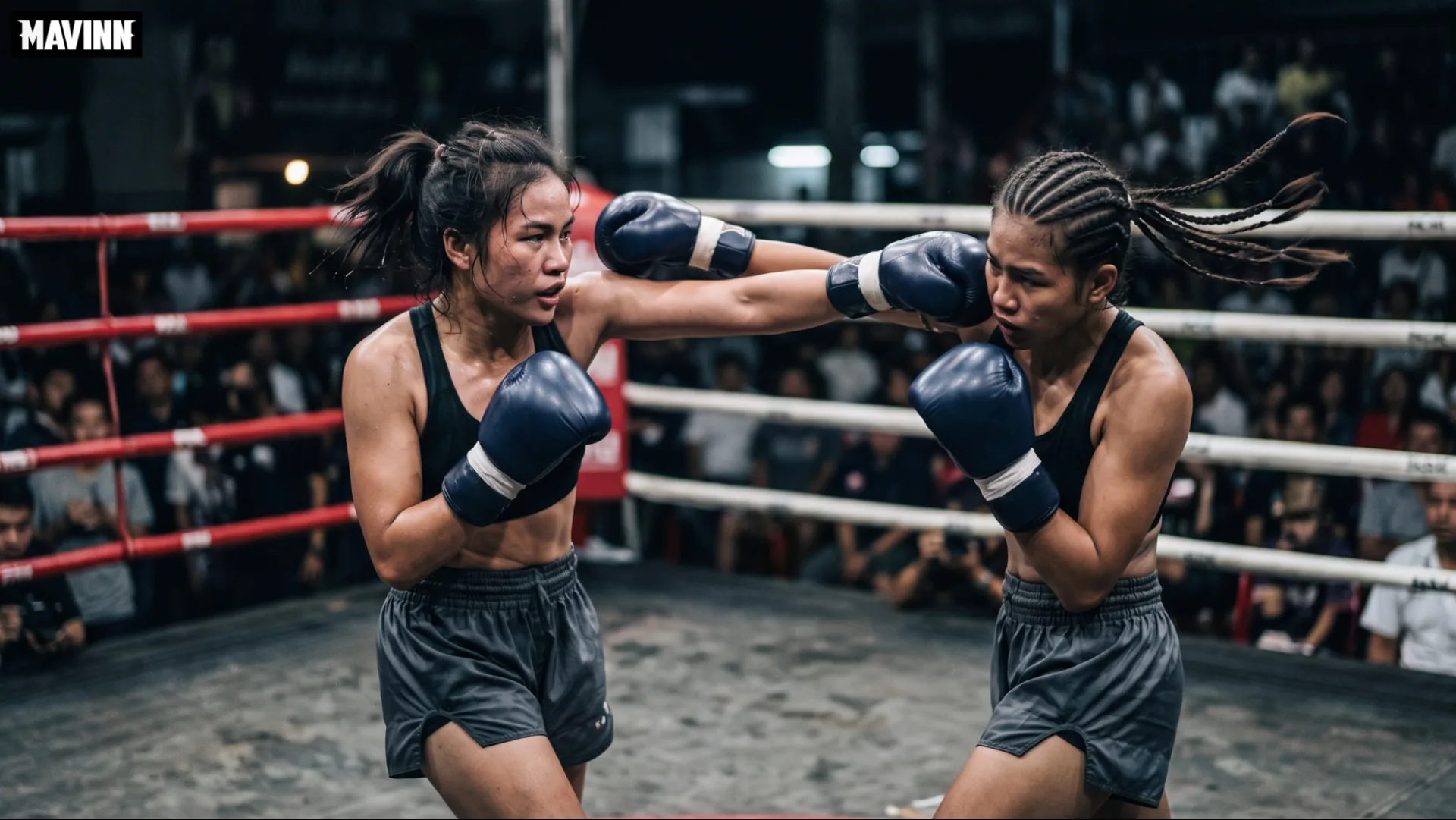
Muay Thai judges score combinations based on clean impact, visible damage, and physical dominance rather than the sheer volume of strikes thrown. Clean, powerful strikes that visibly off-balance your opponent score much higher than rapid, light taps. For example, under standard stadium rules in Thailand, a hard rear kick to the ribs scores higher than three light jabs.
To score highly, you must ensure your Muay Thai combos finish with a dominant, heavy strike rather than a defensive retreat. Judges look for effective aggression, meaning you must control the center of the ring and dictate the pace of the exchange. Finishing your sequence with a clean sweep or a solid knee strike often secures the judges’ favor at the end of a round.
Perfect Your Muay Thai Combos at Mavinn Muaythai
You will master your Muay Thai combos faster by training under the guidance of world-class instructors at Mavinn Muaythai. Our structured programs build correct muscle memory through high-intensity pad work and partner drills. You can access these professional training systems at our fully equipped gyms in Bangkok (Nuanchan) and Pattaya.
We offer specialized packages designed for all fitness levels, including our immersive Stay & Train program. This curriculum is developed with insights from elite fighters to ensure your striking techniques are both powerful and defensively sound. Our training methodology is led by striking specialists, including reigning ONE Featherweight Kickboxing World Champion Superbon Singha Mavinn.
Why Expert Pad Work Builds Muscle Memory
Expert pad work builds muscle memory by forcing your nervous system to repeat strikes against dynamic, moving targets. Holding pads requires a trainer to mimic real fight distances, which trains your eyes and muscles to fire automatically. At Mavinn Muaythai, trainers adjust the pads to correct your hip rotation on every single kick.
This hands-on feedback loop prevents you from practicing bad habits that become permanent. Repetitive striking against the resistance of Thai pads strengthens your tendons and conditions your shins for impact. You will sharpen your defensive reflexes by slipping and blocking counter-strikes thrown by your trainer during 3-minute rounds.
Muay Thai Training Packages in Bangkok and Pattaya
We offer structured Muay Thai training packages at our Nuanchan branch in Bangkok and our Pattaya branch to help you master fundamental combinations. These programs cater to all skill levels, from beginners learning their first combos to advanced fighters. You can choose training options designed to fit your schedule and travel plans.
- Stay & Train Package: This option runs a structured multi-day block of intensive daily training to accelerate your skill development.
- Group Classes: Access daily group classes focusing on pad work, partner drills, and cardiovascular conditioning.
- Online Training Courses: Learn world-class striking techniques remotely under the guidance of reigning world champion Superbon Singha Mavinn.
FAQs Muay Thai Combos
How often should beginners practice these combinations ?
You should practice these basic Muay Thai combos two to three times per week to build solid muscle memory without overtraining. This frequency allows your muscles and joints to adapt to the high-impact movements of kicking and punching. Spending 15 to 20 minutes on combo drills during each session provides enough repetition to lock in your form.
Consistency matters much more than session length when you are starting out. We recommend performing 50 repetitions of each individual combination per training day to refine your balance and hip rotation. You can track your progress by filming a 3-minute round of shadowboxing at the end of every week.
Can you learn Muay Thai combos at home without a partner ?
You can practice and refine Muay Thai combos at home without a training partner by using shadowboxing and heavy bag drills. Training alone allows you to focus purely on your balance, stance, and hip rotation without the distraction of incoming strikes. For example, throwing a simple jab-cross-hook sequence in front of a mirror helps you spot openings in your guard.
Read next: Can You Learn Muay Thai at Home, a Step-by-Step Guide
To maximize your solo sessions, focus on these three structured training methods:
- Mirror shadowboxing: Stand 2 feet away from a mirror to check your hand positioning during transitions.
- Heavy bag work: Strike a 100-pound bag to build bone density and power.
- Round timers: Train in 3-minute intervals to build fight-specific endurance.
Conclusion
Mastering your first five Muay Thai combos builds the essential muscle memory needed for real sparring and effective heavy bag workouts. Consistent practice of these sequences improves your balance, timing, and defensive transitions. You can start by drilling each combination 100 times per shadowboxing session to lock in the correct mechanics.
Refining these techniques under professional supervision prevents you from developing bad habits that are difficult to break later. Training at Mavinn Muaythai in Bangkok or Pattaya connects you with elite coaches who correct your hip rotation and hand placement in real time. Committing to a few structured sessions each week is what turns these sequences into habits you can rely on under pressure.