Key Takeaways
- Muay Thai Wai Kru – This traditional ritual honors a fighter’s teachers and family while serving as a crucial mental preparation tool before combat.
- The physical movements function as a specific warm-up that stretches key muscles and helps fighters analyze the ring surface.
- Practicing the dance builds deep focus, controls adrenaline, and projects confidence to the opponent before the opening bell.
- Understanding this tradition connects serious practitioners to the heritage of the sport, elevating their overall training experience.
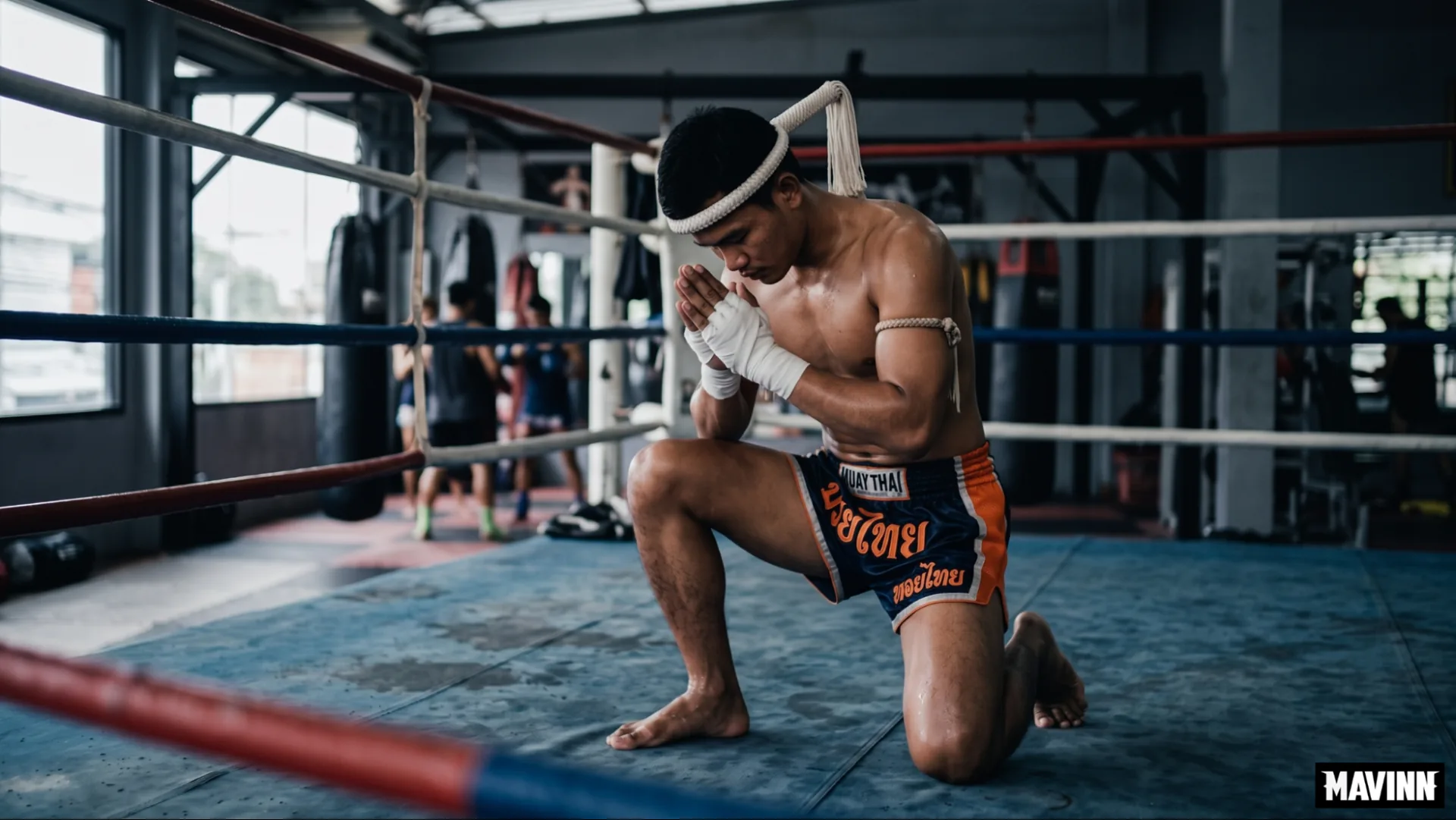
The Muay Thai Wai Kru Ram Muay is a sacred pre-fight ritual that prepares fighters physically and mentally while honoring their teachers and heritage. This traditional ceremony combines rhythmic movements with deep spiritual respect before the combat begins. Fighters perform these precise motions in the center of the ring immediately before the first three-minute round starts.
You will see athletes wear the sacred mongkhon headband and pra jiad armbands during this performance. The ritual reveals as much about what makes a Muay Thai fighter as the bout that follows. The flowing motion settles the fighter’s breathing and stretches key muscle groups like the hamstrings and hips. At our Bangkok and Pattaya training facilities, we teach these exact movement patterns to help you connect with the true heritage of the sport.
What is the Story and Meaning Behind Muay Thai Wai Kru ?
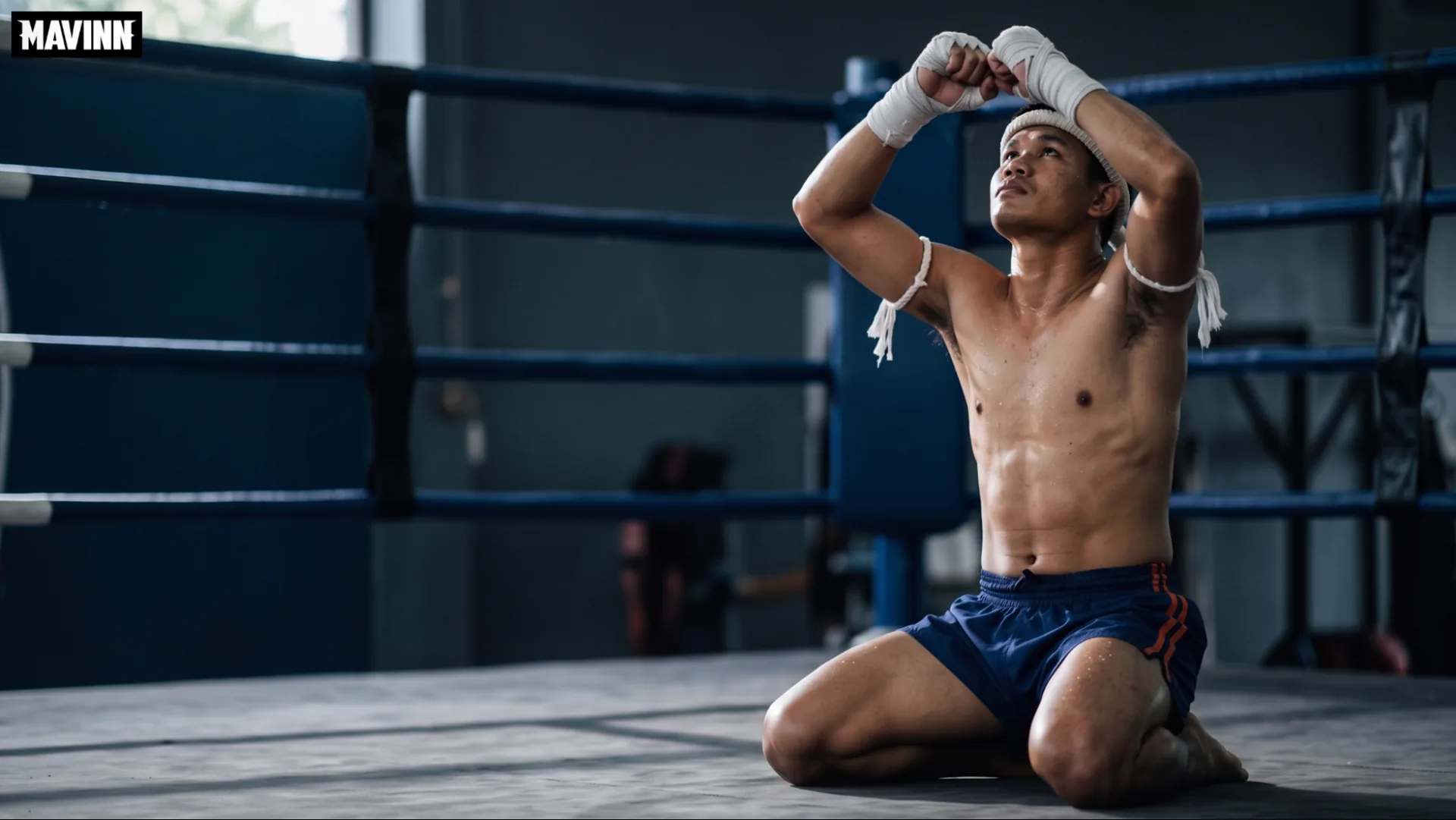
The Muay Thai wai kru is a sacred pre-fight ritual performed to honor a fighter’s teachers, parents, and ancestors while preparing the mind and body for battle. This ceremony establishes a spiritual connection to the lineage of the sport and acts as a psychological shield. Ancient warriors first developed these movements during the Ayutthaya Kingdom to seek protection before entering active combat.
Understanding the difference between Wai Kru and Ram Muay
The primary difference between these two practices is that the Wai Kru is an act of paying respect to instructors, while the Ram Muay is the physical dance that follows. Fighters perform the Wai Kru to honor their trainers, parents, and ancestral warriors before entering combat. The Ram Muay then serves as a personalized movement routine to stretch muscles and demonstrate a fighter’s unique style.
| Aspect | Wai Kru | Ram Muay |
|---|---|---|
| Primary Purpose | Showing gratitude and respect | Warming up and showing style |
| Target of Respect | Teachers, family, and spirits | The audience and opponents |
| Physical Action | Bowing on the knees | Rhythmic, standing dance |
Both elements merge into a single pre-fight ritual that establishes focus and claims control of the ring space. For example, a fighter might use specific footwork during the dance to gauge the texture of the canvas. This dual ritual ensures that mental respect and physical readiness are achieved before the first strike.
The origins and history of this sacred tradition
The Muay Thai Wai Kru originated during the Ayutthaya Kingdom of Thailand as a battlefield ritual for soldiers before they entered close-quarters combat. Soldiers performed these movements to pay respect to their king, their mentors, and the spiritual forces they believed would protect them in battle. King Naresuan the Great trained his infantry in these methods during the late 16th century.
Over time, these battlefield preparatory rituals transitioned into the structured combat sport we recognize today. Ancient warriors wore sacred amulets and inscribed armbands called Pra Jiad during the performance to ward off danger on the field. Today, this tradition preserves the cultural lineage of ancient Thai warfare in modern stadiums like Rajadamnern, alongside other living customs such as the sak yant tattoos many fighters still wear.
Why Do Fighters Perform the Muay Thai Wai Kru Before a Fight ?
Fighters perform the muay thai wai kru to honor their mentors, warm up their bodies, and prepare their minds for combat. This pre-fight ritual serves as both a spiritual shield and a practical tool to prevent injury on the canvas. It transitions the athlete from a state of chaotic focus to absolute readiness before the opening bell rings.
Paying respect to teachers, parents, and family
Fighters perform the muay thai wai kru to express deep gratitude to their trainers, parents, and ancestors who supported their journey to the ring. This ritual acknowledges that a combatant never stands alone, honoring the lineage of combat knowledge passed down through generations. For example, fighters bow in three distinct directions to symbolize respect for their spiritual beliefs, parents, and teachers.
You use these rhythmic movements to seal the ring from negative influences and pay tribute to your family’s sacrifices. The gestures serve as a physical thank-you to the coaches who spent hours holding pads and refining your technique. Many gyms hold a formal Wai Kru ceremony where students present flowers, incense, and candles to their trainer, and Thailand marks National Muay Thai Day on 17 March in honour of Nai Khanom Tom.
Physical warm up and mental preparation
The muay thai wai kru serves as a functional warm-up and a psychological transition to prepare your body and mind for intense combat. The deliberate, slow movements stretch major muscle groups, including your hips, hamstrings, and shoulders. Fighters work through these precise patterns unhurried, which is enough to warm the hips and hamstrings before the opening round.
Mentally, the rhythmic motion acts as a form of moving meditation that blocks out crowd noise and pre-fight anxiety. By focusing entirely on the music rhythm, you enter a state of flow and mental clarity. Sports psychologists recognize this ritual as an effective sensory cue that triggers your brain’s fight-or-flight readiness state just seconds before the bell rings.
Official Regulations Is it mandatory in professional fights ?
Traditional Muay Thai treats the wai kru as part of the bout itself, and the major Thai stadiums expect both fighters to complete it before the opening bell. The ritual usually runs three to five minutes depending on the tempo of the music, and it is one of the first things to rehearse when you prepare for your first Muay Thai match.
While some international kickboxing promotions skip the tradition to save broadcast time, Lumpinee and Rajadamnern keep the full ritual on every card. Skipping it in a traditional stadium reads as an insult to the opponent and the gym.
Read next: Muay Thai Bangkok Stadium, Which is Best
Key Elements and Movements in the Muay Thai Wai Kru Ritual
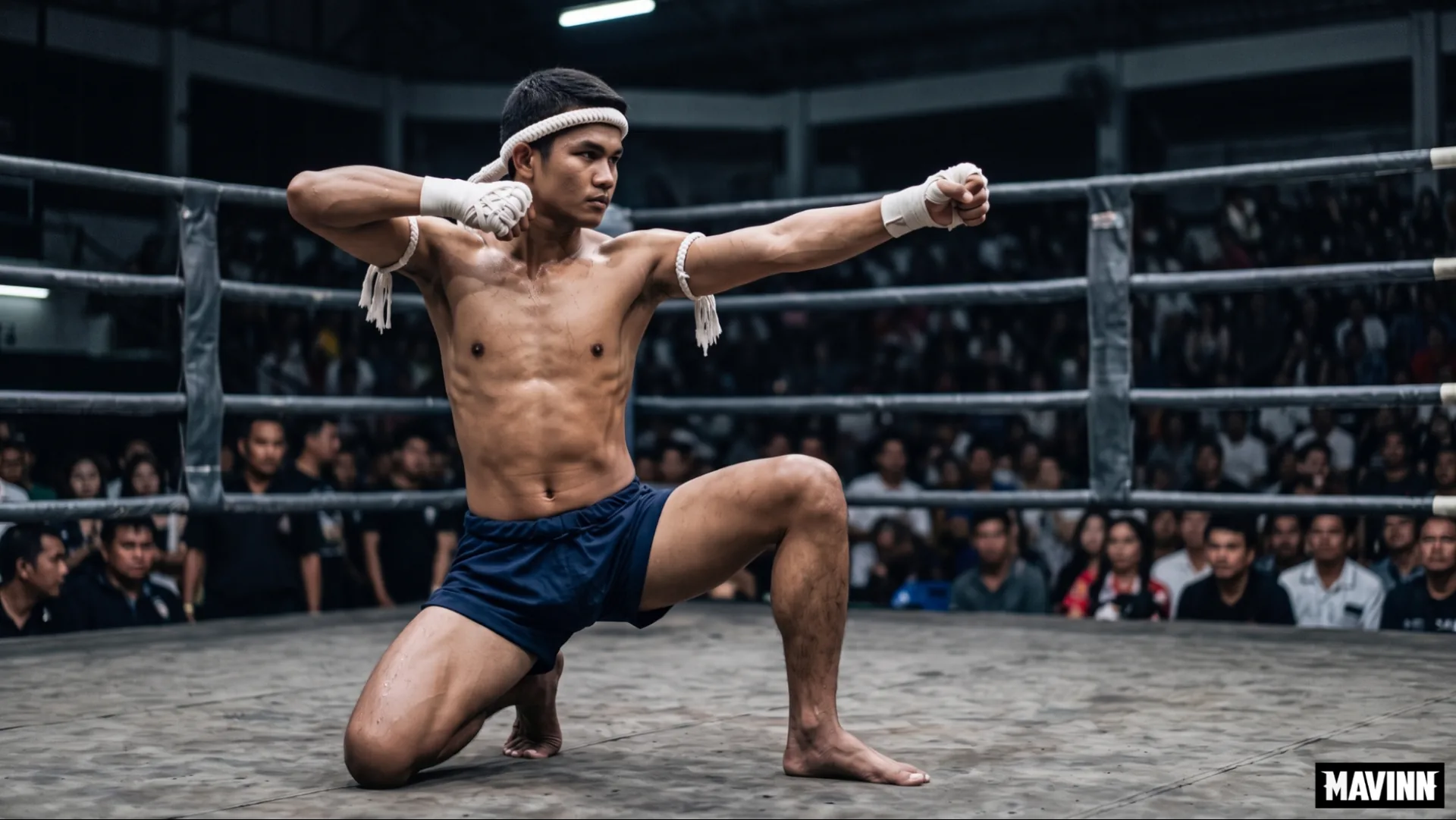
The Muay Thai Wai Kru ritual consists of specific physical movements and sacred attire that transition you from a state of quiet focus to active combat readiness. Fighters begin with the Wai Kru (paying respect) on their knees, bowing three times to honor their parents, teachers, and spiritual beliefs. This leads into the Ram Muay (the dance), where fighters perform rhythmic, sweeping steps like the Phra Ram Plaeng Son (Rama shooting an arrow) to mark their territory.
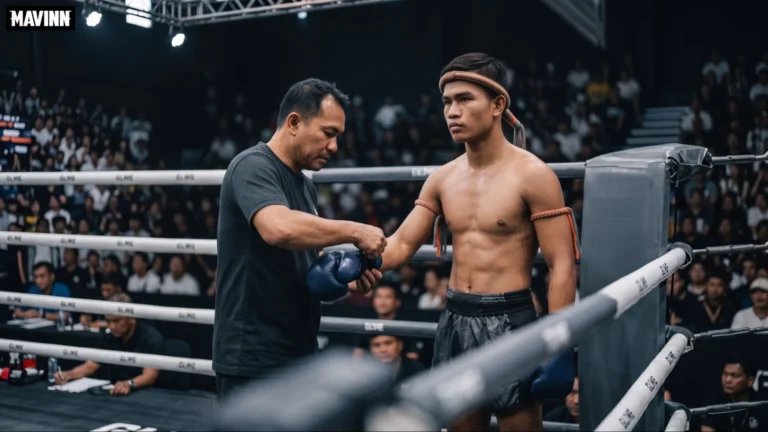
Throughout the performance, fighters wear the Mongkhon, a sacred headband blessed by trainers that is removed only before the fight starts. You will also wear the Pra Jiad, which are protective armbands tied around the biceps that remain on during the actual bout. The entire sequence is synchronized to the rising tempo of the Sarama, a traditional four-piece ensemble built around the pi chawa oboe, a pair of klong khaek drums, and ching finger cymbals.
Symbolic gestures of the dance
The symbolic gestures of the muay thai wai kru dance translate ancient spiritual beliefs and warrior traditions into structured physical movements. Fighters mimic animals and legendary figures, such as the sweeping motions of Phra Ram shooting an arrow to demonstrate focus and precision. These deliberate steps allow you to inspect the canvas for uneven surfaces while establishing dominance in the four corners of the ring.
Kneeling gestures like the *Phrom Nang* (sitting Brahma) show humility and respect to the ground, teachers, and ancestral spirits. When you perform the circular hand movements over your head, you symbolize sealing the ring from negative energy. Each school teaches unique variations of these motions, such as the three steps forward sequence to mark territorial control before combat begins.
The sacred meaning of Mongkhon and Pra Jiad
The Mongkhon (headband) and Pra Jiad (armbands) are sacred amulets worn during the muay thai wai kru to bestow protection, strength, and good fortune upon the fighter. Teachers weave and bless the Mongkhon, which represents the gym’s lineage and is placed on the fighter’s head before they enter the ring. The trainer removes this headband after the dance ritual, symbolizing the transition from spiritual preparation to physical combat.
The Pra Jiad are fabric armbands worn around one or both biceps throughout the entire fight to ward off danger. Historically, ancient Thai warriors wore these bands containing sacred inscriptions or hair from their parents to keep them safe in battle. Today, fighters still wear them to maintain a deep connection to their family and spiritual roots during intense competition.
Traditional Sarama music that guides the rhythm
Traditional Sarama music dictates the pace and intensity of the Muay Thai Wai Kru ritual. You will hear a live four-piece band playing wind and percussion instruments to guide the fighter’s movements. This ensemble traditionally consists of a pi chawa (oboe), a pair of klong khaek (double-headed drums), and ching (small finger cymbals).
The tempo starts slow and hypnotic during the initial prayer to help you focus your mind and breathe deeply. As the dance transitions into the mock combat phases, the drummers accelerate the beat to build anticipation. This rhythmic shift lifts the fighter out of the calm of the opening prayer and into fighting intensity before the first bell.
Experience Authentic Muay Thai Wai Kru at Mavinn Muaythai
You can master the traditional muay thai wai kru through our dedicated training programs at Mavinn Muaythai. We integrate this cultural ritual into our daily training sessions to help you connect with the deep spiritual heritage of the sport. Our structured classes accommodate all skill levels at our gyms in Bangkok (Nuanchan) and Pattaya.
Our immersive Stay & Train packages offer multi-day instruction covering physical striking techniques alongside the symbolic movements of the ritual dance. You will train under the guidance of world-class instructors, including reigning ONE Featherweight Kickboxing World Champion Superbon Singha Mavinn. This hands-on coaching ensures you learn the exact footwork, posture, and breathing patterns required for an authentic pre-fight performance.
Training packages at our Bangkok and Pattaya gyms for all levels
We offer specialized training packages at our Bangkok and Pattaya gyms that teach you authentic striking techniques alongside the traditional muay thai wai kru. Our programs accommodate everyone from complete beginners to active fighters looking to refine their ring rituals and combat skills. You will train under elite instructors using systems developed by championship fighters like Superbon Singha Mavinn.
You can choose the perfect setup for your schedule, whether you want a single session or an immersive camp. Our Stay & Train package combines intensive daily workouts into a structured multi-day block. For those who cannot visit our physical locations, we provide structured online courses to help you practice from home.
| Training Package | Location | Best For |
|---|---|---|
| Group Classes | Bangkok (Nuanchan) & Pattaya | Flexible drop-in training |
| Stay & Train | Bangkok and Pattaya | Immersive multi-day camps |
| Online Courses | Digital | Remote technical learning |
FAQs Muay Thai Wai Kru
How long does a Muay Thai Wai Kru dance usually last ?
A Muay Thai Wai Kru dance usually lasts between three to five minutes in a standard professional bout. This duration allows you to pay respects, seal the ring, and warm up your muscles without depleting your physical energy before the first round. In major stadium fights in Bangkok, the referee may gently signal the fighters to speed up if the ritual exceeds the five-minute mark.
The exact length depends heavily on the tempo of the live Sarama music playing in the background. Fighters adjust their pacing to match the traditional wind and percussion instruments, which speed up as the dance nears completion. For example, a fighter executing the complex Phra Ram Plaeng Son (Rama shooting an arrow) movement will naturally take longer than one performing a basic three-step stance.
Can foreigners and beginners learn Wai Kru ?
Yes, any practitioner can learn the Muay Thai Wai Kru regardless of their nationality, age, or current experience level. International students and beginners are highly encouraged to practice these movements to deepen their connection to the cultural roots of the sport. This ritual serves as a foundational tool for learning balance, coordination, and mental focus from day one of training.
Most traditional gyms integrate these rhythmic movements into standard warm-up routines to build leg strength and hip mobility. Instructors break down the complex steps into simple gestures, starting with the seated floor sequences before moving to the standing postures. You will typically master the basic sequence within four to six weeks of consistent practice.
Do female fighters perform the Wai Kru differently ?
Female Muay Thai fighters perform the exact same core Muay Thai wai kru movements as male fighters, though historical customs once dictated how they entered the ring. Traditionally, women entered the ring by crawling under the bottom rope rather than stepping over the top rope to respect spiritual beliefs. Today, female athletes execute the same three kneeling bows to honor their teachers and parents.
The specific choreography of the dance depends on the fighter’s gym lineage rather than their gender. Female fighters wear the same sacred mongkhon headbands during the ritual before removing them for combat. We teach these identical steps to both male and female practitioners at our Bangkok gym to build pre-fight mental focus.
Conclusion
The Muay Thai Wai Kru is more than a pre-fight dance; it is a fundamental ritual that honors lineage, prepares the mind, and protects the fighter. This tradition connects modern competitors directly to the ancient heritage of Thai battlefield warriors. At Mavinn Muaythai, we teach the exact physical steps and cultural meanings of this ceremony before you ever step into the ring for a sparring session.
Mastering this ritual helps you build the mental focus needed to perform under pressure in high-stakes environments. Our instructors guide you through the synchronization of the breath, the movements, and the traditional Sarama music. You can practice these authentic techniques under the guidance of world-class specialists at our two training camps in Bangkok and Pattaya.