Key Takeaways
- Shin Conditioning for Muay Thai – Developing durable shins requires consistent, progressive impact through regular heavy bag training and pad work.
- Safe conditioning relies on gradual bone remodeling and nerve desensitization rather than extreme, painful methods.
- Adequate recovery time and proper nutrition are vital to repair micro-damage and build stronger bone density.
- Structured training programs help fighters of all levels establish safe, effective conditioning habits.
Shin Conditioning for Muay Thai is the systematic process of hardening your tibia bone to withstand the high-impact demands of striking and blocking. We achieve this durability through progressive overload, which stimulates the bone to remodel itself into a denser, stronger structure.
Our trainers at our Bangkok and Pattaya gyms guide you through this process safely using structured heavy bag work, target pads, and controlled sparring to prevent stress fractures.
What is Shin Conditioning for Muay Thai ?
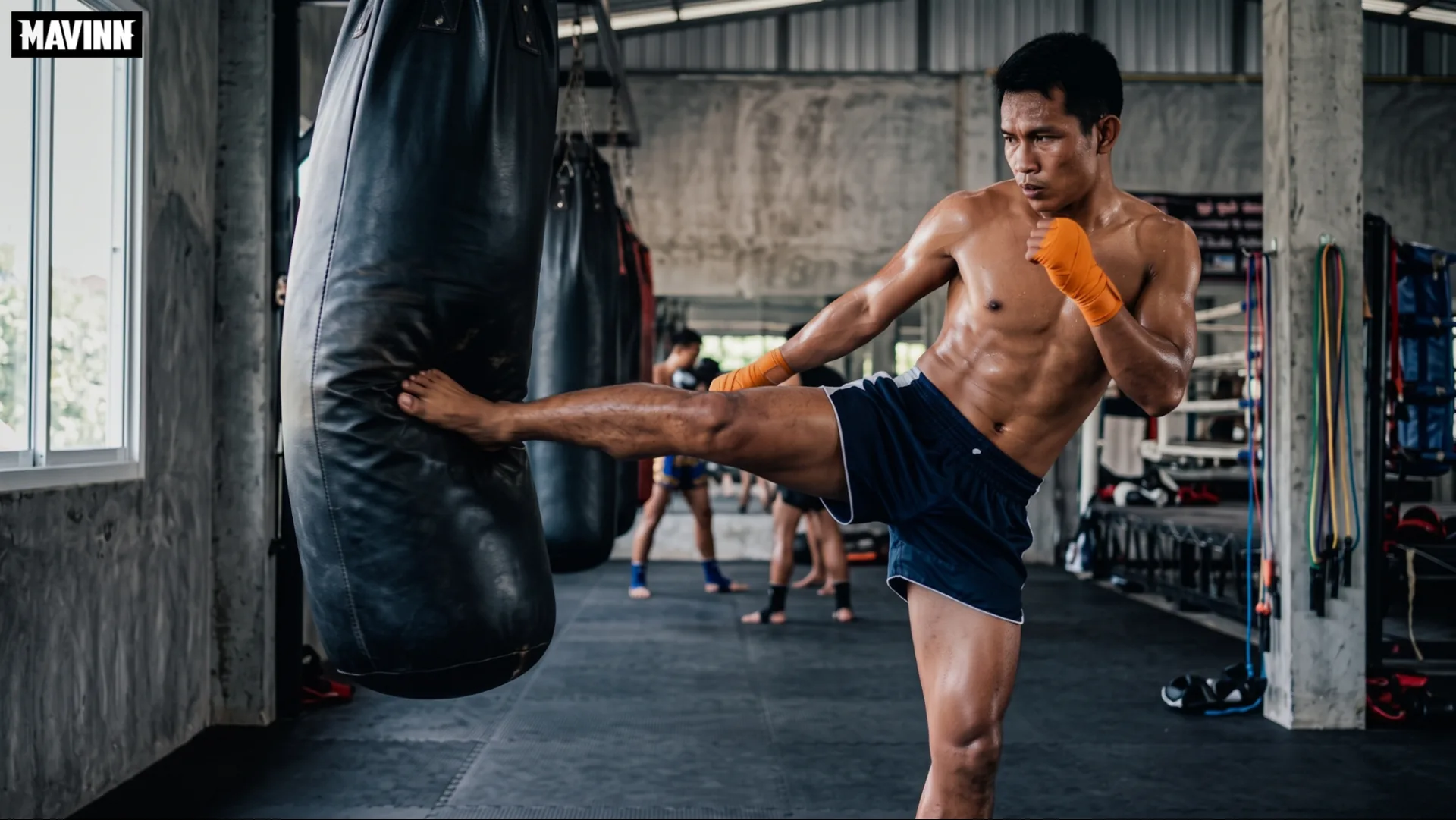
Shin conditioning for Muay Thai is the systematic process of strengthening your tibia bone and desensitizing the surrounding nerves to withstand heavy impact. You achieve this through repetitive, controlled contact that creates micro-fractures in the bone, which heal to become denser over time. Professional fighters rely on this physiological adaptation to safely withstand bone-to-bone clashes during a 5-round bout.
This adaptation relies on a biological principle known as Wolff’s Law, which states that bone density increases in response to physical stress. When you kick heavy bags consistently, your body deposits calcium to reinforce the bone structure. A dedicated practitioner training 3 to 4 times per week will generally experience a significant reduction in shin pain within twelve weeks of starting.
The Science of Bone Remodeling (Wolff’s Law)
Bone remodeling under Wolff’s Law explains how your shins adapt and grow stronger in response to the physical stress of impact training. When you apply controlled force to your bones, it triggers cellular activity that deposits calcium and builds a denser bone matrix. Over time, this natural biological process transforms micro-damage into a highly resilient skeletal structure capable of absorbing heavy impacts. For example, micro-fractures created during bag work heal within 3 to 6 weeks to form a much thicker bone layer.
This adaptation relies on a balance where specialized cells remove damaged tissue and deposit new, stronger minerals. Rushing this process with extreme trauma causes painful fractures instead of triggering healthy structural growth. You must apply progressive overload to safely stimulate this cellular reconstruction by kicking heavy bags at 50% to 70% power.
Shin Conditioning Muay Thai Myths vs. Safety
Safe shin conditioning for Muay Thai relies on progressive overload through heavy bag training and sparring, not painful gimmicks that damage bone tissue. Many beginners mistakenly believe they need to deaden their nerves by striking hard, blunt objects. This dangerous approach can cause microfractures, chronic inflammation, and long-term bone damage.
| Myth (Dangerous Practice) | Safe Scientific Practice |
|---|---|
| Rolling wooden pins or metal bars on shins | Kicking heavy bags (100-150 kicks per session) |
| Striking trees or hard concrete surfaces | Controlled sparring with shin guards |
| Ignoring pain and training through bone bruises | Allowing 48 hours of recovery between heavy sessions |
We emphasize gradual adaptation because your bones need time to remodel and grow denser under systematic impact. Utilizing proper protective gear during partner drills prevents acute injuries like deep bone bruises. For example, wearing high-density foam shin guards during defense drills allows you to build muscle memory without risking a tibia fracture.
Why Rolling Wooden Pins on Your Shins Causes Serious Damage
Rolling wooden pins on your shins causes serious damage because the crushing pressure destroys the periosteum, the vital outer membrane that supplies blood and nutrients to your bones. This archaic practice fails to build bone density and instead causes several severe physiological issues:
- Periosteum Damage: Crushing this highly sensitive tissue layer cuts off essential blood flow, leading to localized bone cell death.
- Microfractures: The hard, non-pliable pressure of wood creates deep bone bruises that require 6 to 8 weeks of complete rest to heal.
- Nerve Destruction: Numbing your shins by killing pain receptors merely masks injuries, drastically increasing your risk of suffering a complete tibia fracture during sparring.
This continuous blunt trauma also causes severe skin friction, leading to open wounds and bacterial infections. Safe conditioning requires impact that compresses the bone to stimulate calcium deposits, not crushing force that weakens your skeletal integrity. Focus on heavy bag training to safely build a dense shin structure.
How to Do Shin Conditioning for Muay Thai Safely
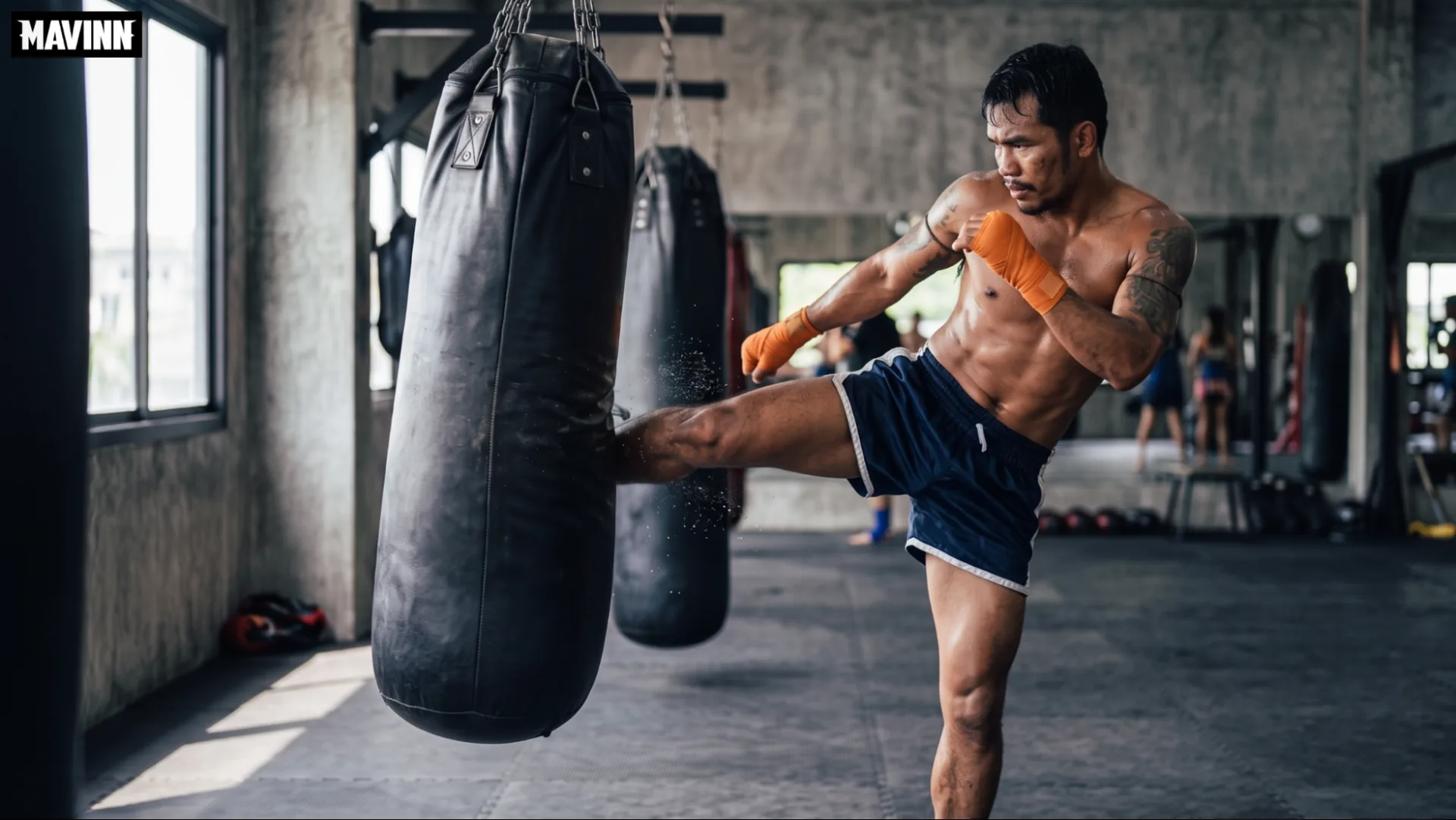
Safe shin conditioning relies on progressive overload through consistent, impact-based training rather than painful gimmicks. You build durable shins by repeatedly creating microscopic fractures in the bone tissue, which stimulates your body to rebuild the area denser and stronger. Professional fighters develop this foundational durability by kicking heavy bags 100 to 150 times per training session.
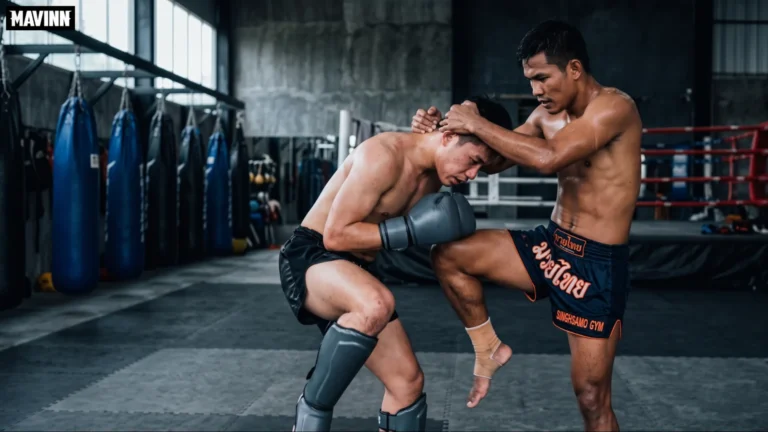
You must pair this bag work with controlled sparring to accustom your shins to the impact of moving targets and defensive blocks. Using protective gear during these sessions allows you to condition the bone without sustaining deep bone bruises that halt your training. We recommend using 1.5-inch thick foam shin guards to absorb the heaviest impacts while your bones gradually adapt.
Kick Heavy Bags with Proper Technique
Kicking a heavy leather bag is the single most effective way to build durable shins for Muay Thai. The repetitive impact creates microscopic fractures in the tibia, which heal back significantly denser through bone remodeling. To prevent joint injuries, always strike the bag with the lower part of your shin bone rather than your foot or ankle, which is the same contact point our guide to faster kicks drills.
Execute your kicks with proper mechanics to ensure safe conditioning:
- Pivot your supporting foot away from the target to open your hips and generate power.
- Keep your kicking leg slightly bent at the knee upon impact to absorb shock.
- Aim to complete 100 kicks per leg during each training session to build endurance.
Controlled Sparring with Protective Gear
Controlled sparring with high-quality shin guards allows you to condition your shins against moving targets without risking bone fractures. This practice simulates real combat impact while the protective padding absorbs the sharpest, most damaging vibrations. We recommend using leather shin guards with at least 1.5 inches of high-density foam padding to shield your tibia during technical drills.
As your shins adapt over months of consistent training, you can gradually increase sparring intensity to further stimulate bone remodeling. This progressive loading strengthens the bone through minor, controlled impacts rather than sudden, debilitating trauma. Always pair your shin guards with a fitted mouthguard and 16-ounce sparring gloves to ensure overall safety during every session.
Build Bone Density with Strength Training
Strength training stimulates bone density growth through progressive resistance, making it a critical component of shin conditioning for Muay Thai. Heavy weight-bearing exercises place mechanical stress on your skeletal system, which signals your body to deposit more calcium into the shinbones. You should focus on compound movements like heavy barbell squats, deadlifts, and standing calf raises, along with kettlebell workouts for Muay Thai, to target the lower limbs.
Perform these lifting sessions two to three times per week to allow your bones and muscles adequate recovery time. Combine your lifting with plyometric work such as depth jumps, and use a structured jump rope workout to train your shins to absorb sudden, explosive forces. Consistent resistance training can increase bone mineral density by up to 3 percent over a six-month period.
Recovery and Nutrition for Shin Conditioning Muay Thai
Shin recovery requires a combination of targeted rest, anti-inflammatory nutrition, and specific bone-building minerals to repair the micro-fractures caused by heavy impact. Your body needs adequate protein to rebuild damaged soft tissue and collagen networks surrounding the tibia. Consuming protein-rich foods like chicken breast alongside 1,000 mg of calcium daily accelerates this natural bone-remodeling process.
Active recovery methods help flush out metabolic waste and reduce the localized swelling that occurs after intense kicking sessions. Applying ice to the shins for the first 24 hours constricts blood vessels to limit bruising, while warm contrast baths stimulate blood flow later in the recovery cycle. Restful sleep of at least 8 hours per night triggers the release of natural growth hormones, which directly repair damaged bone tissue.
Fuel Your Body & Active Recovery Methods
You must consume adequate calcium, vitamin D, and protein to rebuild the microfractures created during shin conditioning for Muay Thai. These nutrients provide the raw structural materials needed for bone remodeling and muscle tissue repair. To optimize this recovery process, aim for 1,000 milligrams of calcium daily from dietary sources like Greek yogurt, almonds, or fortified leafy greens.
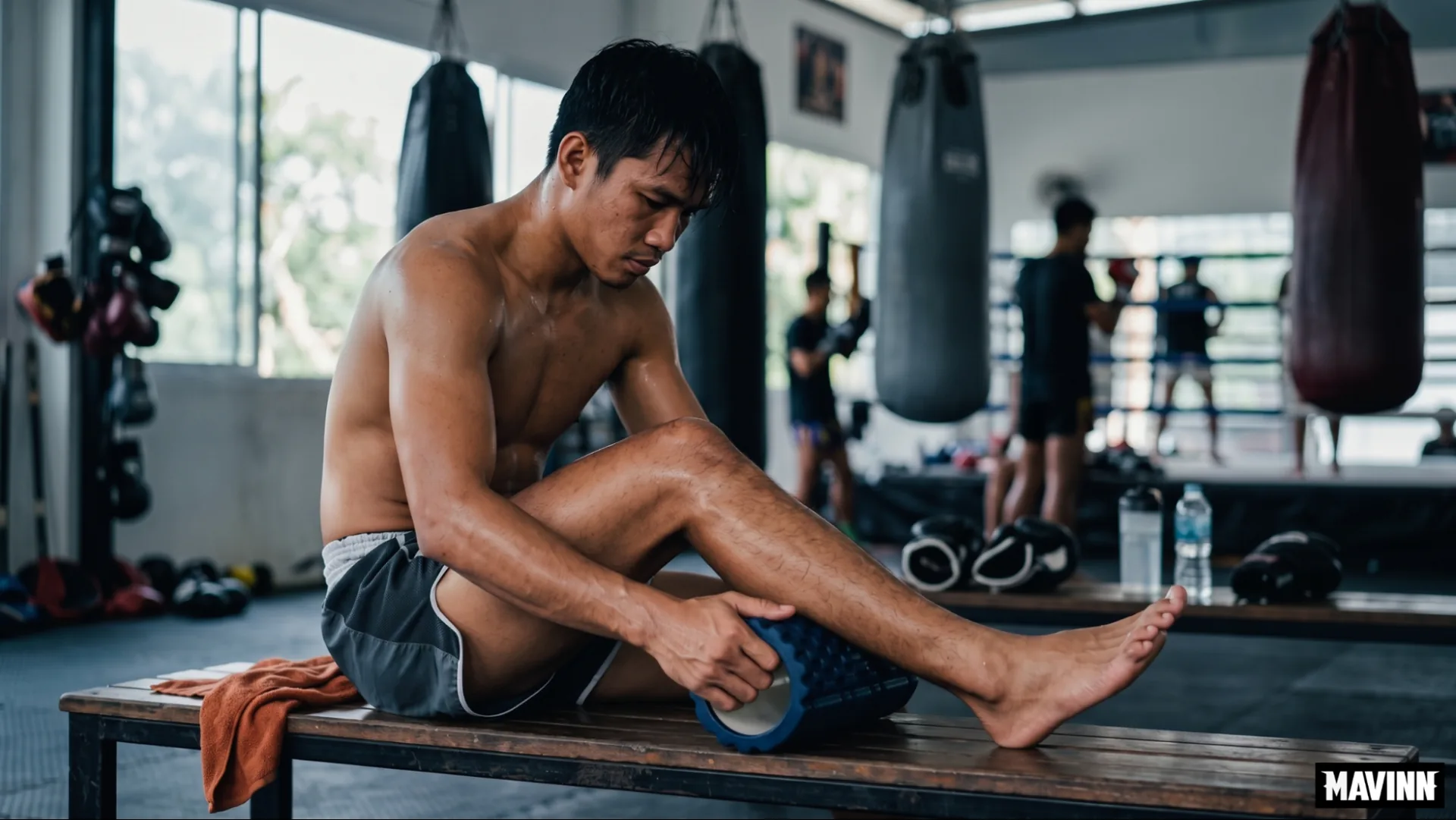
Active recovery techniques prevent chronic inflammation and keep your lower leg tissues pliable after heavy impact sessions. Light movement, such as low-intensity swimming or stationary cycling, increases nutrient-rich blood flow to the shins without adding mechanical stress. We recommend dedicating 15 minutes to foam rolling your calves and tibialis anterior muscles after training to relieve tension around the shin bone.
Sports Safety Standards & Guidelines in Combat Sports
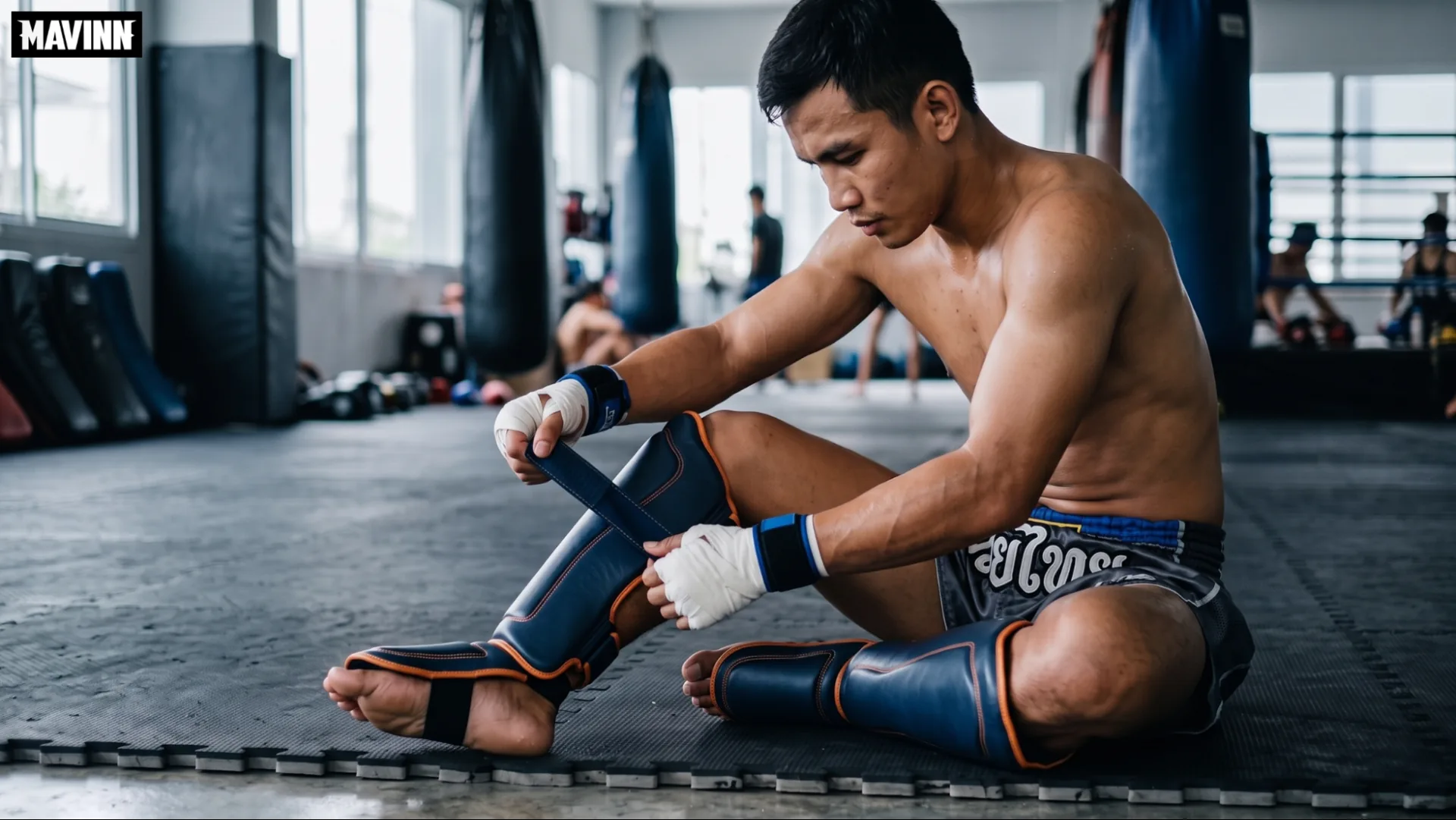
Official combat sports safety standards require a structured, progressive approach to shin conditioning to prevent bone fractures and chronic shin splints. Governing bodies such as the International Federation of Muaythai Associations (IFMA) set protective equipment requirements for amateur competition, and most gyms carry the same standards into training. These rules ensure that bone remodeling occurs safely without causing microfractures or long-term periosteal inflammation.
Professional training camps must align their daily practices with established sports science guidelines to maintain athlete health. We implement the following standard safety protocols during every conditioning session:
- 10-minute warm-up focusing on joint mobility and localized blood flow before kicking.
- Mandatory use of high-density foam shin guards during all tactical sparring sessions.
- A strict limit of 3 to 4 heavy bag sessions per week to allow bone tissue recovery.
Start Your Journey at Mavinn Muaythai
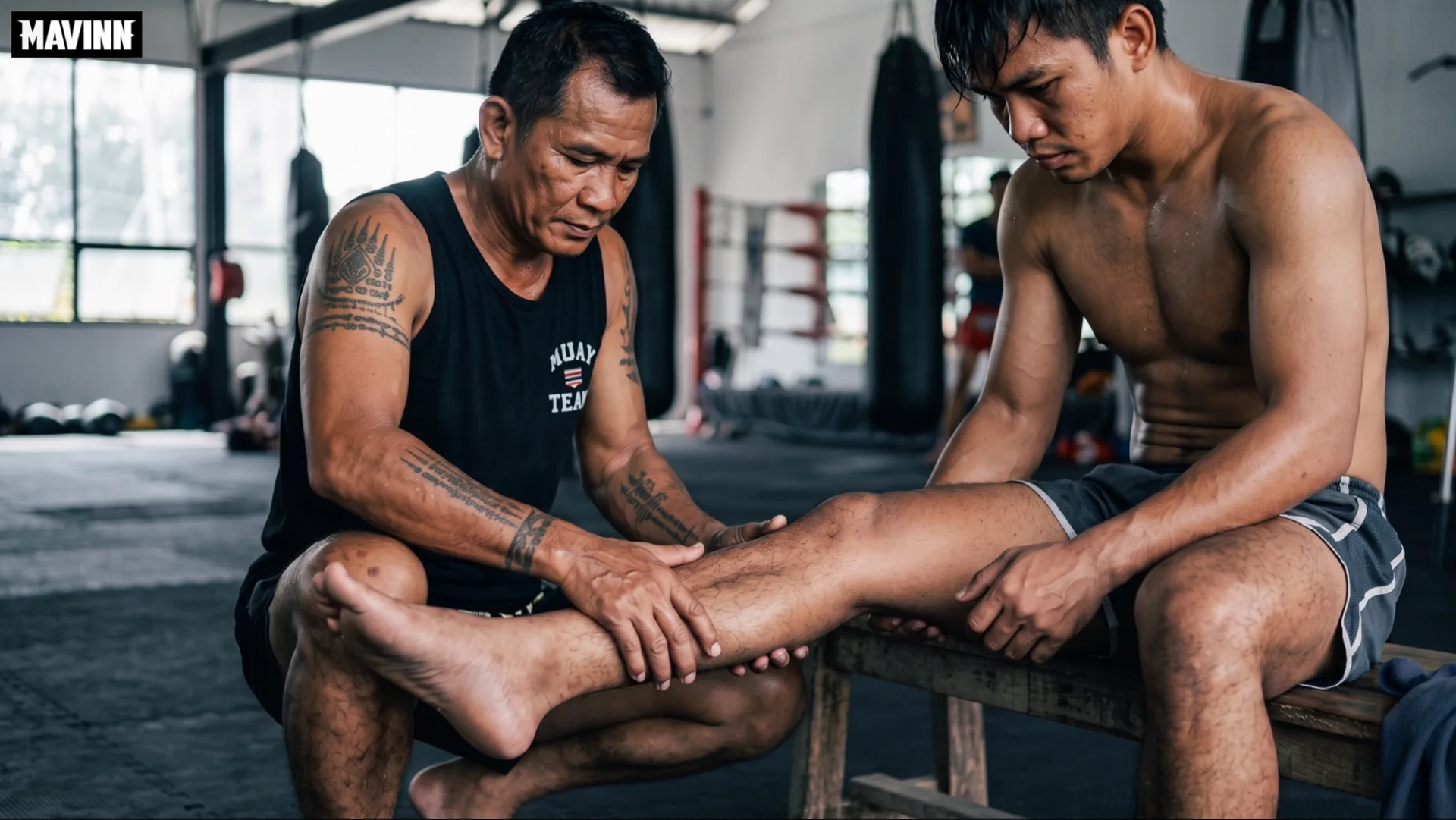
You can build world-class striking skills and proper shin conditioning for Muay Thai by training directly with champions at Mavinn Muaythai. We provide structured training programs for all levels, designed to develop your technique and power safely. Superbon Singha Mavinn, a world-class striking specialist and the reigning ONE Featherweight Kickboxing World Champion, trains at our Bangkok gym.
We offer diverse training programs to fit your lifestyle, including our popular Stay & Train package designed for serious practitioners. You can experience elite coaching at our Nuanchan branch in Bangkok or at our Pattaya branch. Each program delivers structured daily sessions designed to push your limits and elevate your striking accuracy.
Professional Packages at Mavinn Muaythai Bangkok
Mavinn Muaythai Bangkok in Nuanchan offers structured training packages designed to elevate your striking and conditioning. We provide options tailored for every skill level, from absolute beginners to professional fighters. Our programs focus on authentic techniques supervised by elite trainers, including insights from reigning ONE Featherweight Kickboxing World Champion Superbon Singha Mavinn.
We structure our Bangkok services into specific packages to match your training goals:
- Stay & Train Packages: Combine intensive daily training sessions with a structured multi-day plan.
- Group Classes: Access daily group sessions focusing on pad work, bag work, and technical sparring.
- Online Courses: Master fundamental striking and conditioning from any location with virtual instructional programs.
Shin Conditioning at Mavinn Muaythai Pattaya
Our Pattaya gym gives you a structured environment to build shin conditioning for Muay Thai through progressive daily work. We pair roadwork and mobility with high-volume heavy bag rounds so the bone loads gradually instead of all at once.
The Pattaya branch runs training packages tailored for all levels. Our Stay & Train package gives you direct access to world-class coaching, and you train on professional-grade equipment chosen to develop bone density safely.
- Progressive session structure that raises impact volume week by week.
- Heavy bags calibrated to different hardness levels for progressive shin conditioning.
- Expert trainers who monitor your kicking technique to prevent micro-fractures.
FAQ Shin Conditioning for Muay Thai
How long does it take to condition your shins for Muay Thai ?
It takes three to six months of consistent training to build basic shin conditioning for Muay Thai. This timeline depends on your training frequency, recovery protocol, and individual bone density. Beginners training three times per week will notice a significant reduction in shin sensitivity within the first twelve weeks.
Achieving professional-grade bone density requires two to three years of continuous kicking on heavy bags and pads. During this extended period, cortical bone remodeling occurs as your body deposits calcium to patch microfractures. You can safely accelerate this process by kicking a 100-pound heavy bag 100 times per leg during each training session.
Is shin conditioning supposed to be painful ?
Shin conditioning involves mild discomfort and dull muscle soreness, but you should never experience sharp, excruciating pain during or after your training. Healthy training stimulates microscopic bone remodeling without damaging the protective outer layer of your bone tissue. Sharp pain during a kick indicates a potential stress fracture, which requires immediate medical evaluation and a minimum of six weeks of rest.
You must distinguish between the normal bruising of surface soft tissue and the deep, throbbing ache of injured bone. Minor surface bruising generally fades within days, whereas deep bone bruises can halt your training for several months. Professional coaches recommend limiting heavy bag work to 100 kicks per leg per session at a moderate intensity to build tolerance safely.
Read next: Roundhouse Kick, Master the Technique for Power and Speed
Conclusion
Safe shin conditioning for Muay Thai requires progressive overload through consistent heavy bag training rather than dangerous shortcuts like rolling wooden pins. You must allow your bones time to remodel and strengthen naturally over several months of structured impact. We recommend kicking the heavy bag at least 3 times per week to stimulate safe bone density growth.
Pairing this consistent bag work with proper nutrition and protective gear during sparring prevents microfractures from turning into debilitating shin splints. Dedicating 15 minutes of focused kicking drills to your daily training routine will yield noticeable results without injury.