Key Takeaways
- Muay Thai Belt System – Traditional Muay Thai does not use a belt ranking system, but modern academies often adopt colored armbands (Prajioud) or belts to structure student progress.
- Grading systems provide clear milestones that help fighters track their technical growth from beginner levels to advanced combat readiness.
- Professional training programs in Bangkok and Pattaya focus heavily on practical striking skills, ring experience, and physical conditioning.
- Dedicated online courses and Stay & Train packages offer structured paths for fighters of all levels to elevate their combat skills.
You will not find a traditional muay thai belt system in Thailand because fighters historically measured progress through active ring records. The sport known as the art of eight limbs never built one. Modern training centers worldwide now use colored armbands and waist belts to help students track their advancement. For example, some Western associations build a full colour ladder out of the prajioud armband.
Whether you train at home or prepare for a fight camp, understanding these modern grading structures keeps your development on track. We focus on clear technical milestones to move you from basic footwork to advanced sparring. You can test your current striking abilities at our training locations in Bangkok and Pattaya.
Does Muay Thai Have a Belt System ?
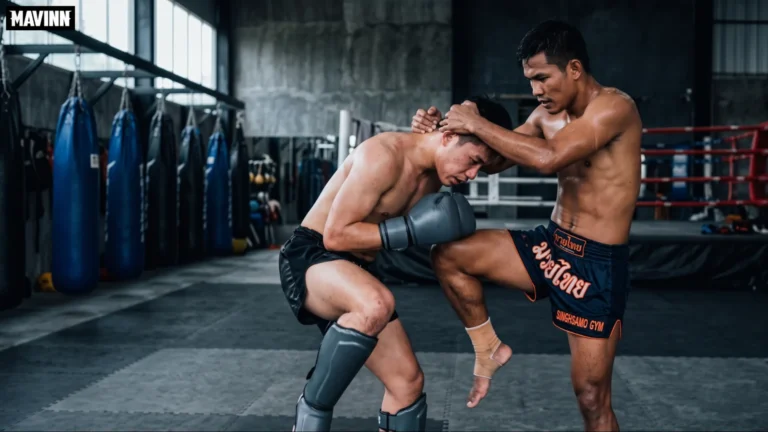
Traditional Muay Thai does not use a muay thai belt system to rank practitioners. Instead, fighters in Thailand historically established their status and skill level through their official ring records. This means a fighter with 50 professional bouts is recognized as highly experienced regardless of any formal rank.
While Thailand relies on fight history, Western gyms often introduce colored armbands called prajioud to structure student progress. We structure our training programs to focus on these practical skills rather than arbitrary belt colors. You will develop authentic striking techniques under the guidance of elite coaches at the same Bangkok gym where Superbon Singha Mavinn trains.
You can experience this traditional, performance-based training firsthand at our gyms in Bangkok and Pattaya. Focusing on physical conditioning and sparring performance helps you build real combat readiness. Consistent training is what moves the needle here, not a certificate on the wall.
Why traditional Muay Thai relies on fight records instead of belts
Traditional Muay Thai measures your skill by your competitive performance and active ring record rather than a physical belt ranking. In Thailand, a fighter’s reputation depends entirely on the quality of their opponents and their total number of professional bouts. This focus on live combat ensures that practical application under pressure outweighs theoretical knowledge, which is why historic venues like Lumpinee Stadium do not recognize belt ranks.
We evaluate your true capability in Muay Thai through several real-world performance metrics:
- Win-loss ratios: Your official record proves your ability to execute techniques under high-pressure fight conditions.
- Stadium rankings: Competing in prestigious Thai venues determines your official standing on the national circuit.
- Opponent quality: Defeating seasoned active champions holds more value than completing a static technical curriculum.
What are Prajioud and Mongkhon ?
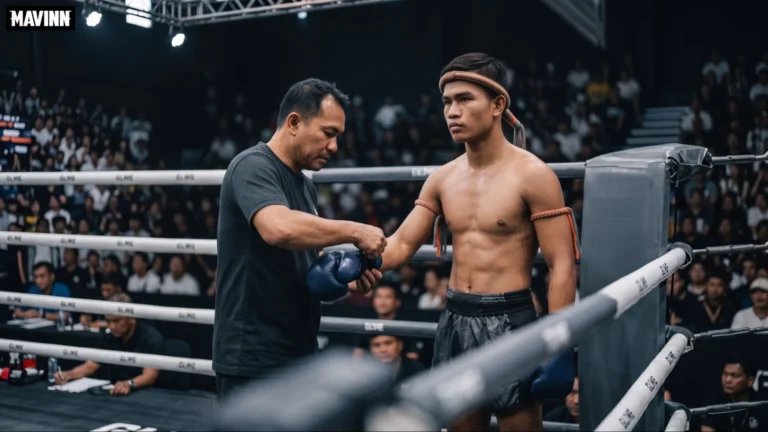
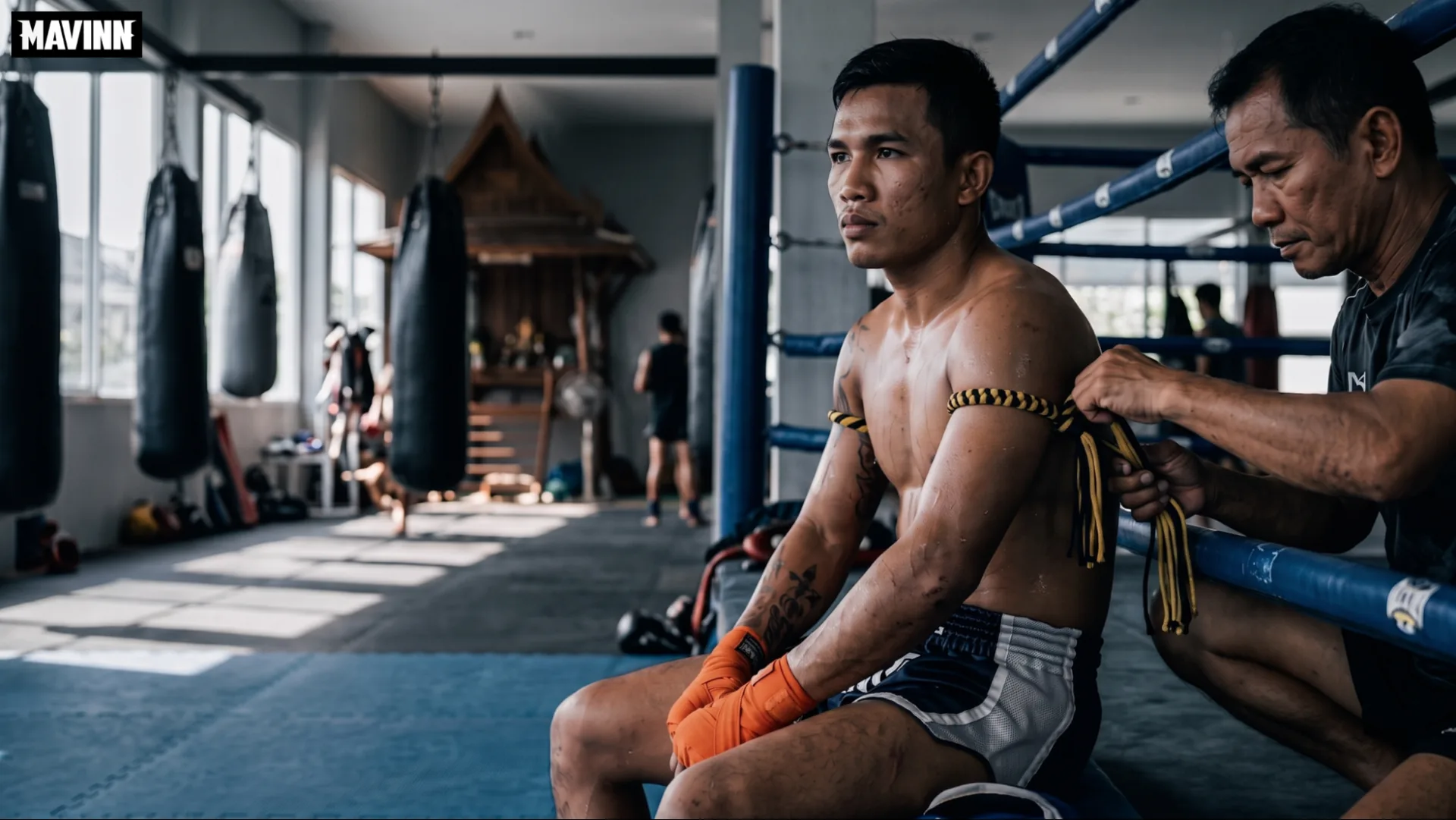
The Prajioud (armband) and Mongkhon (headband) are traditional Muay Thai gear pieces worn for spiritual protection and cultural respect rather than functional rank. Trainers bless these sacred items to bring good fortune and safety to fighters during active combat. Fighters must remove the Mongkhon before the fight begins, while they wear the Prajioud on one or both arms throughout the entire 3 to 5-round bout.
While Western gyms sometimes integrate the Prajioud into a colored muay thai belt system to denote student levels, their original purpose in Thailand is purely ceremonial. Fighters wear the Mongkhon through the Wai Kru Ram Muay, the pre-fight ritual we cover in full in our guide to the Wai Kru.
How the Modern Muay Thai Belt Ranking System Works
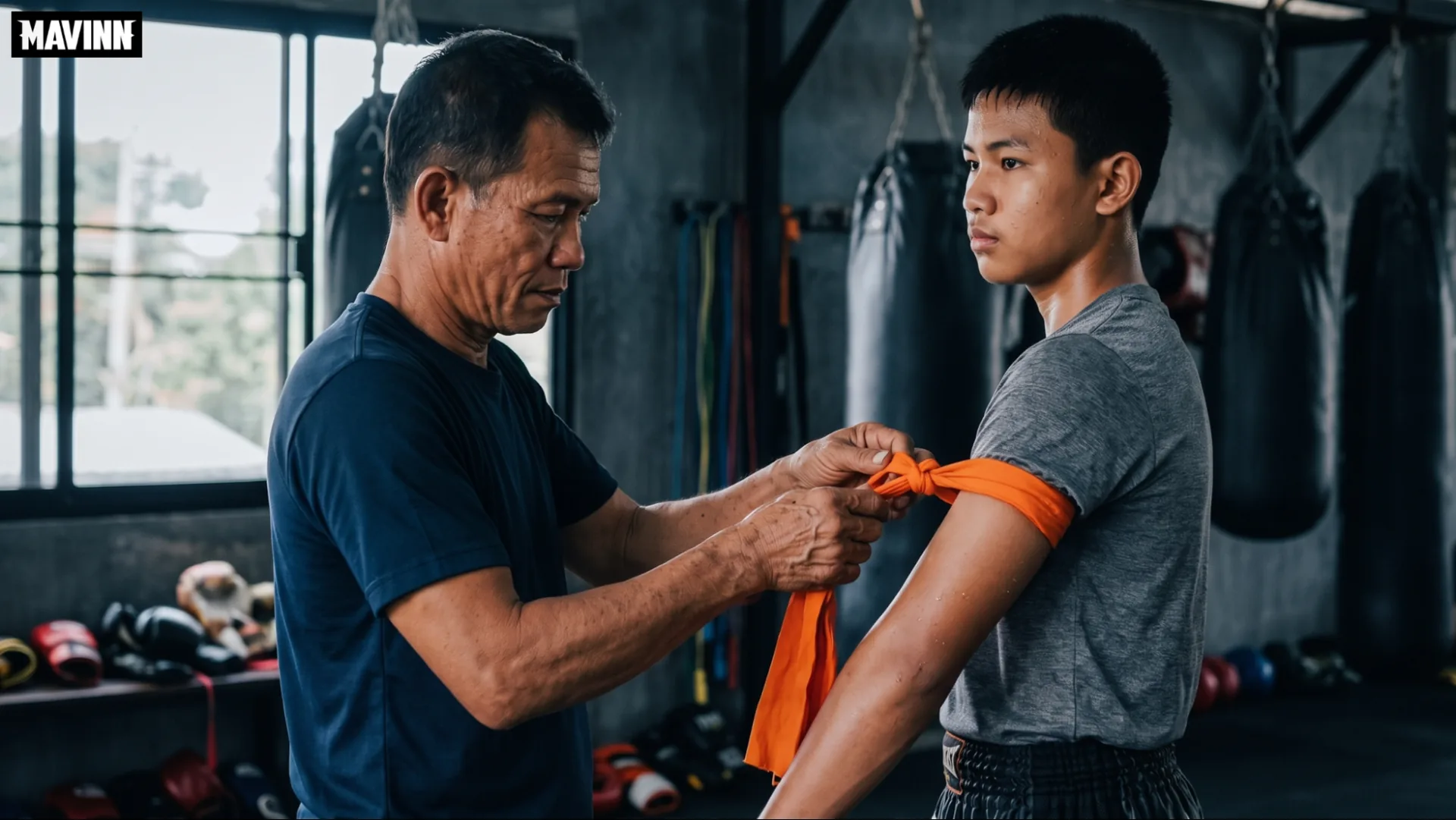
Modern Muay Thai gyms outside of Thailand use colored armbands instead of waist belts to rank and track student progress. This adaptation standardizes technical progression by borrowing ranking structures from traditional martial arts like karate or Brazilian jiu-jitsu. International organizations design colour-coded curriculums that guide practitioners from white armbands up to the senior instructor grades.
Global governing bodies now regulate these modern grading systems to maintain instructional consistency across international gyms. For example, the International Federation of Muaythai Associations (IFMA) uses an official 15-khan grading system to certify coaches and competitors worldwide. This system requires students to demonstrate proficiency in specific offensive strikes, defensive blocks, and the traditional Wai Kru before advancing to the next tier, and IFMA now runs it across 128 member nations.
Western gyms and the adoption of colored grading systems
Western gyms adopted colored grading systems to provide a structured progression pathway that keeps students motivated and tracking their goals. Traditional Thai gyms evaluate fighters solely on ring victories, but Western schools needed a curriculum to retain recreational members. This adaptation utilizes colored armbands or t-shirts to represent technical knowledge, mimicking the ranking structures of Brazilian Jiu-Jitsu.
- White and Yellow: Beginner levels focusing on stance, basic punches, kicks, and fundamental footwork.
- Green and Blue: Intermediate ranks introducing advanced defensive counters, light sparring, and basic clinch work.
- Brown and Black: Advanced levels requiring fight experience, ring management, and instructional capability.
These colored systems allow coaches to run safe, organized classes by grouping students of similar skill levels together during partner drills. Progression through these ranks depends on structured testing intervals, typically requiring three to six months of consistent training per level.
Industry Standards WTBA and IFMA Grading Systems
The World Thai Boxing Association (WTBA) and the International Federation of Muaythai Associations (IFMA) provide the two main global frameworks for standardizing Muay Thai ranks through colored armbands. While WTBA focuses on progression systems for Western schools, IFMA sets the Olympic-recognized amateur standards worldwide. Both replace waist belts with coloured armbands, but they are not the same ladder, so a rank in one does not convert to the other.
- The WTBA curriculum runs student grades from white through to black using coloured armbands, then adds separate combined-colour armbands for instructor ranks.
- The IFMA structure uses a 15-khan grading system, and IFMA itself holds full International Olympic Committee recognition granted in 2021.
Choosing between these systems depends on whether you seek recreational growth or Olympic-style amateur competition. For example, IFMA grading requires demonstrating specific Wai Kru dance steps alongside technical striking combinations.
How to Measure Your Progress Without a Muay Thai Belt System
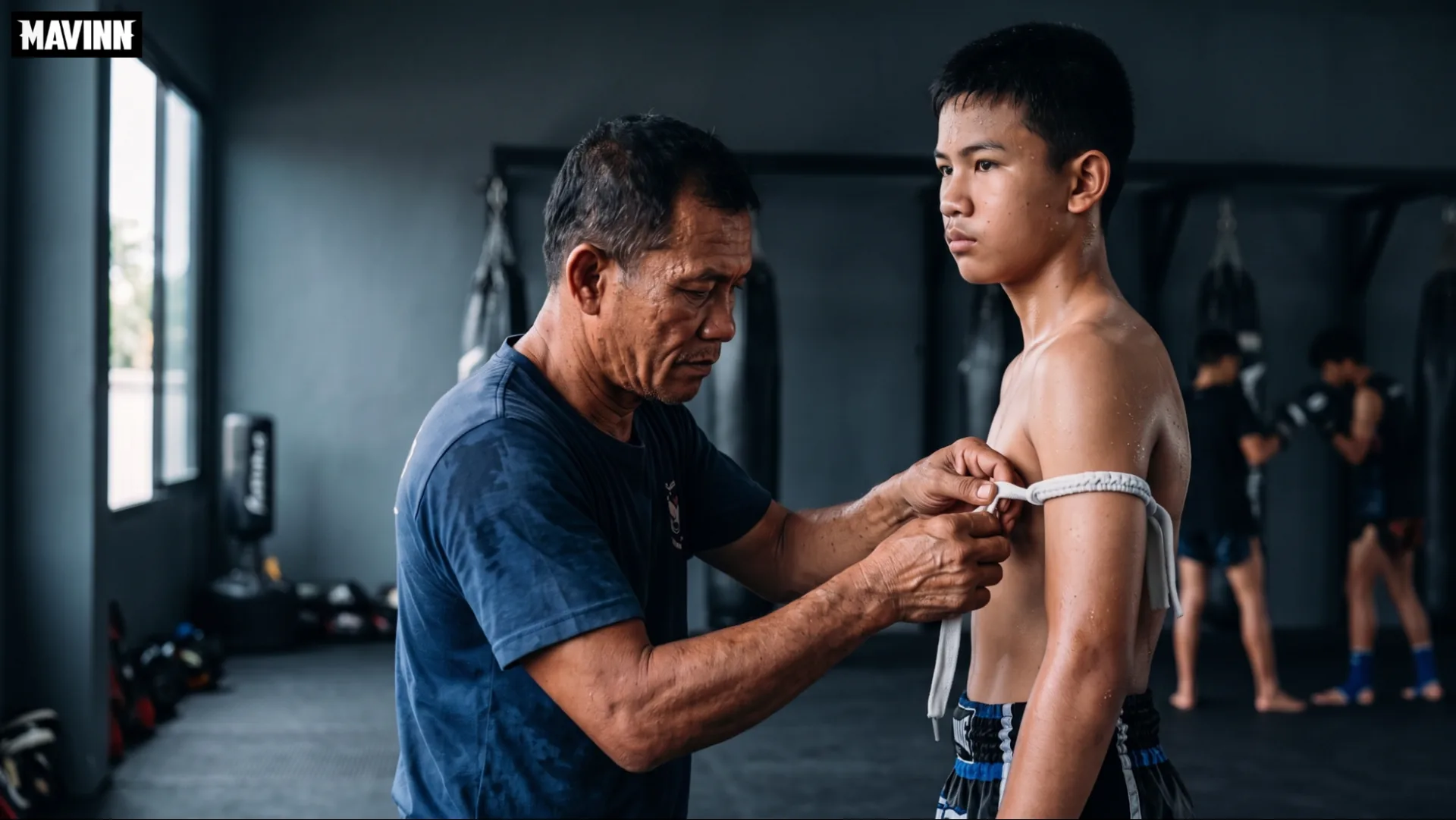
You measure your progress in Muay Thai through technical consistency and what happens in live sparring rather than earning colored belts. Your ability to execute a clean left switch-kick while under pressure reveals your actual skill level. Coaches evaluate your stance, guard retention, and balance during high-intensity pad work sessions to gauge your advancement.
Cardiovascular endurance serves as another clear benchmark of your growth in the gym. A beginner might struggle through three rounds of pad work, whereas an advanced practitioner maintains power into the fifth round. Your defensive reflexes, such as successfully timing a sweep or catching an opponent’s kick, prove your development without needing a physical certificate.
Technical mastery and physical conditioning
We track your advancement in Muay Thai through specific physical milestones and skill execution rather than a traditional belt ranking. You can measure your development by focusing on these core indicators of progress:
- Defensive Guard and Balance: Advanced students maintain a tight guard and return to a stable stance instantly after throwing a rear kick, never losing their footing.
- Three-Minute Round Endurance: Progressing from struggling through one round to sustaining high-volume striking across five full rounds of pad work indicates elite conditioning.
- Striking Accuracy and Timing: True mastery means consistently landing clean roundhouse kicks on the pads with the shin bone rather than the foot.
- Active Recovery Rate: A well-conditioned fighter drops their heart rate back to baseline within the 60-second rest period between intense training rounds.
Sparring performance and ring experience
You prove your actual Muay Thai proficiency through controlled sparring and ring experience rather than chasing colored belts. Your ability to apply defensive techniques against an active, resisting opponent serves as the ultimate test of your martial arts development. We evaluate your growth during live exchanges based on key tactical milestones:
- Ring Generalship: Controlling the center of the canvas and using lateral footwork to escape corners shows advanced spatial awareness.
- Reaction Speed: Checking low kicks and countering with a cross within split-second windows demonstrates high-level defensive reflexes.
- Composure and Breathing: Maintaining a calm demeanor and steady breathing pattern during heavy exchanges prevents premature exhaustion.
- Tactical Adaptability: Adjusting your strategy mid-round to counter a southpaw opponent or a heavy kicker proves genuine ring intelligence.
Level Up Your Skills at Mavinn Muaythai
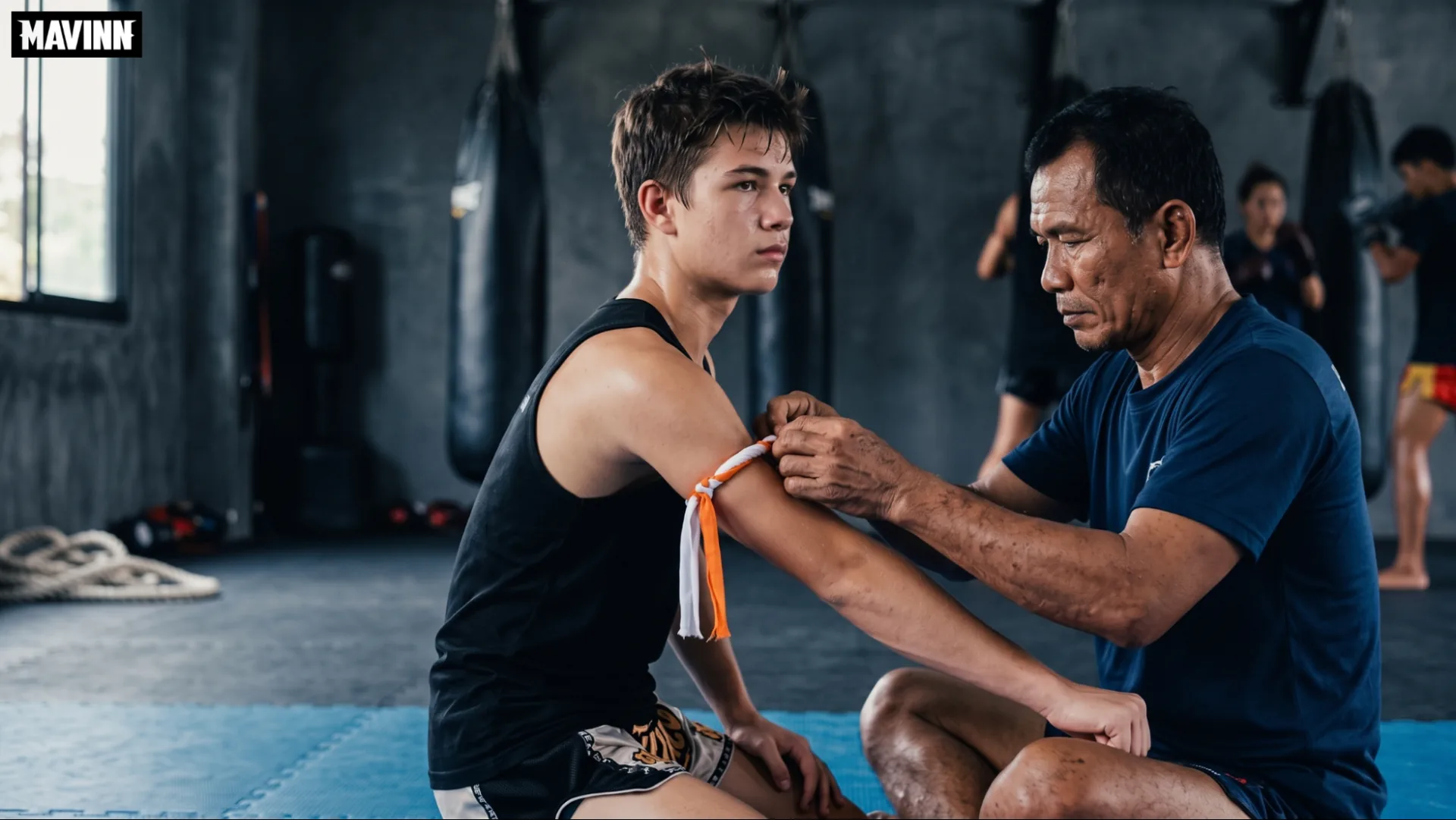
We help you progress through your training goals without relying on a traditional muay thai belt system by focusing on real, measurable skill development. Our training programs cater to all levels, from beginners learning the basics to advanced fighters looking to sharpen their technique. You will train under the guidance of elite instructors, including reigning ONE Featherweight Kickboxing World Champion Superbon Singha Mavinn.
You can join our structured daily training sessions at our Bangkok gym in Nuanchan or at our Pattaya gym. For a fully immersive experience, we offer dedicated Stay & Train packages that run intensive daily workouts across a multi-day block. If you cannot travel to Thailand, our specialized online courses provide step-by-step video instruction to help you master authentic striking from home.
Programs designed for every skill level and tracking your growth
We design our training programs at Mavinn Muaythai to systematically elevate your skills from beginner to advanced without relying on a traditional Muay Thai belt system. We focus on measurable athletic progression through structured physical benchmarks and technical assessments.
You can choose from our specialized programs to match your current experience level:
- Stay & Train package: An immersive camp experience at our Bangkok (Nuanchan) or Pattaya gyms.
- Online courses: Digital training modules designed for remote technical development.
- Group Classes: Daily sessions focusing on pad work, heavy bag drills, and sparring defence.
We track your progress by evaluating specific performance metrics like striking speed, defensive reactions, and aerobic conditioning instead of awarding colored rankings. You will receive direct feedback on your stance and combinations in every session, in the same gym where world-class striking specialist Superbon Singha Mavinn trains.
FAQs Muay Thai Belt System
How long does it take to get a black belt in Muay Thai ?
Traditional Muay Thai does not use a belt ranking system, meaning you cannot earn a traditional black belt in this martial art. Instead, fighters traditionally measure their skill and status through their actual ring record and competitive experience. Some modern Western Muay Thai organizations use colored armbands called Prajioud, where reaching the highest rank equivalent to a black belt typically requires 7 to 10 years of consistent training.
To reach these advanced ranking levels in Westernized grading systems, you must demonstrate mastery of complex striking combinations, clinching techniques, and defensive maneuvers. Instructors also evaluate your physical conditioning, sparring performance, and teaching capabilities before awarding senior armbands. If you train under a structured curriculum like the World Thai Boxing Association (WTBA), you must pass each colour grade in turn before testing for the black-equivalent rank.
Read next: How to Learn Muay Thai for Complete Beginners
Do I need a belt or rank to compete in Muay Thai ?
You do not need a belt or rank to compete in Muay Thai. Matchmakers organize fights based on your weight class, skill level, and actual fight record rather than a colored ranking system. In traditional Thai stadiums like Rajadamnern, fighters are matched solely on their ring experience and competitive history.
In Western promotions, amateur bouts group fighters into class categories based on their number of active bouts. For example, a Class C fighter typically has fewer than five matches and fights with protective shin guards. Once you gain more ring experience, promotions advance you to Class B and Class A categories without requiring any formal grading exams.
What do the colors mean in modern Muay Thai rankings ?
Colored armbands in the modern Muay Thai belt system signify a student’s technical skill, defensive capability, and theoretical knowledge. White and yellow bands represent beginners learning basic stances, footwork, and primary strikes, while intermediate colors like green and blue show mastery of combinations and sparring. The International Federation of Muaythai Associations (IFMA) standardizes this progression using 15 distinct levels known as Khan.
Brown and red bands represent advanced practitioners and assistant instructors who can effectively teach complex counter-striking and clinch sweeps. Black, silver, and gold bands are reserved for master-level kru or senior instructors with decades of dedication to the sport. Transitioning from a brown rank to a red instructor level typically requires a minimum of 2 years of active teaching assistance.
Conclusion
Understanding the modern muay thai belt system helps you navigate the different grading methods used by international gyms today. While traditional Thai camps do not use waist belts to rank fighters, global organizations like the IFMA and WTBA utilize colored armbands to provide clear progression milestones. This dual approach means you can choose between chasing competitive ring experience or following a structured technical curriculum.
Your progress ultimately depends on your consistency, conditioning, and practical sparring ability regardless of the ranking system your gym uses. We focus on real-world striking development through structured programs at our Bangkok (Nuanchan) and Pattaya gyms. You can build your skills through our immersive Stay & Train packages, online courses, or daily sessions guided by elite instructors like Superbon Singha Mavinn.