Key Takeaways
- Is muay thai good for self defense – Yes, it equips you with the “Art of Eight Limbs,” teaching you to use punches, kicks, knees, and elbows to neutralize threats and maintain safe distance.
- Consistent sparring and pad work build the muscle memory, reflexes, and timing needed to manage real-world physical confrontations.
- The high-intensity training improves physical conditioning and mental resilience, helping you stay calm under sudden pressure.
- Learning under elite trainers, like striking specialist Superbon Singha Mavinn, ensures you develop proper biomechanics for effective power generation.
Is muay thai good for self defense? Yes, this martial art provides highly practical real-world protection by training you to use your fists, elbows, knees, and shins. This system, better known as the art of eight limbs, teaches you to strike from multiple distances and quickly escape dangerous close-range holds. For instance, a basic lead teep (push kick) can keep an aggressive attacker over five feet away from you.
The intense conditioning also builds the cardiovascular stamina you need to escape or sprint to safety. Training at established facilities like Mavinn Muaythai in Bangkok and Pattaya develops the muscle memory required to execute these moves under stress.
The Real Answer on Muay Thai for Self Defense
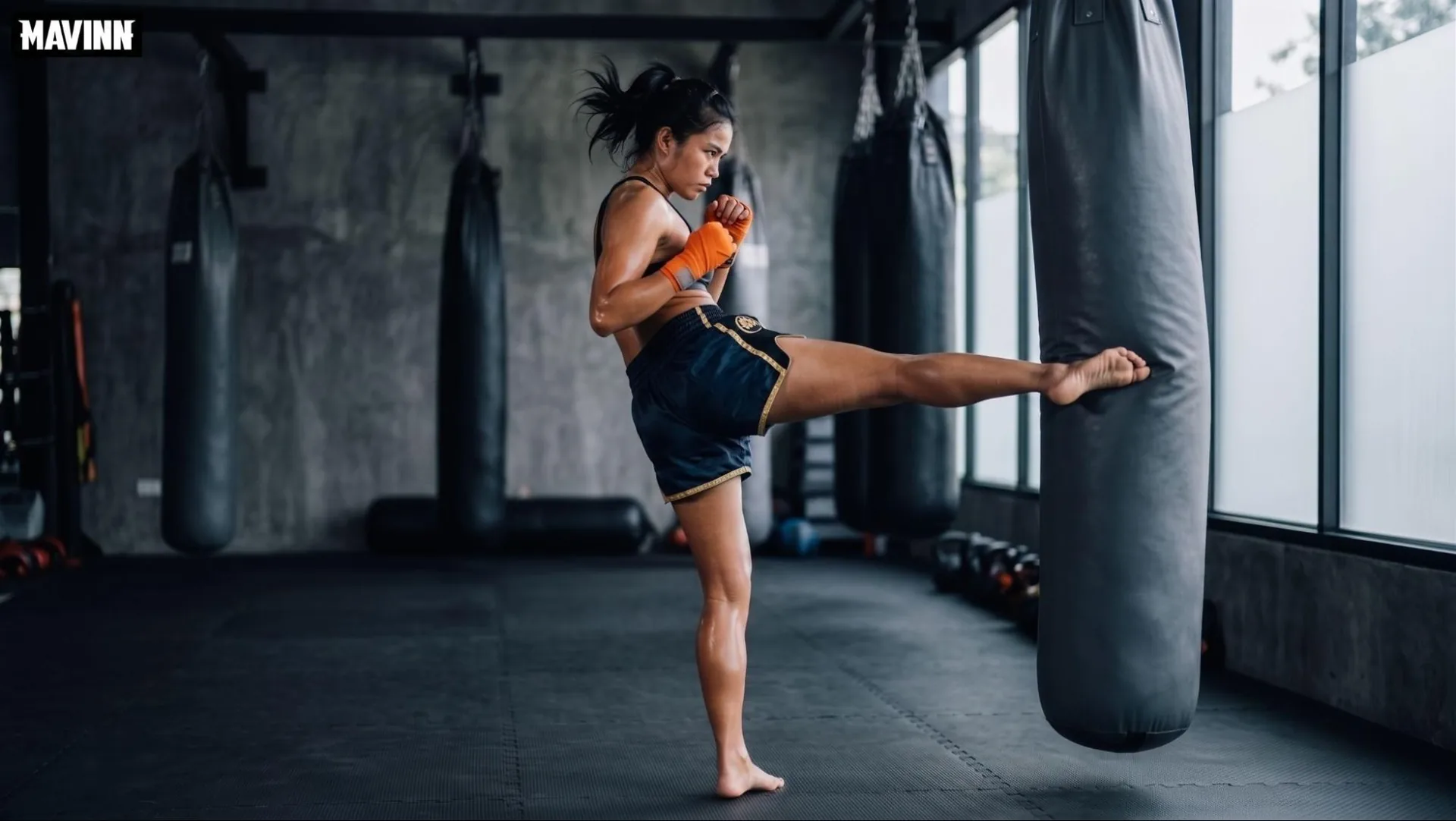
Is Muay Thai good for self defense? Yes, it is one of the most effective martial arts for real-world personal protection because it teaches you to use your entire body as a weapon. Known as the “Art of Eight Limbs,” this discipline trains you to use punches, kicks, knees, and elbows to neutralize threats at multiple distances. For example, a single well-placed lead teep can instantly create five feet of space between you and an attacker.
The training also builds the extreme cardiovascular stamina and mental resilience needed to make split-second decisions under high stress. By practicing realistic pad work and controlled sparring, you develop the muscle memory to react without freezing when confronted. Professional training at Mavinn Muaythai prepares you to handle physical pressure through structured conditioning programs.
Why Muay Thai is so effective in real situations
If you are wondering why Muay Thai is so effective, it is because it conditions your body to react automatically using simple, high-impact strikes that work under extreme stress. Unlike martial arts that rely on complex choreography, this system focuses on raw power and practical utility. Training drills build the muscle memory required to execute defensive movements instantly.
- Eight contact points: You learn to use fists, elbows, knees, and shins, giving you offensive options at close, medium, and long ranges.
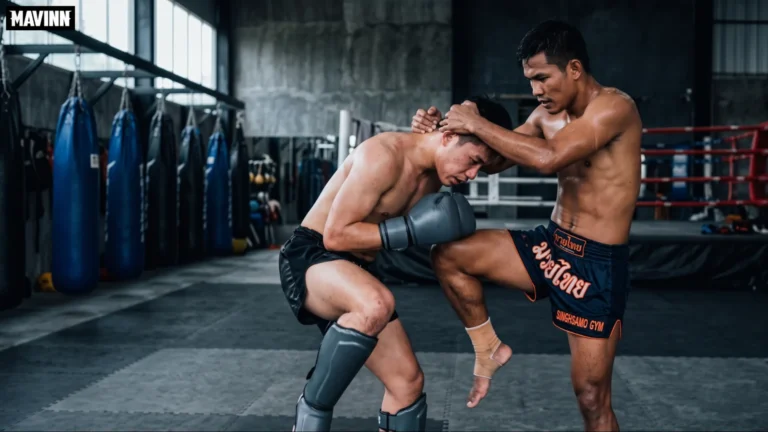
- The clinch: This standing grappling position allows you to control an attacker’s head and neutralize their movement.
- Pressure testing: Regular sparring teaches you to maintain your composure and strike accurately when facing real resistance.
Is it the best fighting method when facing a larger opponent ?
Many consider it the best fighting method when facing a larger opponent because it prioritizes structural power, distance control, and devastating low kicks that target mobility. By attacking the legs, you can compromise a larger person’s balance and base without needing to match their upper-body strength. For example, a heavy low kick into the outer thigh can compromise a much larger attacker’s base and halt their advance.
To neutralize a size advantage, you must use specific tactics that avoid trading head-on punches:
- Maintain distance: Use the teep (push kick) to keep a heavy opponent from closing the distance and smothering you.
- Target weak points: Attack areas like the liver, floating ribs, and the sides of the knees where bone structure cannot protect them.
- Use the clinch: Apply the Thai clinch to control the opponent’s posture and deliver knees to the solar plexus, stopping their forward momentum.
Why Muay Thai is the Most Effective Striking Martial Art
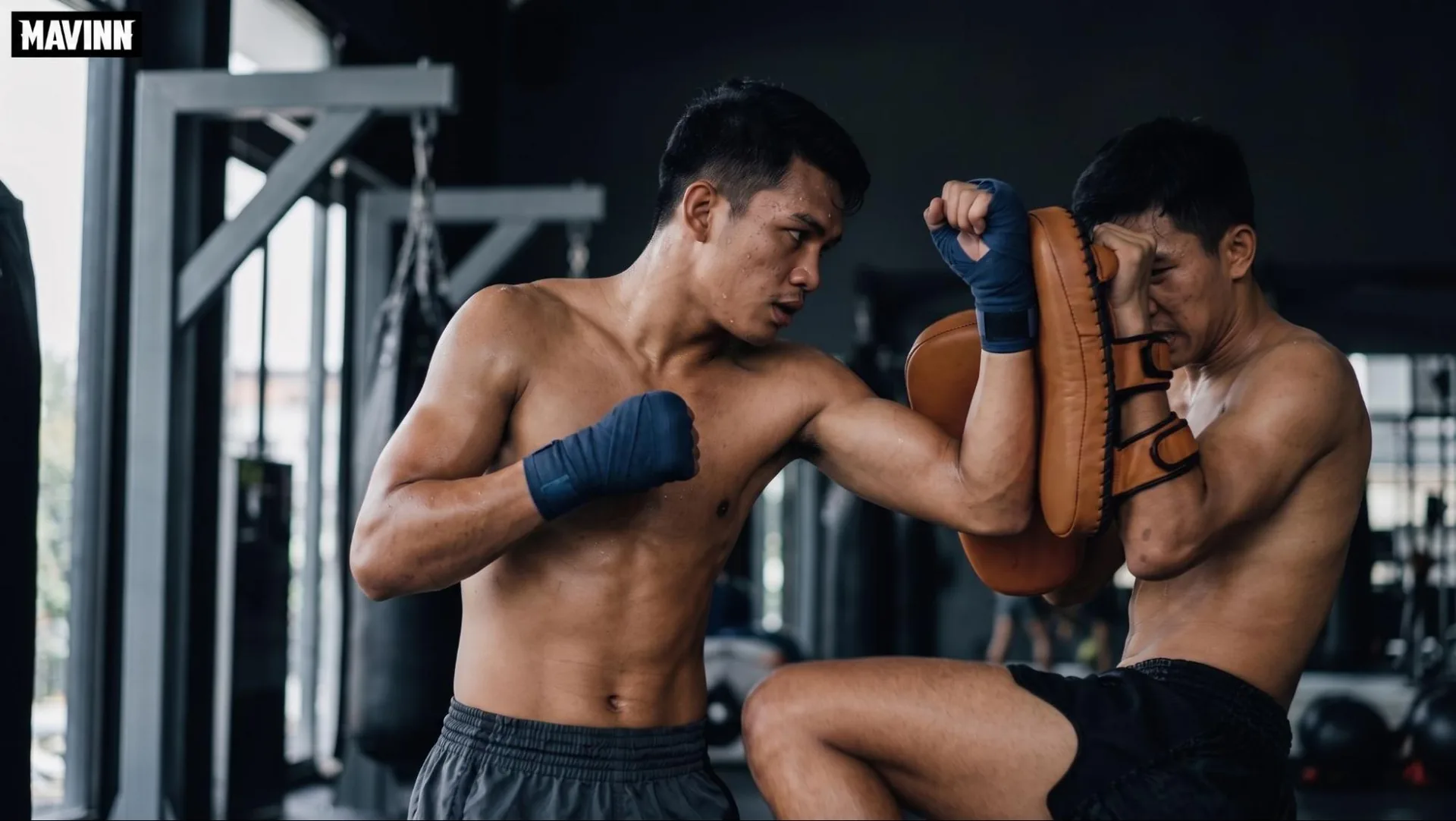
Muay Thai stands out as the most effective striking martial art because it utilizes the “Art of Eight Limbs” to turn your entire body into a versatile weapon. Unlike combat styles that restrict you to punches or kicks, this discipline incorporates punches, kicks, elbows, and knees. This variety allows you to neutralize threats from a close-quarters clinch distance of less than twelve inches.
The intense physical conditioning builds the bone density and cardiovascular endurance needed to survive a prolonged physical confrontation. Routine sparring and pad work train your muscle memory to react instantly under high-stress conditions. Training under world-class striking specialists like Superbon Singha Mavinn ensures you learn these high-impact defense habits correctly.
Essential self defense techniques you learn at Mavinn Muaythai
You learn functional, high-impact moves at Mavinn Muaythai that work in real-world confrontations. We focus on techniques that establish distance and neutralize threats immediately.
- The Teep (Push Kick): This linear kick acts like a footprint-shaped shield. You use it to push an attacker back and prevent them from rushing you.
- The Clinch and Knees: If an attacker grabs you, the clinch allows you to control their head and posture. You can then deliver devastating knee strikes to the midsection.
- Short Elbow Strikes: Elbows are incredibly sharp and effective in tight spaces. They do not require a glove to cause damage, making them perfect for close-range defense.
Which is Better Kickboxing or Muay Thai for Protecting Yourself ?
Muay Thai is more effective than kickboxing for self-defense because it prepares you for close-range combat. While kickboxing focuses strictly on punches and kicks, Muay Thai utilizes elbows, knees, and clinching to control opponents, a difference we break down further in our guide to what kickboxing is. This multi-range versatility matters because real confrontations rarely stay at kicking distance, and once someone grabs you, pure striking runs out of answers.
| Feature | Muay Thai | Kickboxing |
|---|---|---|
| Striking Weapons | Punches, kicks, knees, elbows | Punches and kicks only |
| Clinch Fighting | Active grappling and sweeps | Prohibited or quickly broken |
| Defensive Range | Long, medium, and close range | Long and medium range only |
Learning to fight in the clinch allows you to off-balance an attacker and escape quickly. At Mavinn Muaythai, we teach you how to apply these eight limbs to stay safe in unpredictable encounters. Focus on mastering the clinch and knee strikes first to neutralize close-range threats instantly.
Practical Limitations of Muay Thai in a Street Fight
Muay Thai has clear limitations in real-world street fights because it focuses almost entirely on standing combat. If an attacker takes you to the ground, the sport’s upright stance and striking techniques lose their effectiveness. For example, trying to execute a high kick on wet asphalt often leads to slips and immediate takedowns.
The system also lacks defenses against weapons and multiple simultaneous attackers. Ring rules teach you to focus on a single opponent, which leaves you vulnerable to flank attacks in a crowded environment. A hard low kick to an attacker’s lead leg can buy you the seconds you need to break away and run.
Read next: Sparring Defined, an Essential Guide to Combat Practice
Legal considerations Proportional force in self defense
Using Muay Thai for self-defense carries serious legal responsibilities because powerful strikes can be classified as lethal force in court. If you use a devastating elbow or knee strike on an unarmed attacker who is already retreating, you risk facing severe assault charges. Self-defence law varies widely between countries, but the common thread is that your response has to be proportionate to the threat, which makes a single strike that lets you escape far safer ground than knocking someone unconscious.
To stay within the boundaries of proportional force, you must use Muay Thai techniques primarily to create space and escape rather than to punish an assailant. Some jurisdictions weigh whether you had a safe opportunity to retreat, and others do not, so check the law where you live rather than assuming. The practical rule that travels everywhere is to strike only enough to create your exit, because anything past that point starts to look like retaliation.
What to do when striking is not enough
When striking fails or is not viable, you must pivot immediately to clinch-based control, grappling, and tactical escape strategies. If an attacker closes the distance and grabs you, raw punches and kicks lose their power. You must use their momentum to unbalance them and secure a clear exit path.
To survive these close-quarters situations, focus on three specific tactical maneuvers:
- Clinch control: Secure the back of the opponent’s neck with both hands to pull their head down and neutralize their posture.
- Foot sweeps: Use your lead foot to block their heel while pushing their shoulder to trip them to the concrete.
- Immediate disengagement: Run toward a crowded space the moment they lose balance, as ground fighting on the street is highly dangerous.
Build Real World Skills with Mavinn Muaythai
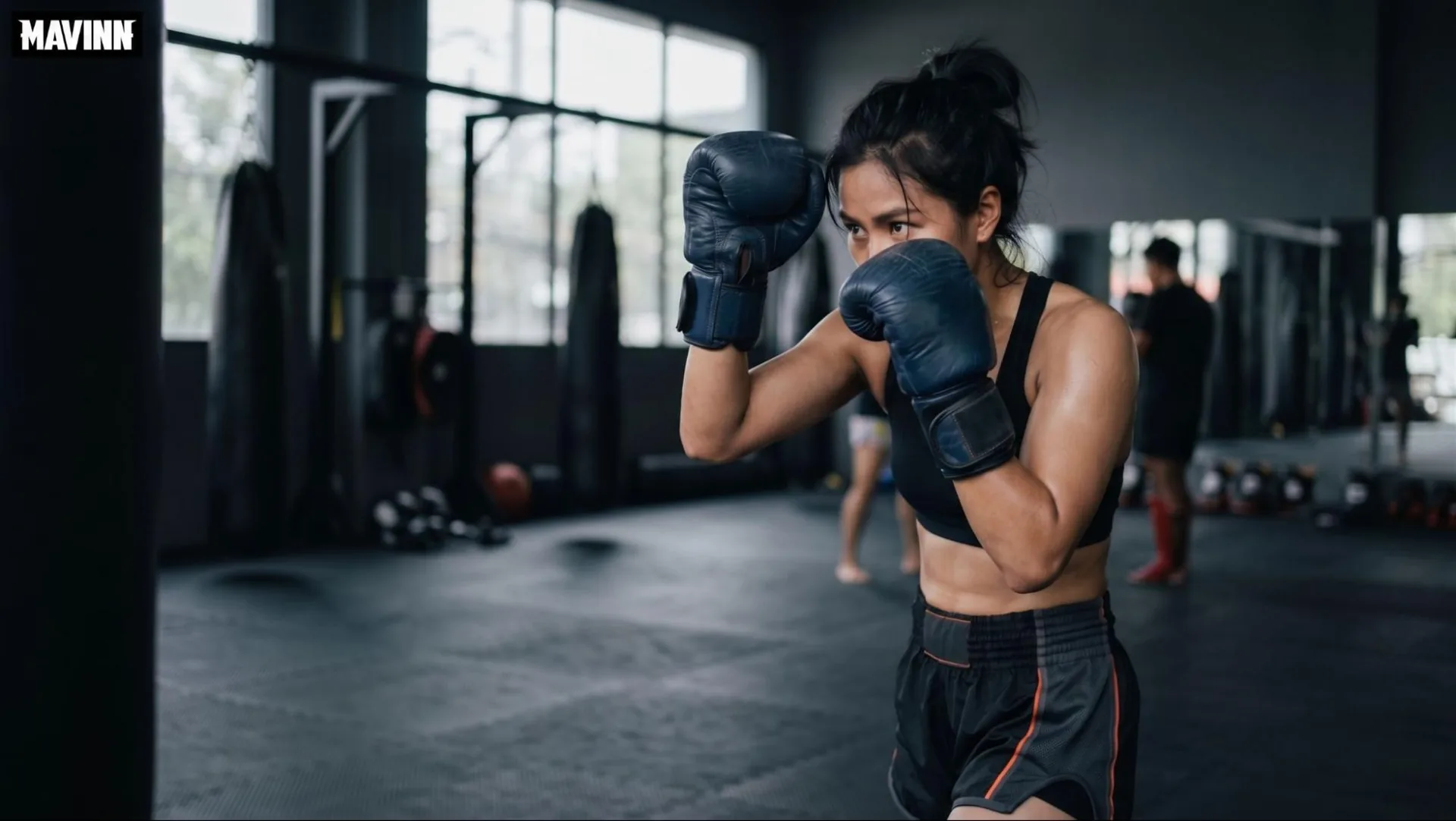
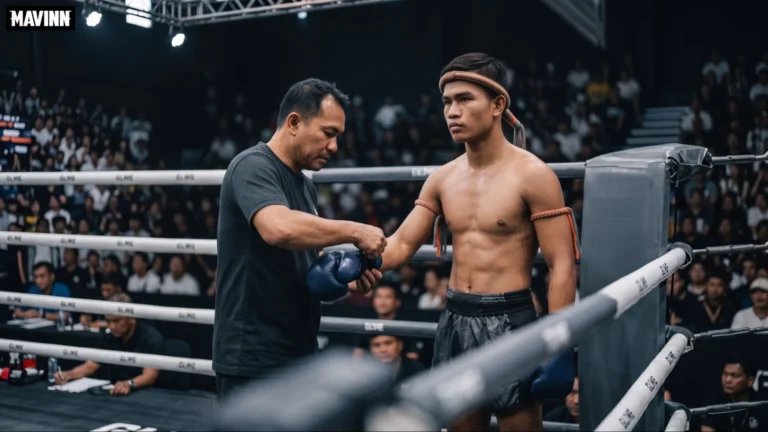
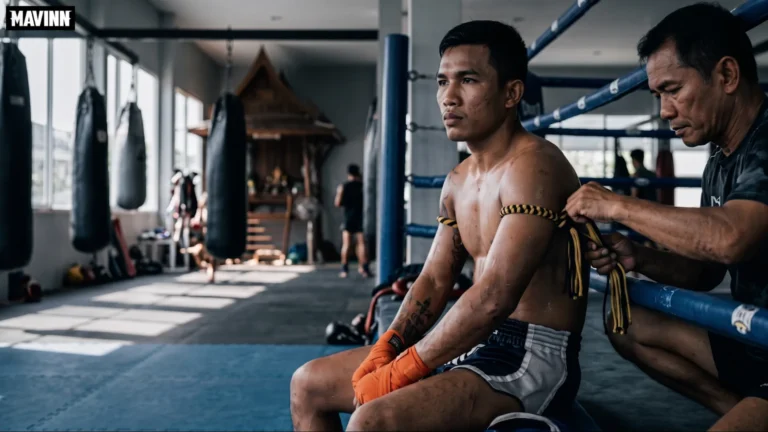
You can develop practical self-defense skills by training directly with world-class specialists at Mavinn Muaythai. Our programs focus on realistic striking, functional conditioning, and situational awareness to keep you safe in real-world encounters. You will learn authentic techniques under the guidance of elite trainers, including reigning ONE Featherweight Kickboxing World Champion Superbon Singha Mavinn.
We offer structured training packages designed for all experience levels at our physical locations and online. Whether you want to train in Bangkok or Pattaya, we have dedicated programs to fit your lifestyle.
| Package Type | Location / Format | Best For |
|---|---|---|
| Stay & Train | Pattaya | Immersive physical conditioning |
| Group Classes | Bangkok (Nuanchan) | Technical skill development |
| Online Courses | Digital Platform | Flexible home training |
Bangkok and Pattaya gym packages for all levels
We provide structured training programs designed to build functional combat skills for students of all experience levels. You can train directly under elite coaches, including world-class striking specialist Superbon Singha Mavinn, to master practical defense. Our curriculum focuses on real-world application, heavy conditioning, and controlled sparring drills.
| Package Type | Location | Best For |
|---|---|---|
| Stay & Train | Pattaya & Bangkok (Nuanchan) | Immersive training and travelers |
| Group Classes | Bangkok (Nuanchan) | Local students wanting regular practice |
| Online Courses | Global | Remote learners building a foundation |
Our Stay & Train package runs intensive daily sessions to accelerate your muscle memory. Beginners start with basic guard structures, while advanced students transition into live counter-striking setups. You can join our daily classes at the Nuanchan facility in Bangkok or at our Pattaya gym.
FAQ Is Muay Thai Good for Self Defense
Does the lack of a belt system in Muay Thai affect its self defense value ?
The lack of a belt system in Muay Thai does not reduce its self-defense value because the sport prioritizes functional combat readiness over theoretical rankings. Instead of testing for color-coded belts, you measure your progress through live sparring, physical conditioning, and your ability to apply techniques against resisting partners. You develop muscle memory by practicing full-contact pad work and controlled sparring, which prepares you directly for high-stress encounters.
Traditional martial arts often spend months preparing students for formal grading ceremonies to earn their next rank. In contrast, Muay Thai focuses entirely on refining the “Art of Eight Limbs,” which teaches you to use your fists, elbows, knees, and shins. This streamlined training structure allows dedicated students to acquire functional defensive skills within 6 months of consistent practice.
Can women use Muay Thai effectively for self defense ?
Yes, women can use Muay Thai as an exceptionally effective tool for self-defense against larger attackers. This martial art teaches you to utilize your entire body weight through leverage, explosive hip rotation, and hard skeletal contact points. For example, practicing the Muay Thai teep (push kick) allows a smaller defender to maintain a safe distance of over three feet from an aggressor.
Furthermore, you develop the muscle memory to strike with your elbows and knees, which are highly durable bones that do not easily break upon impact. These close-range strikes target vulnerable areas like the jaw or solar plexus to neutralize threats quickly. We focus on these high-impact mechanics in our training programs at Mavinn Muaythai to ensure you can deliver maximum force regardless of your physical size.
How long does it take to learn basic self defense skills ?
You can acquire basic self-defense skills in three to six months of consistent Muay Thai training. This timeframe assumes you attend structured classes two to three times per week to build muscle memory. During these initial months, you develop the ability to land clean strikes and maintain a proper defensive guard.
Our training programs accelerate this learning curve by simulating real physical pressure through controlled pad work and sparring. Within 12 weeks, most dedicated students develop the reflexes needed to evade basic attacks and counter-strike effectively. Consistent practice at our gyms ensures these movements become automatic reactions during unexpected confrontations.
Conclusion
Is Muay Thai good for self defense? Yes, this striking system transforms your body into an effective defensive tool by teaching you to use your fists, elbows, knees, and shins. By training your muscle memory to react under pressure, you learn to control distance and neutralize physical threats. Dedicating just three to six months of consistent practice builds the automatic reflexes needed to protect yourself.
Ultimately, mastering this discipline prepares you for unpredictable physical encounters where quick decision-making is vital. While no combat style guarantees complete safety, this training gives you the conditioning and power to escape dangerous situations unharmed. Focus on sharpening high-impact basics like the lead teep to keep attackers at least five feet away.